



OPINION:
ANALYSIS/OPINION
Barack Obama, with heavy rain falling without ceasing from that perpetual cloud over his head, must find a P-51 Mustang. The plane that crashed in Reno, Nev., sending spectators fleeing in a spectacular windup to an air show, saved FDR and the Allies amidst an earlier war seven decades ago. This president, too, needs a deus ex machina — literally, “a god out of the machine.”
The P-51 that crashed in Reno, ignominiously referred to in the early news accounts as merely “a plane from World War II,” had been radically altered to convert it to a remarkable speed demon that could do one too many tricks. The National Transportation Safety Board’s detectives are inspecting the tiny pieces of wreckage to try to figure out what happened.
People were interested in these podcasts
The early speculation is that the alterations - one pilot calls it “like sex-change surgery” — converted the plane into a machine that it was never intended to be. Ten feet of aluminum were shaved from its wingspan, and the ailerons, part of the rear edge of the wings that controls balance, were reduced from 60 to 32 inches. This gave the plane considerably more speed, but at the considerable cost of stability.
Jimmy Leeward, the Hollywood stunt pilot who made the changes, had said months earlier that his Mustang, which he called the “Galloping Ghost,” was considerably faster and more maneuverable, but he wasn’t sure how it would perform under the stress of flight. “I know it’ll do speed,” he said in an interview in June, “but the systems aren’t proven yet. We think they’re going to be OK.” They weren’t OK, to use the language of laconic understatement of fliers everywhere, and Mr. Leeward died with nine spectators.
The original P-51, first put into extensive service in 1943, was developed to accompany the massive fleets of B-17 bombers dispatched to devastate German war factories. The Mustang and the men who flew it were credited with shooting down almost 5,000 planes of the Luftwaffe, far more than any other plane in the war. Designed and built by North American Aviation and powered by a supercharged Packard engine built under license from Rolls-Royce, the Mustang was a killer beast. A bargain, too: The government got them for $51,000 apiece. (They’re for sale on the Internet for about $2 million apiece.) “When I saw Mustangs over Berlin,” said Hermann Goering, the commander of the Luftwaffe, who killed himself in prison while waiting for the hangman, “I knew the war was lost.”
But before seizing the skies above the German capital, FDR and his generals had to find something to stop the slaughter of American and British bomber crews. When the U.S. 8th Air Force set up bases in southern England in 1942, the generals decided that the B-17 had enough armor to take care of itself on its bombing missions deep into occupied France. In the early months of the offensive, the Allies lost only 2 percent of their planes, regarded as “acceptable.” But in January 1943, the leaders of the Allies, meeting at Casablanca, ordered around-the-clock bombing, the Americans by day and the British and Canadians by night. The bombers flew deep into Germany, beyond the range of escorting fighters, and the losses quickly became horrific. One in 5 crews could expect to become guests of the Germans - if they were lucky.
Disaster struck on Oct. 14, 1943. A fleet of 291 B-17s was dispatched to take out the ball-bearing works at Schweinfurt. Luftwaffe pilots were expecting them. Sixty American B-17s were shot down; 17 others crashed or crash-landed when they returned to England. In all, 650 of the 3,000 men on the mission did not return. Only 65 fell into prison camps.
Enter the P-51. The Mustang and the 8th Air Force were assigned to win air superiority over Europe in advance of D-Day. The Mustangs escorted the bombers to targets deep in German-held territory, and strafed and shot up German airfields on their return home to England. The Mustang could carry a large fuel load, and a good thing, too, because a Mustang could drain an oil well. But it was oil well spent. The Mustang even defeated the Messerschmitt 262, the primitive first jet fighter, and chased down a few V-1 rockets on their way to London. One Mustang ace, George Preddy, shot down 26 German planes before he was killed by friendly fire on Christmas Day 1944. All the brothers were valiant, and so was the Mustang. The men and their remarkable machine owned the skies over Europe.
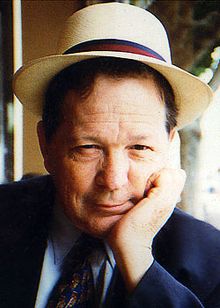
• Wesley Pruden is editor emeritus of The Washington Times.
Follow the author

Please read our comment policy before commenting.