



OPINION:
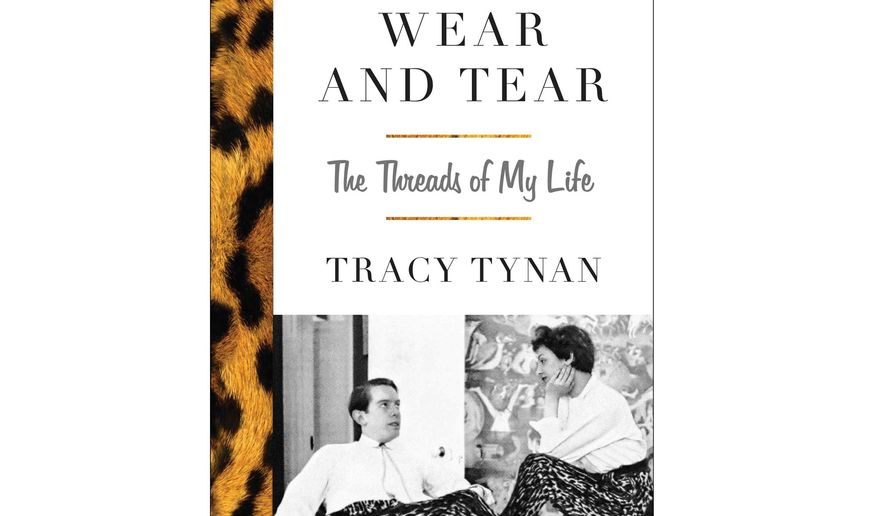
WEAR AND TEAR: THE THREADS OF MY LIFE
By Tracy Tynan
Scribner, $26, 322 pages
If there was a more dysfunctional marriage than the one between British critic and enfant terrible Kenneth Tynan and American writer Elaine Dundy, you wouldn’t want to know about it, let alone be caught up in its maelstrom. Yet that is exactly what happened to their only child, Tracy, as she conveys with unflinching vividness in this memoir. Why this pair ever had a child is hard to fathom, since they seemed perpetually bemused by what to do with her and paid her as little attention as possible.
Actual threats of suicide and assorted other mayhem by one parent — and urgings on by the other — were almost everyday occurrences in her childhood. Screaming matches not just at home, but in public, resulting in, on one occasion, the family being asked to leave a hotel. No wonder she says she was the only child who actually delighted in going to boarding school.
Perhaps because of her home life — this family apparently never had dinner just the three of them — and the stunning lack of parental affection shown her, she early on took refuge in the lovely feel of fur coats and other comforting garments. Clothes have been an abiding part of her identity ever since and, since she is a very successful costume designer for movies, they have played an important part in both private and professional life. So it is understandable that she has chosen to organize each chapter of this memoir around a garment or accessory. There is no mistaking the genuineness of her identification with and attachment to these objects, but whether it was a wise artistic choice is doubtful, since the device seems at times forced, distracting from the main event.
For what artifact, no matter how over the top, could possibly give her parents a run for their money when it comes to flamboyance? Mr. and Mrs. Tynan were two of the 20th century’s greatest drama queens and so it is natural that they were drawn to one another. Yes, they dressed to kill, particularly Kenneth, whose clothes from his student days at Oxford onward were chosen to draw attention to him. That was just the beginning: He was the first person to utter the f-word on the still-staid mid-’60s BBC television, the notoriety of that scandalous event a source of enormous embarrassment to his schoolgirl daughter.
But if he delighted in shocking people in public, Kenneth Tynan’s private predilection for sadomasochistic sex destroyed his marriage to Ms. Dundy and bedeviled his second one, although it managed to endure till his premature death from emphysema. Doris Lessing, who was not exactly a neophyte when it came to sexual variety and was no shrinking violet, has left an indelible description of beating a hasty retreat from the bed she was sharing with him when she saw the range of sadomasochistic artifacts he was planning to use on her. Yet his daughter is actually complimented when he finally confides in her about his tastes and entrusts his very frank diaries to her for posthumous publication.
Perhaps the most surprising aspect of this memoir is the difference between its author’s attitude to her parents, both of whom were neglectful, unloving and distant. Yet she admits craving her father’s affection and is pathetically grateful to discover that there are even a mere eight references to her in those diaries covering a decade — and thrilled that they are positive if sometimes unsettling. This from a man who brushed aside her telling him that she loved him when he was dying. Yet she is clearly immensely proud of Kenneth Tynan as a writer: “Thirty-five years after my father’s death, not a month goes by when I don’t see him quoted in a magazine or newspaper. He may be dead, but his words live on.”
When it comes to her mother, though, she is unforgiving — “it was as though I was allergic to her.” Elaine Dundy may not have been the literary rock star her husband was, but her work — both fiction and, most famously, on Elvis Presley and his mother in “Elvis and Gladys” — was highly esteemed. Yet there is no equivalent daughterly pride shown here. Similarly, Tracy acknowledges that others adored Elaine, but can’t help feeling nothing but revulsion, albeit tempered with guilt. Doesn’t she realize the extent that her mother was as much Kenneth Tynan’s victim as she herself was, and that much of her mother’s ruined and ruinous life stems from the damage done to her in the course of her marriage?
It is admirable that having suffered as she did from the kind of upbringing she had to endure, Tracy Tynan was determined to provide her own children with the exact opposite and appears from her own account to have succeeded. Yet that Tynan penchant for the unorthodox seems somehow genetically ingrained. Her stepson is married to her half-sister and how she revels in the unique oddness of the situation: “Because I’m their aunt on their mother’s side and their (step) grandmother on their father’s side, they call me ’Grauntie.’ ” So it seems there are limits as to how far this apple can fall from its tree: Tynan flamboyance will out in the end.
• Martin Rubin is a writer and critic in Pasadena, Calif.

Please read our comment policy before commenting.