



OPINION:
With the presidential and congressional elections over — and with no really big, substantive news emerging until Inauguration Day — the nation’s capital is settling down to some richly deserved obscurity. Longtime Washingtonians sometimes have difficulty recognizing how much their town is overwhelmed by weighty and not-so-weighty matters of politics, except perhaps when they venture elsewhere on holidays or vacation.
As I write, news releases emanating from Washington continue to pay homage to the three branches of government, no matter that some of the subject matter is anticipatory (guessing what will happen after Jan. 20, 2017). And virtually every activity of the newly elected president, Donald Trump, becomes news. And it’s been that way for a long time.
For example, on Sept. 29, 1904, President Theodore Roosevelt left the White House to visit a dentist a short distance away, on New York Avenue and 14th Street. “The presence of the President and his carriage,” read a news account, “attracted a crowd, but when the President seated himself in a chair and the dentist began to work in full view of the passers-by, the crowd grew to large proportions.” Although Teddy handled himself with aplomb in this situation, one has to wonder whether such minutiae are the stuff of good history.
People were interested in these podcasts
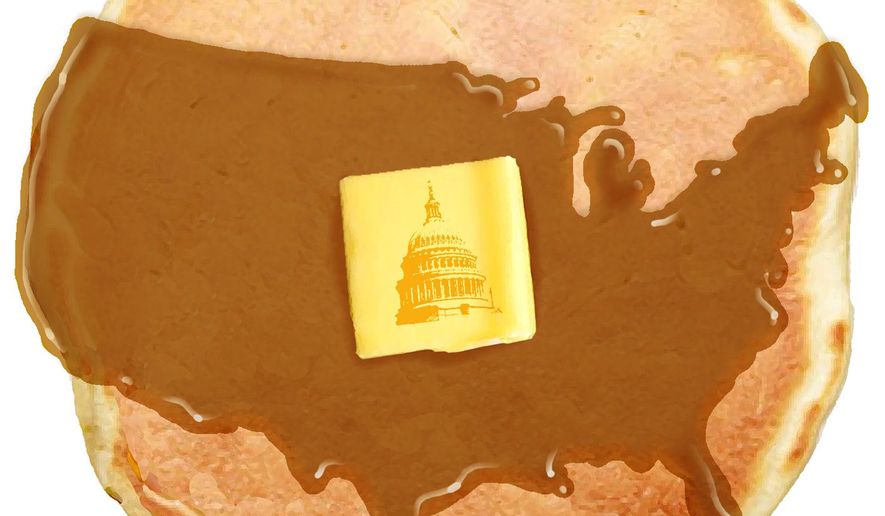
All this would not be so bad except that the element of perspective — the passing of months and years — is not provided the reporter so much as it is the historian. Case in point: During the Great Society days of the 1960s, reporters were quick to nod agreement to the conclusions of Washington officials who ventured to Appalachia for analysis of social ills. Specifically, these officials were appalled to find Appalachian folk eating pancakes for dinner. Ergo, these residents were ill-nourished and in dire need of federal support programs. One small step for Appalachia’s entry into middle-class America, one giant leap for Washington’s status as a reservoir of social wisdom.
On reflection, however, such conclusions illustrate the standards and expectations of reformers more than they reflect sound nutritionary advice, Put another way, one gets the feeling that the nation’s capital has had a bad case of social myopia and that Americans are missing the really important events of history.
About 125 years ago when Chester A. Arthur was president, John Bach McMaster wrote his “History of the American People” as an antidote to those who wished to make a mountain out of the political molehills of Washington.
“The subject of my narrative,” McMaster wrote, “Is the history of the people of the United States of America … . In the course of this narrative much, indeed, must be written of war … of presidents, of congresses … . Yet the history of the people shall be the chief theme. At every stage of the splendid progress … it shall be my purpose to describe the dress, the occupations … to recount the manifold improvements … now the admiration of the world, and our just pride and boast.”
All this is by way of saying that we need to put events into perspective — to know a great deal more about the people of the nation and a lot less about its political leaders holding sway in the nation’s capital. And I suspect that the data uncovered would suggest, as it did for McMaster, that the citizenry is much more significant and interesting in its accomplishments, demeanor and priorities than Washington’s officialdom. Especially those VIPs who make up the city’s social circuit where, I’m told, political chitchat is centered around a late-night feast of a whole lot of little pancakes.
• Thomas V. DiBacco is professor emeritus of American University.

Please read our comment policy before commenting.