



OPINION:
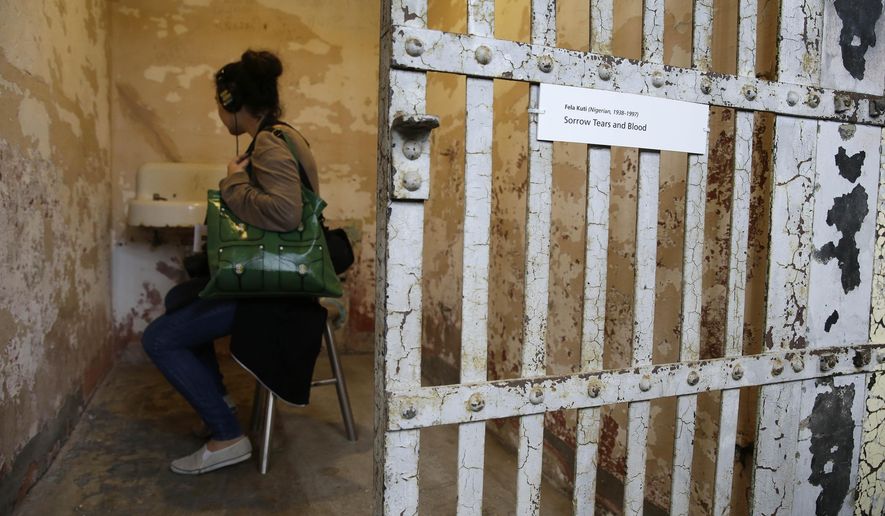
My wife and I visited our daughter and her Air Force pilot husband in California recently, and we spent a day at the famous former federal prison on Alcatraz Island.
Located in San Francisco Bay, Alcatraz once held some of the most notorious criminals in American history. The Justice Department took over Alcatraz in 1934 as it wanted a prison that would house criminals too dangerous and disruptive to be kept at other prisons.
Foremost among the notorious prisoners was mobster Al Capone, who was transferred here when it was discovered that he was running his Chicago criminal organization from the penitentiary in Atlanta. His mob leadership role ended abruptly when Capone entered his Alcatraz cell.
According to John Kobler, author of “Capone,” Al Capone, the country’s most famous gangster at the time said, “It looks like Alcatraz has got me licked.”
Other notorious criminals held at Alcatraz were gangsters, Alvin “Creepy Karpis” Karpowicz, whom the FBI in the 1930s called “Public Enemy No. 1,” and George “Machine Gun” Kelly. Robert Stroud, a convicted murderer known as the “Birdman of Alcatraz,” was also a prisoner on “the Rock.”
The prison closed in 1963 and since then millions of tourists have visited the island.
Two of these tourists, a middle-age white couple, stood in front of me at one point and stated loudly for all to hear that the conditions at Alcatraz were inhumane. They also said that today’s prisons were still terrible and bemoaned the “mass incarceration” of black people. They went on to praise President Obama for his attempt at prison reform.
Tempted to refute their assertions, as there is no “mass” in American incarceration — criminals commit crimes individually, they are arrested and convicted individually, and they are sentenced individually — it was prudent to just let it pass. And a thought occurred: Why does the left seem to sympathize more with criminals than with crime victims?
President Obama, who granted clemency to more federal criminals than any recent president, visited the El Reno medium-security federal prison in Oklahoma in 2015. He spoke to six selected inmates imprisoned on drug charges.
Mr. Obama spoke afterwards of prisoners who made mistakes that were no different from the mistakes he and most others made in their youth. They were in prison, he said, simply because they were not given a second chance and didn’t have the resources to avoid prison.
“A primary driver of this mass incarceration phenomenon is our drug laws — our mandatory minimum sentencing around drug laws,” Mr. Obama said.
Heather Mac Donald, the author of “The War On Cops: How the New Attack On Law and Order Makes Everyone Less Safe,” did not agree.
“This conceit was preposterous. It takes a lot more than marijuana or cocaine use to end up in federal prison. But the truth didn’t matter,” Ms. Mac Donald wrote in the City Journal.
“Obama’s prison tour came in the midst of the biggest delegitimation of law enforcement in recent memory. Activists, politicians, and the media have spent the last year broadcasting a daily message that the criminal-justice system is biased against blacks and insanely draconian. The immediate trigger for that movement, known as Black Lives Matter, has been a series of highly publicized deaths of black males at the hands of the police. But the movement also builds on a long-standing discourse from the academic Left about ’mass incarceration,’ policing, and race.”
Ms. Mac Donald noted that less than 1 percent of sentenced drug offenders in federal court in 2014 were convicted for simple drug possession, according to the U.S. Sentencing Commission, and most of those convictions were plea-bargained down from trafficking charges.
I spoke to Heather Mac Donald a while back and she disputed the idea of mass incarceration.
“Everybody in prison was put there one at a time with due process of law,” Ms. Mac Donald said.
She said that mass incarceration is an idea meant to get at the notion that the U.S. is conducting a racist drug war and the disproportionate number of blacks in prison is due to racism rather than criminal offending.
“This is just not the case,” Ms. Mac Donald told me. “Every criminologist has tried to prove that and come up short. If we moved all drug prisoners from the nations’ prisons the percentage of the black population in prisons would drop from 37.6 percent to 37.4 percent, so drug enforcement has virtually no effect on racial disparities in prison, which are due to vastly elevated rates of violent and property crime.”
I should have told that misguided couple in front of me at Alcatraz that the prisoners here were murderers and violent criminals who deserve little sympathy. One should reserve one’s sympathy for their victims.
• Paul Davis is a writer who covers crime, espionage and terrorism.

Please read our comment policy before commenting.