



OPINION:
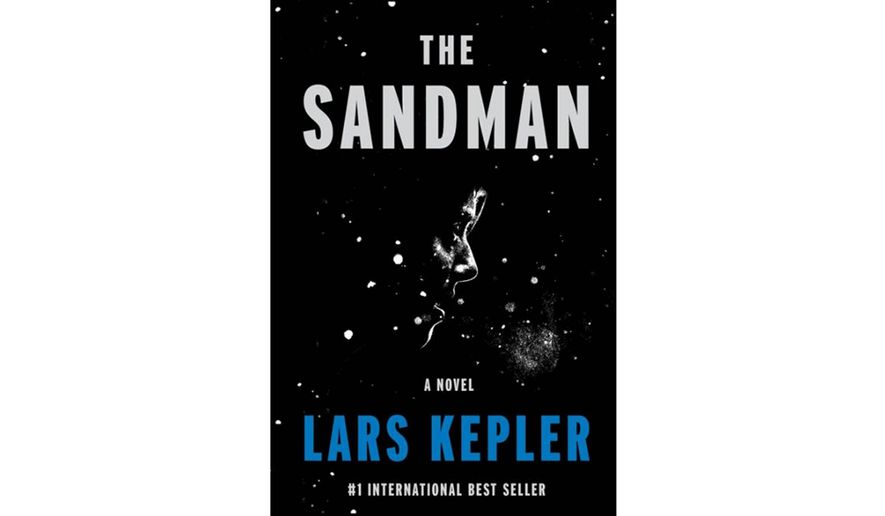
THE SANDMAN
By Lars Kepler
Translated from Swedish by Neil Smith
People were interested in these podcasts
Knopf, $27.95, 464 pages
“The Sandman” is packed with isolated prisoners — though they are not usually in a prison. One woman is buried alive for years in a coffin fitted with an airpipe so she can breathe. Others are stuffed in plastic barrels, also with airpipes that make their captivity a long-term affair. Two half-starved children are locked in an air raid shelter that’s so dark they can see nothing.
Jurek Walter, who arranged these incarcerations, is himself locked in the secure criminal psychology unit of a Stockholm hospital, where he is watched day and night. He is so persuasive that the staff wear earplugs so they can’t hear him, and so dangerous that he is never allowed out of his cell.
Even characters who are not actually buried or locked up, are often trapped. Policewoman Saga Bauer accepts an undercover assignment to Walter’s ward that exposes her not only to the unit’s extreme restrictions but also to the sexual depredations of a doctor empowered by syringes of potent drugs.
Saga’s mission is to discover the whereabouts of Felicia Kohler-Frost, one of the children in the air-raid shelter. She and her brother Mikael were kidnapped 13 years earlier. Now, emaciated and feverish, Mikael has reappeared walking across a railway bridge. He is unable to reveal anything about their jailer or their unlit jail except that Felicia remains there alone. Like him, she is probably sick.
Policeman Joona Linna is more than eager to find Felicia. It was he who had discovered Jurek Walter shoving the woman back into the coffin where he had stashed her, and he has always thought that Walter must have had a helper. Since it’s impossible that the sick and starving Mikael could have escaped unaided, his reappearance must have been engineered by Walter working through someone else. Finding Felicia depends on identifying that accomplice. Joona has a personal motive for doing so.
When Joona and his partner Samuel captured Walter, he threatened their families. Soon Samuel’s wife and children disappeared, and as Walter had predicted, Samuel committed suicide. Joona, fearing for his own wife and daughter, staged their deaths and has since had to live without them.
Lars Kepler, the author of “The Sandman,” is the pseudonym of the Swedish couple Alexandra Coelho Ahndoril and Alexander Ahndoril. Writing both separately and together in a characteristic plain prose that focuses all attention on the action, they have produced numerous successful and widely translated thrillers. The skill and deftness of their pacing of “The Sandman” is not, therefore, surprising. Nor is their control of the twists and turns of the plot and its large cast of characters.
What is more surprising is why Scandi Noir, the gothic genre in which the Andhorils are experts, appeals to so many readers. Cruel tortures and horrible deaths are its stock in trade. So are bleak, alarming settings such as wintry forests, the windswept railway bridge that Mikael must cross, and the ice-filled harbor that Joona hurls himself into, hoping to rescue his partner from a container being hauled onto a ship. He fails. Not for the Scandinavians the all-conquering detectives of American thrillers or the charming chintzy settings of English whodunnits.
What seems to be at work is readers’ fascination with the loss of agency. Even characters who are not physically imprisoned, are locked in situations that rob them of power. The doctor’s wife is tied to the bed. Mikael’s father is trapped in an alcoholic haze. Saga is ridden with memories of her mother’s death. They suggest intransigent problems such as sexual predation, seemingly motiveless murder and anxiety about immigrants such as Jurek Walter.
Mikael calls him “the sandman” because the only clue he has about his captor is that he smelled of sand. Mikael had grown up with tales of the sandman who throws sand into children’s eyes so they can go to sleep. (Now there’s loss of agency for you.)
But European folklore has another, darker version of the sandman story, which features a sandman who can steal children’s eyes. There’s also the bad-guy Sandman of Marvel comics, a shape shifter who can turn himself into sand. Of its nature sand is almost ungraspable, and hard to keep hold of. Perhaps the secret of Scandi Noir is that it taps into the lurking evils that seem beyond our control — violence, rape, unbridled revenge. Good, though often troubled, police agents such as Joona and Saga pit themselves against perpetrators such as Jurek Walter.
Their success hints that the world can be made safe. Yet their almost superhuman strength and expertise warns that lack of power is a human lot — and that’s an alarming idea can engage readers’ worst imaginations.
• Claire Hopley is a writer and editor in Amherst, Mass.

Please read our comment policy before commenting.