


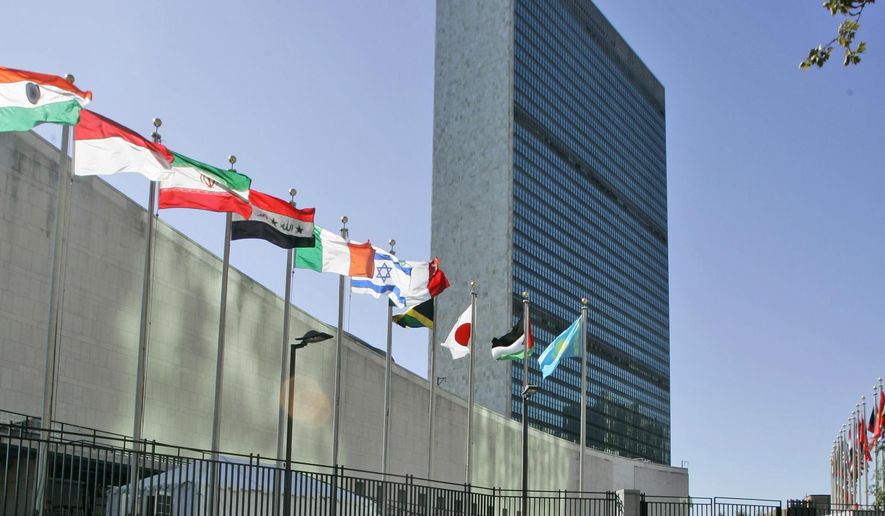

The Kremlin threatened retaliation Tuesday after several members of Russia’s delegation to the United Nations General Assembly were reportedly denied visas to enter the U.S.
“This is a direct violation of Washington’s international obligations,” said Dmitry Peskov, press secretary for Russian President Vladimir Putin, state media reported.
“This certainly requires a rather tough reaction from Moscow … and from the U.N.,” Mr. Peskov said, Russian government-run outlets reported.
People were interested in these podcasts
Russia media reported Tuesday that 10 members of the country’s delegation to the U.N. General Assembly were denied visas by the U.S., effectively preventing them from traveling this week to the international organization’s headquarters in New York.
“This is an outrageous example of disrespect by the United States of America for UN members, as well as failure to fulfill its obligations as a country hosting the world organization,” Russian Ministry of Foreign Affairs spokeswoman Maria Zakharova said in a Facebook post.
Russian Foreign Minister Sergei Lavrov would likely discuss the issue with U.S. Secretary of State Mike Pompeo in New York, Ms. Zakharova added.
A spokesperson for Department of State told The Washington Times that visa records are confidential under U.S. law and that the agency is thus unable to discuss individual cases.
“We evaluate each visa application on a case-by-case basis, consistent with existing laws and obligations,” said the State Department spokesperson.
Reports of the U.S. denying visas to the delegation emerged nearly a month since two American lawmakers critical of Mr. Putin’s policies — Sens. Ron Johnson, Wisconsin Republican, and Chris Murphy, Connecticut Democrat — similarly complained about being unable to participate in a recent trip to Russia organized by members of Congress.
Ms. Zakharova subsequently told reporters that both senators were barred from entering Russia because their name appears on a blacklist established in response to similar travel sanctions imposed by the U.S.

Please read our comment policy before commenting.