



OPINION:
President Trump rightly compares the current pandemic to war, even though most Americans have experienced neither extremity. I have survived both, beginning almost 70 years ago when polio stalked the kindergartens of Boston and other cities, disproportionately singling out the young.
Like the coronavirus, polio was a killer but also a crippler, its paralyzed victims fighting for every breath. I was one of them but was improbably spared, spending my life and subsequent career as a professional soldier studying the art of war. Its disciplines taught me the theories and practice of grand strategy, from Harvard to the West Point faculty, Pentagon assignments and the National War College.
Because wars and pandemics are ultimate survival tests, their surprising similarities are already apparent. Both demand a peculiar intensity of leadership, rigorously applying high-quality data to see problems clearly and to commit the total resources of an embattled nation. Sometimes those odds can be staggering, as in World War II when the Greatest Generation faced the stark alternatives of victory or death. Not since then have we seen today’s reality: determined, dug-in leadership and the coast-to-coast mobilization of the nation’s power.
People were interested in these podcasts
The contrast with recent events is simply remarkable. Was the State of the Union Address only two months ago, a display of partisan rivalry suggesting nothing so much as the onset of civil war? How did that gratuitous rancor yield to a two trillion-dollar aid package passed with virtual unanimity? Were these different people — or merely the same ones now facing the grim prospect of recession or even their own mortality?
Naturally the nation’s press corps continues its agenda-driven coverage. Yet, the inevitable reports of soaring infections and mounting death tolls are accompanied by the stunning heroism of the nation’s doctors, nurses and health care professionals. Suddenly, public-private partnerships and federal-state compacts are proliferating.
Sacred federal procurement and medical regulations that once blocked all progress are instantly suspended in the race for the cure. Daily White House briefings highlight those developments while underlining the impressive talents of the joint task force now leading the charge. All of this is essential medicine for a badly shaken nation whose best instincts have long been suppressed — as if we were all witless college students on an endless spring break.
How ironic that a virus of Chinese origin suggests the timeless strategic wisdom of Sun Tzu, who taught that knowing one’s self, as well as one’s enemy, were the keys to winning every battle. For a commander facing a relentless enemy, a business forced to re-invent itself or a nation facing a pandemic, that clarity begins with self-examination. Who are you, what are you and who stands with you? Which brings me back to that long-ago polio epidemic and those basic lessons.
In 1952, I had just turned 5 when persistent pains began affecting my legs, pains that rapidly grew worse. In that distant era before the Salk vaccine, 52,000 cases of polio swept through Boston, where the dread word “epidemic” was whispered.
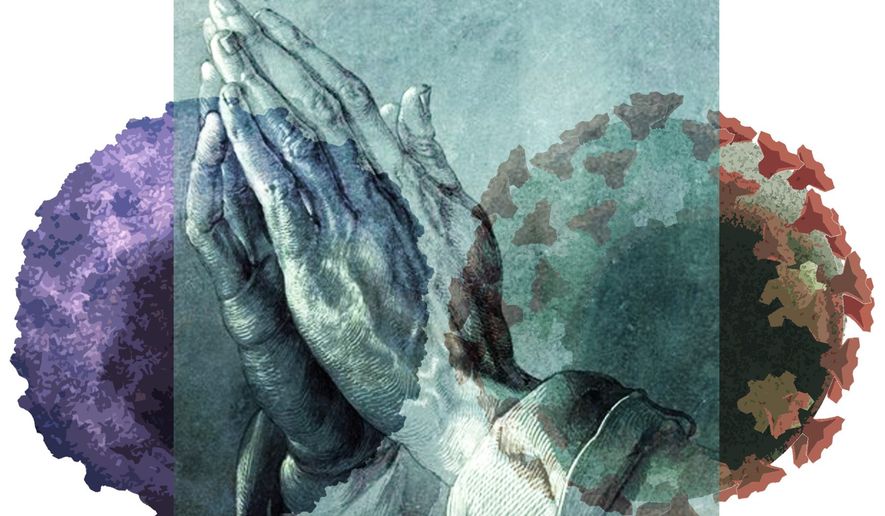
At Children’s Hospital, my memories of crying kids in wheelchairs or iron lungs are still frozen in high definition; so too the painful stab of a spinal tap and the relentless agonies of the disease attacking my body. That night as I screamed in pain, my father — a humble store-front preacher — dropped to his knees, praying beside my bed and calling out to God for deliverance. I remember vividly how, as my cries grew louder, his prayers did too.
I saw neither a bright light nor angels hovering above my bed. But what happened next was a lot better to a small boy of 5. The pain in my legs was suddenly cut off, interrupted just as smoothly and completely as if someone had thrown a switch. My tearful and overwhelmed parents were as shocked as the doctors the next day. No one could explain either my sudden healing or the continued suffering of those other kids.
So now you know what I learned all those years ago: That there is a God who intervenes in human events as He chooses — or chooses not to. Feel free to doubt, disbelieve or explain it away because that is your privilege as a human being with free will. But at least consider this advice from an old soldier: When you are fighting any kind of war — military, medical, financial or spiritual — there is no better place to begin than on your knees.
• Ken Allard is a retired U.S. Army colonel and former NBC News military analyst now living in San Antonio, Texas.

Please read our comment policy before commenting.