


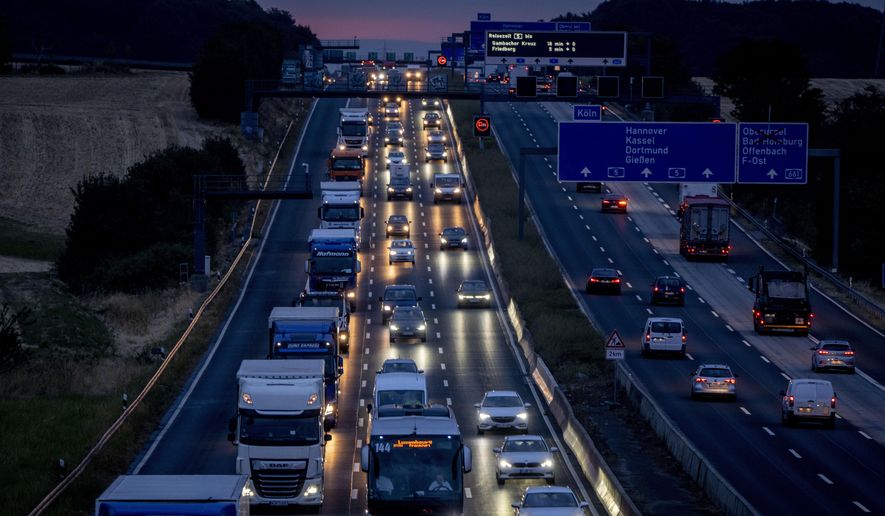

The Environmental Protection Agency ordered new emissions standards Tuesday for heavy-duty trucks starting with the 2027 model year.
The new standards, the first new rules for that vehicle category in more than 20 years, are more than 80% stricter than previous rules.
The standards limit nitrogen oxide emissions from new heavy trucks to 35 milligrams per horsepower hour, from the current 200 milligrams.
People were interested in these podcasts
Any vehicle that weighs at least 26,001 pounds is considered heavy-duty. The emissions standards aim to reduce nitrogen oxide pollution, smog and soot.
“EPA is taking significant action to protect public health, especially the health of 72 million people living near truck freight routes in America … This is just the first action under EPA’s Clean Trucks Plan to pave the way toward a zero-emission future,” EPA Administrator Michael Regan said in an agency statement.
Now manufacturers, such as the Mack imprint of the Volvo group of truck companies, will figure out how to meet the new EPA standards.
“It’s clear that the new standard is very challenging. Beyond that, the rule is extremely complex, so we need time to examine it and understand what it means for our customers, our dealers and our employees,” Mack spokesperson John Mies told CNN in an email.
Truck and Engine Manufacturers Association President Jed Mandel also struck a cautious note.
“Ultimately, the success or failure of this rule hinges on the willingness and ability of trucking fleets to invest in purchasing the new technology to replace their older, higher-emitting vehicles,” he said, according to CNBC.
By 2045, the EPA claims, the new rules should provide the following annual benefits:
- Up to 2,900 fewer premature deaths.
- 6,700 fewer hospital admissions and emergency department visits.
- 18,000 fewer cases of childhood asthma.
- 3.1 million fewer cases of asthma symptoms and allergic rhinitis symptoms.
- 78,000 fewer lost days of work.
- 1.1 million fewer lost school days for children.
- $29 billion in annual net benefits.
By 2045, the nitrogen oxide output of heavy-duty trucks will be down 48%, with carbon monoxide output down by 18% and particulate matter down 8%, according to the Detroit News.
“This rule will result in widespread air quality improvements across the U.S., especially in communities near major roadways that are overburdened by air pollution,” Mr. Regan told the Detroit News.
The new rules, according to the EPA, will lengthen the lifespan of affected vehicles by 1.5-2.5 times and will allow for emissions warranties 2.8 to 4.5 times longer.
Some environmentalists, however, are unimpressed, urging an ever-faster switch to emissions-free vehicles and pointing out that California already has standards stronger than the new regulations implemented in 2027.
“These standards fall short, and the agency missed a critical opportunity to slash soot and smog and accelerate the shift to the cleanest vehicles,” Britt Carmon of the Natural Resources Defense Council told CNN.
Other environmentalists, however, still see the new standards for heavy trucks as a victory.
“The plan announced today includes long-awaited final emissions standards for nitrogen oxides pollution that will significantly reduce this deadly pollutant and ultimately save thousands of lives,” Environmental Defense Fund general counsel Vickie Patton told the Detroit News.

Please read our comment policy before commenting.