



OPINION:
Last month, a college student interested in a career in public service asked me to share the greatest lesson I learned during my early days as a CIA trainee. That’s easy, I replied. Humility.
It all started during our early days of training, when my cohort and I were trained in CIA special operations, about which I and most of my new colleagues knew absolutely nothing.
I had never strapped on a rucksack, rappelled from buildings, trained in trauma first aid, shot an assault rifle or navigated under cover of darkness through swamps and deep forest with only a compass.
People were interested in these podcasts
I’ll never forget a helicopter lifting me hundreds of feet above ground in a stabilized body (STABO) extraction harness, which the U.S. military had notably deployed in Vietnam to rescue soldiers from behind enemy lines.
Zero-based learning from dedicated CIA instructors developed our self-awareness, imbued us with the confidence to learn from our mistakes and made us comfortable relying on our teammates
I’ll always fondly remember one trainee in our squad, whom our instructors liked to call Young Buck. He was a science whiz with a knack for taking apart any weapon and reassembling it after cleaning.
Another trainee, a proficient hunter, was our point man, navigating ahead of our group and scouting the best routes to avoid detection.
Immersing ourselves in the art of recruiting spies and stealing secrets, my training cohort learned how to spot individuals with access to protected information and develop trusting relationships with them.
This required that we become virtuosos at absorbing information from a wide array of sources. We were taught relentlessly to challenge our existing assumptions.
Demonstrating an appropriate level of humility meant never being too rigid to admit when we got something wrong so that we could swivel in the right direction, wherever the evidence took us. A bright shining example of this was British Prime Minister Winston Churchill, who once remarked, “In the course of my life, I have often had to eat my words, and I must confess that I have always found it a wholesome diet.”
We were instilled with an ethos of selfless service where the only priority was mission success.
That’s the essence of the CIA, reflected in the biblical inscription at CIA Headquarters, “And Ye Shall Know the Truth and the Truth Shall Make You Free” (John 8:32). It defines the agency’s sacred mission of collecting intelligence (HUMINT), producing objective all-source analysis and conducting covert action at the president’s direction.
The CIA’s responsibility is not to persuade but to inform the president and his national security team using the most sophisticated analysis and drawing on exquisite intelligence collection and historical context absent any predisposed bias. It’s up to the president to incorporate CIA intelligence into his decision-making.
Today, we are at an inflection point in the war against Iran. Behind-the-scenes CIA briefings for the president are rightly secret, but expect Senate and House Intelligence Oversight Committees to be drilling down on whether the CIA participated in any wargaming exercises prior to U.S. military strikes.
But of even greater importance than the analytical judgments is the level of confidence the CIA attached to them. How confident was the CIA that military strikes were our best option to induce Iran to negotiate in good faith? What was the likelihood of a popular uprising and regime change?
What about the possibility that Iran might respond by militarizing the Strait of Hormuz and, along with its proxy terrorists, attack our Gulf State partners and U.S. bases in the region?
Going forward, the CIA is on the hook to assess with the highest level of confidence Iran’s future plans and intentions. Will Iran embark on a nuclear breakout while seeking to reconstitute its ballistic missile inventory? Will the Islamic Revolutionary Guard Corps assist Hezbollah in developing a fleet of surveillance and attack drones designed to take advantage of Israel’s lack of strategic depth?
And will Iran double down on intelligence, military and economic collaboration with its fellow axis of dictatorship allies Russia, China and North Korea?
CIA economic analysts will be assessing whether the U.S. or Iran has the upper hand in what has become an economic war of attrition.
The analytical process is dynamic. While challenging the validity of past analytical judgments, new information from well-placed human sources should inform analysis in real time so that the president can more effectively weigh a range of kinetic and non-kinetic policy options to achieve mission success.
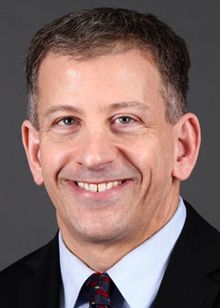
• Daniel N. Hoffman is a retired clandestine services officer and former chief of station with the Central Intelligence Agency. His combined 30 years of government service included high-level overseas and domestic positions at the CIA. He has been a Fox News contributor since May 2018. He can be reached at danielhoffman@yahoo.com. All statements of fact, opinion or analysis expressed are those of the author and do not reflect the official positions or endorsement of the CIA or any other U.S. government agency.
Follow the author

Please read our comment policy before commenting.