



OPINION:
The best you can say about the Biden administration’s economic agenda is that there is one. The president’s initiatives, ambitious though they may be, have produced bitter fruit, including a looming debt crisis and the kind of inflation no American consumer has experienced for two generations.
In fairness, the economy has never been his major concern. Over the decades he spent in the Senate and the eight years he spent as vice president, his principal interest was foreign policy. The knowledge he gained and the global contacts he established in the course of those 50 years were supposed to be an invaluable boost to U.S. interests.
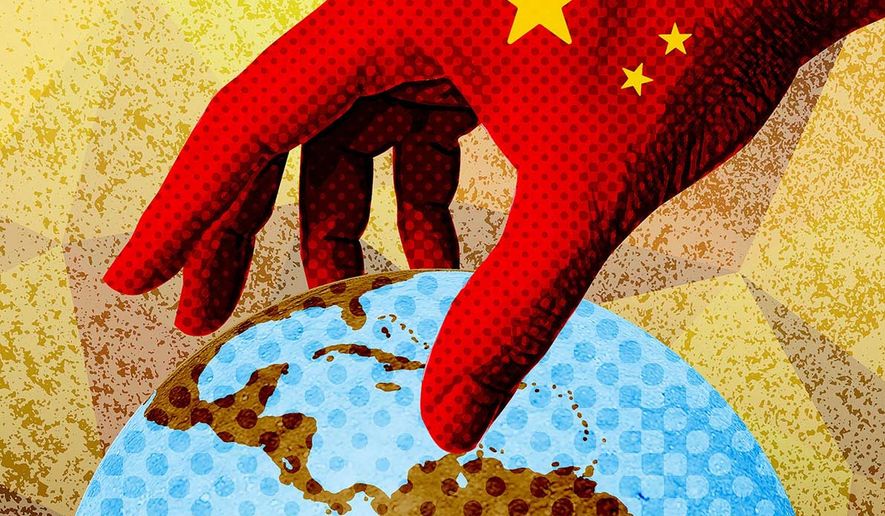
We’re still waiting for all that to pay off. There’s no new nuclear deal with Iran, and the world’s industrial nations have not come together on a plan to reduce carbon emissions and the threat of climate change. Meanwhile, China continues to gain ground everywhere around the world, increasing its military and economic presence right up to our borders.
People were interested in these podcasts
Not enough people are paying attention to what’s happening in Latin America, though. China is building important relationships with our neighbors to the south even as tens of thousands of the people who live there are reportedly headed toward Mexico’s northern border intent on crossing into the United States when they reach it.
Mr. Biden has been inconsistent on border policy from the start. Now, at the worst moment possible, America’s influence in the region is fading.
The 2023 Summit of the Americas, which Mr. Biden hosted in Los Angeles, failed. America is easing sanctions against declared enemies such as Venezuelan dictator Nicolas Maduro to get access to its oil reserves and attacking allies like Salvadoran President Nayib Bukele over his war on criminal gangs. The inconsistency sends a message that standing up to Washington might be worth it.
Mr. Biden is also on the wrong side in the Dominican Republic, where President Luis Abinader is employing “preventive detention” methods to keep his knee on the throat of his political opponents. In March, more than a dozen opposition figures were jailed without charge, including his 2020 presidential opponent. Many of them will stay locked up until after the next election.
According to the National Office of Public Defense, a Dominican public legal aid agency, as many as 70% of current detainees are behind bars as a result of Mr. Abinader’s preventive detention tactics. A report the group released in April says that half of them are still serving past the expiration date of their preventive detention order in clear violation of international norms concerning due process.
Even worse, Dominican prisons are reportedly at 164% of capacity, leading to what the group’s director, Rodolfo Valentin Santos, called “cruel, inhuman, degrading treatment and lack of access to medical care.”
Instead of applying pressure, the Biden administration has designated the Dominican Republic as “a bright spot for democracy” — a designation Mr. Abinader exploits for propaganda purposes that mock the administration’s commitment to human rights.
Mr. Abinader is seeking another term — which he doesn’t deserve — next year while the Chinese strengthen their foothold in the country.
Failed U.S. policies in the region have left Washington to watch from the sidelines as China has systematically persuaded countries in Latin America – including Guyana, Honduras and Panama, as well as the Dominican Republic — to break off relations with Taiwan in favor of a hug and financial assistance from Beijing.
In 2021, Adm. Craig S. Faller, who leads the U.S. Southern Command, warned, “We are losing our positional advantage in this Hemisphere, and immediate action is needed to reverse this trend.”
In the absence of U.S. leadership, China is filling the void.
Make no mistake: Preventive detention is a favorite tool of dictators and wannabes who fear the people will toss them out of power if given a chance. In that respect, there is little difference between China and the Dominican Republic. The leaders of both countries are afraid that real democracy will render them expendable.
The United States used to stand up to such bullies instead of bowing to them. Now, Washington’s lack of credibility and failure to consistently apply leverage and influence, even in countries still largely economically dependent on the U.S., has opened the door for China to plant its flag firmly throughout the hemisphere. The consequences in terms of instability and insecurity will continue to mount until a change in policy and vision is made.
• Peter Roff is a fellow at several Washington-based public policy organizations and is a former writer and columnist for U.S. News & World Report and United Press International. He can be reached by email at RoffColumns@gmail.com. Follow him on Twitter and TruthSocial @TheRoffDraft.

Please read our comment policy before commenting.