



OPINION:
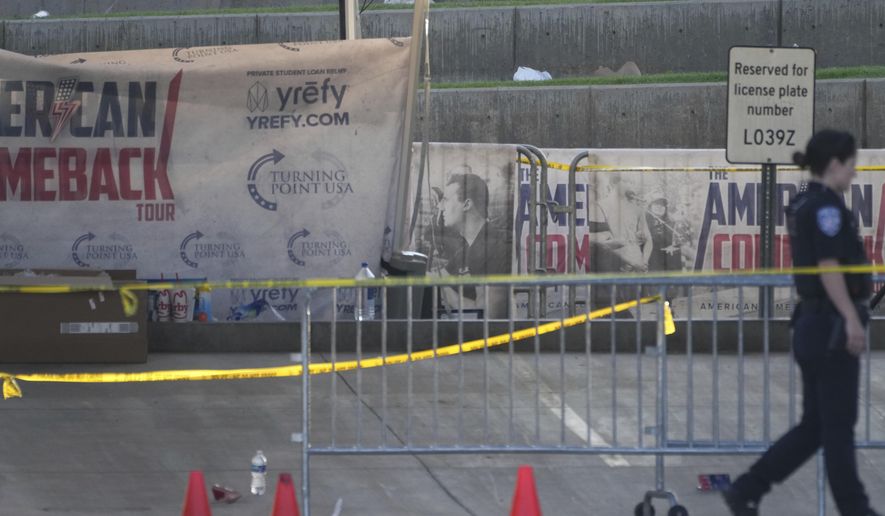
Before a gunman assassinated conservative activist Charlie Kirk on a college campus in Utah, it was already clear that threats and acts of politically motivated aggression were increasing.
In Minnesota, an attacker shot two lawmakers and their spouses, killing state Rep. Melissa Hortman and her husband and wounding state Sen. John Hoffman and his wife, Yvette Hoffman. Last winter, on the streets of Manhattan, UnitedHealthcare CEO Brian Thompson was gunned down by Luigi Mangione. Each of these moments shattered families and communities and served as a stark reminder that political violence doesn’t just silence voices; it also destroys lives.
The recent rise in political violence is not random. It reflects a dangerous shift in the way we engage with politics, and it has been escalating for years. More and more, Americans are being targeted for having the “wrong” opinion or supporting the “wrong” cause. In this environment, even a campaign donation or a vote on a bill can put a target on someone’s back.
People were interested in these podcasts
This is ultimately a dehumanization problem. In civil society, we don’t reduce people to party labels or treat them as mortal enemies because of differing political beliefs. Yet that’s where we seem to be as a country at the moment. Elected officials and their campaign donors, nonprofit leaders and employees, along with donors to groups that take stands on political issues, are especially vulnerable to harassment and violence. The reason? Their personal information is far too easy to find online.
In many states, public records expose the home addresses of lawmakers and their families. Additionally, donor disclosure laws allow activists and political operatives to access and weaponize personal data against private citizens. What started as a “transparency” initiative 50 years ago, when campaign finance laws were first introduced in the post-Watergate era, long before the internet made that information so easy to find, now often ends in doxing, protests outside homes, threats at workplaces and online campaigns designed to destroy reputations or livelihoods.
This is not hypothetical. It’s happening. It’s also forcing good people — public servants, community leaders, everyday citizens — to think twice before getting involved. When speaking out, donating or even voting puts your family at risk, fewer people will participate. That shrinks our public square, leaving it to the loudest and most extreme voices.
Some wrongly assume only high-profile figures are vulnerable because those are the attacks that tend to make national headlines, but extremists specifically target them first to send a chilling message. When those attacks fail to silence others, they move down the chain. We are already seeing this devolution: Assassinations that were once associated with presidents and world leaders now target corporate executives, state legislators and citizen activists.
We cannot let this trend continue, or else ordinary Americans could become the next targets. Donor lists make it all too easy for violent actors to find them.
Legislators can take steps right now to begin addressing this problem. States should enact laws that remove elected officials’ home addresses and sensitive information from public records. They should also modernize campaign finance rules to ensure that only donors above a reasonable threshold are disclosed while shielding personal details such as home addresses.
Furthermore, lawmakers must take steps to protect small-dollar givers and contributors to nonprofit organizations who are not seeking power but simply want to support causes they believe in without fear.
When people worry that speaking out could put them in danger, it creates a society with narrower discourse, shaped not by the diversity of public opinion but rather by those with the resources to stay protected or the fanaticism to ignore the risks. If nothing changes in the face of recent tragedy, this trend will continue to erode trust and participation in the political process. Ultimately, it will lead to a system where only the boldest, or the most indifferent to consequences, feel empowered to speak out.
Protecting the safety and freedom of all Americans who exercise their First Amendment rights, publicly or privately, is essential to preserving civil society. We shouldn’t wait for the next act of political violence before we finally do what common sense demands. Every American, whether they hold office or quietly support a cause, deserves the freedom to engage in civic life without fearing for their personal safety.
• Heather Lauer is the CEO of People United for Privacy Foundation, a nonprofit that defends the First Amendment rights of all Americans, regardless of their beliefs, to come together in support of their shared values.

Please read our comment policy before commenting.