


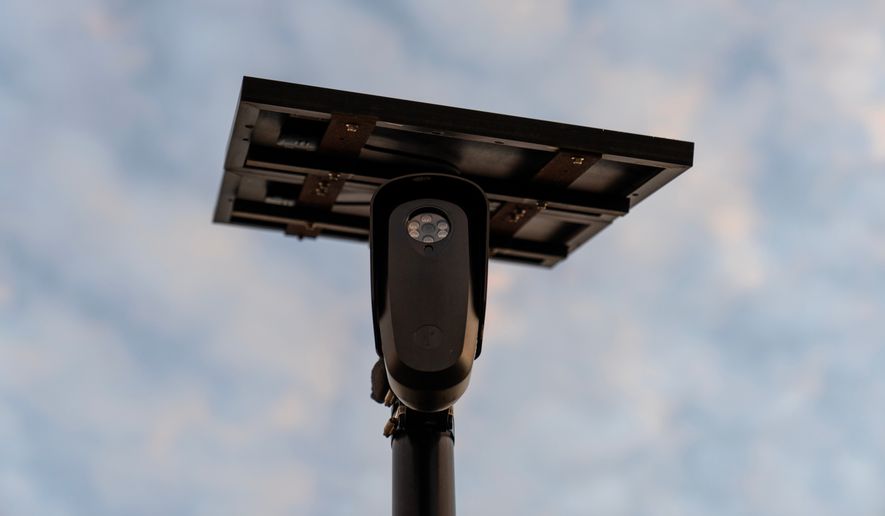

A South Carolina police officer was fired last month after investigators found she had used her department’s Flock license-plate camera system 166 times over five months to track a former romantic partner’s vehicle, according to separation records reviewed by the Post and Courier.
Ellie Anna Hammond, 24, was terminated from the Mauldin Police Department on Aug. 3. Between March and July, Ms. Hammond allegedly logged each search as a warrant check, traffic stop or welfare check — justifications that documents from the South Carolina Criminal Justice Academy show were untrue. She has not been criminally charged, and a department spokesperson called it a personnel matter.
Ms. Hammond is the fifth Greenville County-area law enforcement employee fired this summer over Flock misuse, following two employees of the Greenville County Sheriff’s Office and two Greer Police Department officers, Cpl. Kareem Lynch and Officer Sebastian Echeverry, fired June 26 and June 29. Nationally, the Institute for Justice’s tracker currently lists 40 cases of officers allegedly using the cameras to monitor romantic interests — a running count the group updates as new incidents surface.
People were interested in these podcasts
The case adds to a summer of turmoil for Flock Safety, the Atlanta-based company whose automated license-plate readers are now used by thousands of police departments. In Georgia, three former Bibb County sheriff’s deputies were arrested Aug. 10 after an internal audit found they had each used the system to track someone with whom they had a personal relationship. “There is a line that you do not cross,” Sheriff David Davis said of the case.
The cameras have also drawn a backlash beyond misuse cases. All eight Flock cameras in Winona, Minnesota, were stolen in late July after someone cut the poles down at the base, and the department announced this month it will not reinstall them, saying the technology has “contributed to growing concerns about trust in policing.” In Ashland County, Ohio, seven cameras were vandalized in a 48-hour span in late July, with some struck by vehicles and others by what investigators believe was a bat or club.
Flock’s cameras use artificial intelligence to photograph passing vehicles and log a car’s make, model, color and location in a searchable law enforcement database, according to a description from the Wayzata, Minnesota, police department, whose policy requires officers to log a justification for each search. Privacy advocates argue that safeguard is easy to falsify, as the Mauldin case shows.
Two websites let the public examine the system’s footprint. DeFlock crowdsources a nationwide map of camera locations, while Have I Been Flocked? compiles public audits so users can check whether their local police department has searched their plate.
This article was constructed with the assistance of artificial intelligence and published by a member of The Washington Times' AI News Desk team. The contents of this report are based solely on The Washington Times' original reporting, wire services, and/or other sources cited within the report. For more information, please read our AI policy or contact Steve Fink, Director of Artificial Intelligence, at sfink@washingtontimes.com
The Washington Times AI Ethics Newsroom Committee can be reached at aispotlight@washingtontimes.com.

Please read our comment policy before commenting.