



President Trump’s decade-long project to end deportation amnesties for a large swath of countries has finally come to fruition, after battling from district courts up to the Supreme Court and back down again.
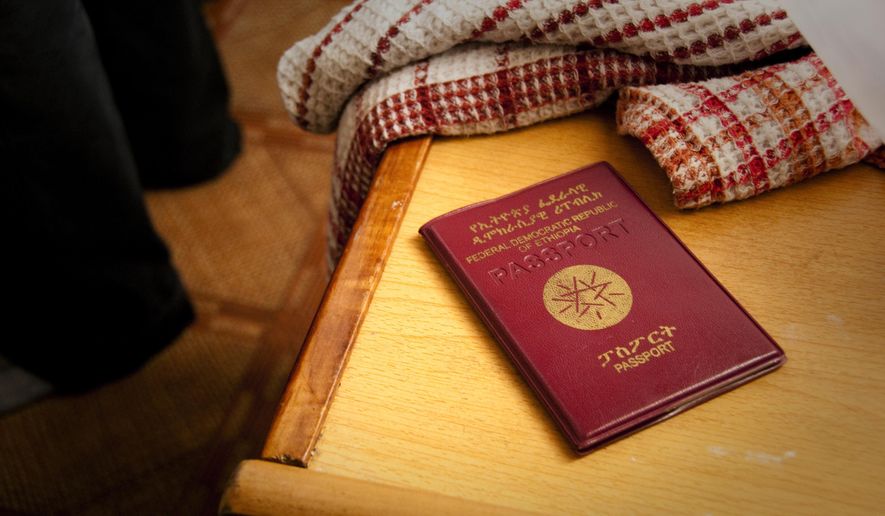
Judge Brian Murphy, a Biden appointee who had been the last holdout, issued an order Tuesday ending his blockade and allowing the Department of Homeland Security to cancel Temporary Protected Status for Ethiopians.
They now join a dozen other nations, including Afghanistan, Haiti, Nepal and Nicaragua, that have seen their TPS programs lapse, a month and a half after the Supreme Court gave the go-ahead.
People were interested in these podcasts
The result is that roughly 1 million migrants who had deportation amnesty are no longer protected.
DHS celebrated with a warning: “Those with terminated TPS should leave NOW. If they don’t, we will DEPORT them.”
TPS grants a stay of deportation and some other benefits, such as the right to compete for jobs and obtain driver’s licenses.
It’s supposed to be granted to citizens of countries that face war, pandemic, instability or natural disasters. It gives the countries breathing space to recover without having to face an influx of people and gives those people a short-term safe haven.
The Biden administration set records for granting TPS, adding 1 million people to the enrollments.
Mr. Trump tried to end some TPS grants in his first term but was blocked by the courts. He tried again starting last year and again met with near-universal resistance from lower federal judges, who accused the president of racist motives in rolling back TPS.
But the Supreme Court, in a 6-3 ruling in late June, said those lower courts largely lacked authority to police decisions about TPS. The one area where judges could intervene was on major constitutional rights questions — but the high court specifically rejected the notion that the Trump team was acting on racist motives.
“None of the cited statements by either the president or [then-Homeland Security Secretary Kristi Noem] was overtly racial, and in substance all expressed policy views that could rest on race-neutral justifications,” Justice Samuel A. Alito Jr. wrote for the majority.
Even after that ruling, lower courts held out, giving TPS advocates a chance to mount last-ditch arguments.
Those were steadily dismissed, leaving just Judge Murphy and his case involving Ethiopians.
In his ruling Tuesday, he said African Communities Together, the lead plaintiff, can continue to press its case that the government violated the Equal Protection Clause. But in the meantime, he lifted his stay of action that had prevented DHS from terminating TPS.
Nils Kinuani, federal policy manager at African Communities Together, said they were disappointed in the ruling and called TPS “a critical lifeline for our Ethiopian community members who cannot safely return home.”
He pointed to ongoing conflict that has displaced millions of people inside the country and sent tens of thousands fleeing outside the nation’s borders.
“These figures underscore the continuing instability and humanitarian crisis on the ground. Ending TPS under these conditions could place thousands of people at serious risk,” he said.
About 4,500 Ethiopians were protected by TPS as of March 2025.
The other TPS designations the administration ended are: Haiti, protecting 330,000 people; Syria, covering 3,900; Yemen, with 1,400; Afghanistan, about 8,100; Cameroon, with nearly 5,000; Nepal, at 7,200; Honduras, with more than 51,000; Nicaragua, with about 3,000; South Sudan, with 210; Myanmar, with about 3,700; Somalia, with 705; and two separate designations of Venezuela totaling about 600,000.
Five nations are still under TPS. The largest of those is El Salvador, which has been covered since earthquakes devastated the country in early 2001.
DHS declined to say whether those no longer covered by TPS will be priorities for arrest.
“DHS does not discuss ongoing or future operations,” the department said in a statement to The Times. “What we would say now is it’s closing time which means you don’t have to go home, but you can’t stay here. The good news is it’s not too late to get a $2,600 check and a free flight home.”
Matthew O’Brien, deputy executive director at the Federation for American Immigration Reform, said TPS had strayed far from how it was intended to be used when Congress created it.
He said it was designed for a situation such as an earthquake that made it tough to return home for a few years. Instead, it became a workaround to the normal immigration system. Some Central Americans have been living in the U.S. under TPS since the turn of the century.
Presidents of both parties routinely renewed the status.
Mr. O’Brien said the administration has now broken that string.
“It’s restored the rule of law to this aspect of immigration law, and for that matter, many other aspects of the law in general,” he said.
He criticized the lower court judges for letting the situation go this far.
“This is a perfect example of judicial overreach,” he said. “Every single one of these decisions made by a judge to halt cancellations of TPS has been a politically motivated decision and an expression of the judge’s policy preference.”
Contact the author


Please read our comment policy before commenting.