


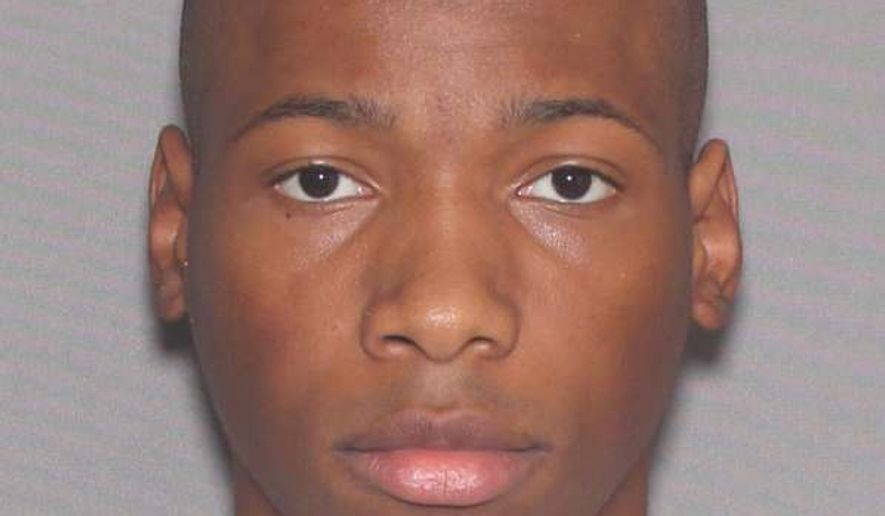

A Texas judge on Saturday denied Karmelo Anthony’s request for a new trial, leaving intact his murder conviction and 35-year prison sentence for the fatal stabbing of Austin Metcalf at a high school track meet.
Retired District Judge Michael Chitty rejected the request after reviewing the defense motion, court record, evidence, legal briefs and arguments presented during two days of testimony in McKinney. His order did not provide a detailed explanation for the decision, according to Fox News Digital.
Anthony’s attorneys had argued that several issues surrounding his trial violated his constitutional rights, including courtroom-access restrictions, proceedings conducted without him present and the handling of an unwritten agreement between prosecutors and his former defense team.
People were interested in these podcasts
Much of the new-trial hearing centered on that informal agreement, sometimes described in court as a “gentleman’s agreement,” under which prosecutors and defense attorneys agreed to keep potentially damaging character evidence involving both teenagers away from the jury and focus the trial on what happened during their confrontation.
Testimony at the hearing revealed more about what the jury did not hear. Prosecutors had evidence involving Anthony’s history with guns and knives, including violent messages recovered from his phone. The defense, meanwhile, had information about Metcalf’s history of fighting, using racial slurs and allegedly bullying Black classmates. Both sides agreed not to introduce such evidence as the case drew intense national attention and racial tensions.
Former lead defense attorney Mike Howard testified that he understood the agreement would still permit Anthony to testify as long as his testimony remained focused on the confrontation at the Frisco track meet.
That understanding became a point of contention on the final day of the trial, when prosecutors told defense attorneys that the agreement would not protect Anthony from the introduction of character evidence if he took the witness stand. Howard testified that the disagreement led to a heated break in the proceedings and contributed to Anthony’s decision not to testify.
Howard acknowledged under cross-examination, however, that the two sides had never explicitly agreed on how the arrangement would apply if Anthony testified. He also said he could not conclude that prosecutors had acted in bad faith.
Former defense attorney Toby Shook similarly testified that Anthony’s original legal team believed the agreement covered his testimony about the confrontation. Shook said the defense had expected Anthony to testify in support of his claim that he acted in self-defense.
Lead prosecutor Bill Wirske disputed that prosecutors had reneged on the arrangement. He testified that the two sides had never discussed in detail how it would operate if Anthony testified and said prosecutors remained willing to honor the agreement. Prosecutors were concerned that testimony from Anthony or his mother could open the door to character evidence that otherwise would have been excluded.
The defense also introduced a presentation Wirske had previously used in continuing legal education courses about self-defense cases. One slide advised defense lawyers that a client “(probably) needs to testify.”
Judge John Roach, who presided over Anthony’s murder trial, had said he could not enforce the unwritten agreement. Shook testified that Anthony was informed of that position during a break and became uncertain whether taking the stand would expose him to damaging character evidence.
Mr. Roach was removed from the remaining trial-court proceedings earlier this week after District Judge Sid Harle determined that a reasonable outside observer could question his appearance of impartiality. Mr. Roach had publicly said the jury “got it right” and defended several decisions he made during the trial.
Mr. Chitty also considered defense arguments that restrictions on courtroom access violated Anthony’s Sixth Amendment right to a public trial and that the jury instructions improperly limited jurors’ consideration of self-defense.
Anthony, now 19, was convicted in June of killing Metcalf. Both Anthony and Metcalf were 17 on April 2, 2025, when their confrontation at the Frisco track meet ended with Metcalf being fatally stabbed. A Collin County jury sentenced Anthony to 35 years in prison.
Saturday’s ruling leaves the conviction and sentence in place, but Anthony’s legal challenge is not over. His case will continue through the direct appeals process.
This article was constructed with the assistance of artificial intelligence and published by a member of The Washington Times' AI News Desk team. The contents of this report are based solely on The Washington Times' original reporting, wire services, and/or other sources cited within the report. For more information, please read our AI policy or contact Steve Fink, Director of Artificial Intelligence, at sfink@washingtontimes.com
The Washington Times AI Ethics Newsroom Committee can be reached at aispotlight@washingtontimes.com.

Please read our comment policy before commenting.