


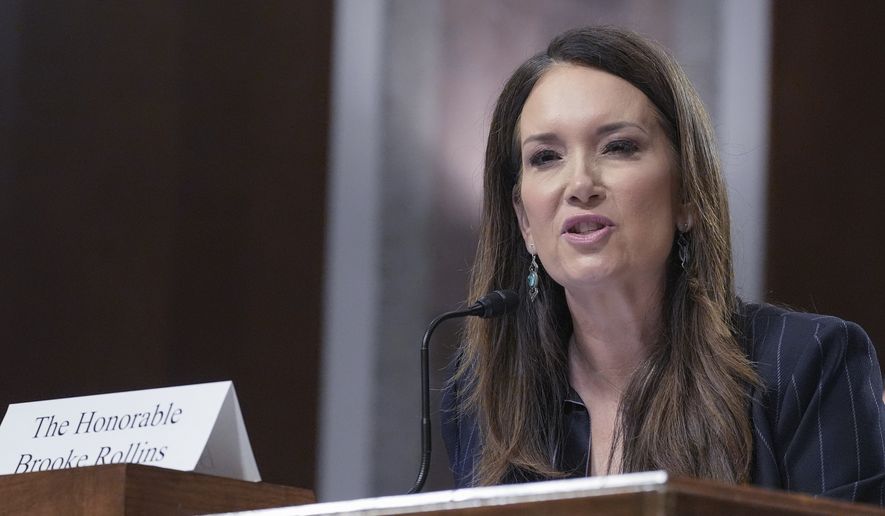

As children return to school across the U.S., the Trump administration is spending $25 million on farm-to-school grants and $70 million for schools to upgrade their cafeterias to cook nutritious meals.
Agriculture Secretary Brooke Rollins and Health and Human Services Secretary Robert F. Kennedy Jr. held an event Monday to announce the new spending, which they say will complement a soon-to-be-finalized federal rule overhauling school meal standards.
“We believe that a healthier future is within reach for all American children,” Ms. Rollins said.
People were interested in these podcasts
Mr. Kennedy said the new nutrition guidelines for school meals will reduce kids’ intake of added sugars and highly processed foods, “move children from refined grains towards whole grains [and] put high-quality protein back in the center of the plate.”
“But we also have to give schools a practical, affordable way to meet those standards,” he said. “Many of these schools have closed their kitchens years ago and do not have the facilities to actually cook on campus.”
Ms. Rollins said the Agriculture Department is spending another $70 million on top of the $20 million it announced a couple of months ago for schools to upgrade their cafeteria equipment so they can cook nutritious meals.
HHS is also spending $32.5 million for a new initiative called Developing Evidence for Programs to Ensure Nutrition Development, or DEPEND, that will help schools identify cost-efficient ways to serve healthier foods within their current operating budgets.
“Many schools, incidentally, across the country have already made this transition and have done it without raising their meal budget,” Mr. Kennedy said. “And we need to understand how they did that, and help other schools to follow those strategies.”
Ms. Rollins said the USDA is spending $25 million in farm-to-school grants for the upcoming school year “to get more healthy food from the farm onto students’ lunch trays.”
As an example, she said last year’s farm-to-school grants funded a partnership in which the Pennsylvania Beef Council provided locally sourced beef to 175 schools across the state.
Ms. Rollins said schools can also use their Food Nutrition Administration dollars to purchase products from local farmers.
The Trump administration is also partnering with the private sector to increase spending on child nutrition.
Ms. Rollins announced that Tyson Foods has committed to spend at least $1 million over the next two years and other companies, such as Cisco and Aramark, have pledged support as well.
The new spending comes as the proposed federal school meals rule is being finalized, she said, noting it is currently “on the five-yard line, right next to the end zone.”
The new dietary guidelines will promote healthy cooking methods and 100% whole grains, whole fruit and whole milk.
“This will be the most transformative action we have taken to date for our children in this country, and frankly, for the future of America,” Ms. Rollins said.
In the interim, she encouraged more states to sign the school meals pledge and begin voluntarily adopting the new dietary guidelines as Nebraska, Arkansas and others have done.
Mr. Kennedy said the Biden administration’s dietary guidelines “were written by food industry lobbyists, and they reflected the mercantile impulses that had put Froot Loops at the top of the food pyramid.”
The Trump administration wants to “put real nutrient-dense food back at the center of the American diet,” he said.
Progress has already been made toward that goal as U.S. consumption of real foods rose 10-11% this year and obesity rates dropped for the first time in 40 years by about 3%, Mr. Kennedy said.
Contact the author


Please read our comment policy before commenting.