


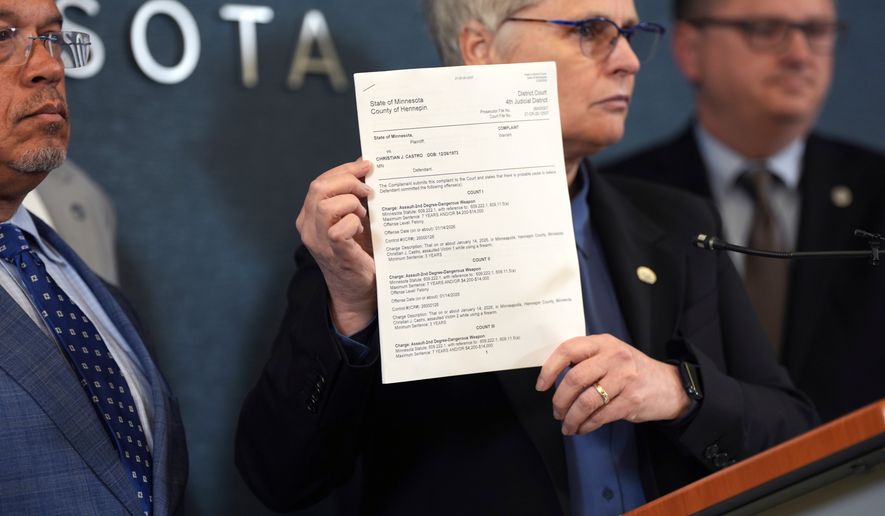

BROWNSVILLE, Texas — An Immigration and Customs Enforcement officer charged with shooting and wounding a man during the crackdown in Minneapolis then lying about it, could walk free from a Texas jail if a federal judge does not intervene.
Christian Castro is charged in Minnesota with assault and falsely reporting a crime in the Jan. 14 shooting of 24-year-old Julio Cesar Sosa-Celis. Minnesota authorities have sought Castro’s extradition since his arrest, but he remains in custody in Brownsville, Texas, a city bordering Mexico.
A judge said he would announce Wednesday whether he would order Texas to extradite Castro to Minnesota or allow his release.
People were interested in these podcasts
Texas law says he must be released after 90 days of detention, which is Thursday. Minnesota’s governor and attorney general filed a lawsuit asking a judge to compel Texas to extradite Castro and to prevent the sheriff in Cameron County, Texas, from releasing him.
Castro is accused of firing a gun through the front door of a Minneapolis home, shooting Sosa-Celis in the leg. Prosecutors say Castro also falsely accused Sosa-Celis and another man of attacking an ICE officer with a broom handle and a snow shovel.
At a federal hearing in Brownsville on Tuesday, attorneys with the Minnesota Attorney General’s Office argued it would be hard to compel Castro to face charges in their state if he is released, and they fear Castro may flee the country, citing his phone conversations with a woman who lives in Mexico.
U.S. District Judge Fernando Rodriguez Jr. said he was inclined not to stop the sheriff from releasing Castro, but that he would respond to the temporary restraining order on Wednesday.
Attorneys representing Texas Gov. Greg Abbott’s office said he had not decided whether to deny or grant Minnesota’s extradition request and therefore the lawsuit is premature.
“I think ripeness is a significant issue,” Rodriguez told attorneys.
Abbott ordered an internal state investigation to determine if Castro can be legally considered a “fugitive.” Trevor W. Ezell, Abbott’s general counsel, also questioned whether the court could impose a deadline for the governor to respond to an extradition request.
“There’s nothing legally left for them to investigate,” Kimberly Ann Svendsen, an attorney representing the Minnesota attorney general, told the judge.
Abbott said last week that he would not respond to the extradition request, citing ongoing the investigation into fraud in government social service programs in Minnesota, which President Donald Trump used to justify his immigration crackdown there.

Please read our comment policy before commenting.