



OPINION:
In the days leading up to the 25th anniversary of 9/11, we’ll hear a lot of memories from those who remember where they were and what they experienced on that dark day. I won’t be one of them, though — as I wasn’t alive then. I didn’t see the Twin Towers collapse in real time or watch the tragic news as it unfolded.
I only know the Sept. 11, 2001, terrorist attacks through the stories of those who lived it. My father-in-law was flying on his wedding anniversary that day. My parents woke to the news on the radio in California, three hours behind the East Coast, as they began their morning. Some of the co-workers I have now watched everything live on TV as they tried to figure out what was happening.
That makes it even more important that the generations with no memory of Sept. 11 carry the responsibility of remembering it. The facts of the day will remain in history books, but facts alone don’t impart meaning. My generation and those who follow it have inherited the task of preserving that meaning.
People were interested in these podcasts
I don’t remember Sept. 11, but I refuse to let it mean less to me.
On the 25th anniversary of the al Qaeda terrorist attacks, we should ask what role falls to generations who have no memory of that day. As the years go on, it becomes less of a memory and more of a squeezed-in school lesson. For so many people, it is a day they will always look back on, remembering the details of what happened with such clarity. For those born after, it increasingly resembles Pearl Harbor, a defining national tragedy known through history books rather than personal memory.
It’s a natural drift, but it can also be dangerous.
The danger is not that Americans will forget what happened, but that our memories become more about the numbers than the people.
The attacks killed nearly 3,000 people. In the years since, thousands more have died from illnesses linked to exposure at the World Trade Center and other sites. Every one of them was a victim with a name, a family, and a life changed forever by Sept. 11. If we forget that day and the impacts that followed, we let go of the true weight of the tragedy.
We can’t just remember the statistics. We must remember the people.
Remembering is not just about grief or trying to feel something about an event we did not personally experience. It is about preserving what happened, who was lost, and what Americans showed one another in response.
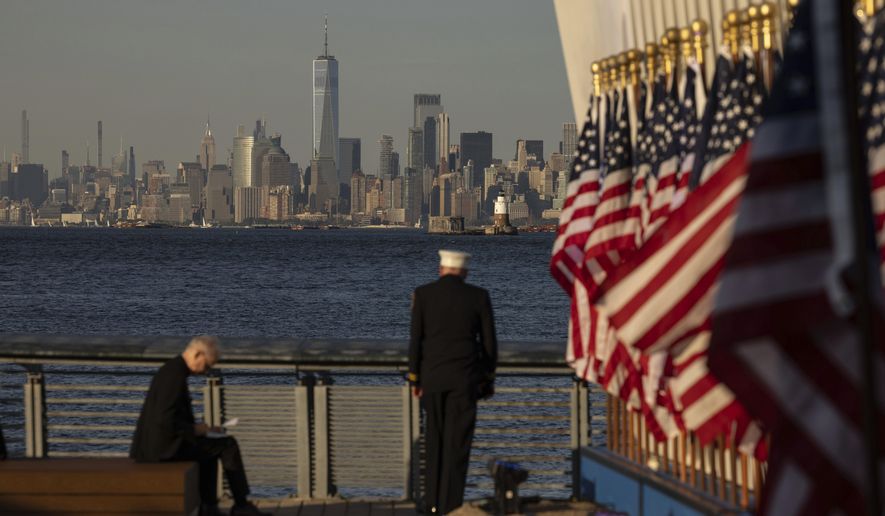
Amid the tragedies of 9/11, there was also a remarkable display of what Americans are capable of when they choose to be a part of something larger than themselves.
Americans placed flags on their porches and lined up to donate blood across the country. Volunteers showed up at Ground Zero to offer aid however they could. Memorials in cities across the nation were erected to honor those we lost.
For that fragile moment, something was shared across partisan lines. We were not suddenly a nation without disagreement, but a nation that decided to come together in spite of our differences. It was not permanent, of course, but it was real. And because the next generations did not witness it firsthand, we must choose to carry that spirit forward. That spirit can’t die out with us. We can’t let it become a nostalgic footnote.
We are the ones who will decide how the story continues.
We already have examples of what intentional remembrance can look like. Boston College’s annual Red Bandana Game honors Welles Crowther, a former lacrosse player and volunteer firefighter who helped others escape the South Tower before he died on Sept. 11. We can visit the 9/11 Memorial and Museum, learn the stories of the victims and first responders, and teach younger Americans about the passengers of Flight 93 who fought back against their hijackers.
Remembering 9/11 cannot only mean mourning what America lost. It should also be about remembering what Americans did for one another. We need to recall a country that, for a moment, was one instead of many factions, a time when community was the top shared goal. That is worth protecting for generations to come.
Grief is easy to revisit once a year. Unity is much harder to sustain. That is why my generation and every generation to come must choose it actively. I wasn’t alive on 9/11, but I can choose what to remember about America afterward. I choose to carry that spirit forward.
• Jess Hamilton is a regional communications associate for media and public relations at The Heritage Foundation.

Please read our comment policy before commenting.