



OPINION:
Ahead of the midterm elections, Democrats have rediscovered a message they abandoned for a decade: They actually care about the future of blue-collar workers. It is a hard sell from the party that spent the Biden years telling factory workers to “learn to code” while their jobs went to Beijing.
Here is the problem for Democrats: President Trump promised blue-collar America he would fight for them, and — unlike most other politicians — he has been spending his second term actually doing it.
Look at what happened in 2024, and why. Non-college White men in union households broke for Mr. Trump by 29 percentage points, up from 25 points just four years earlier. Union households overall, a bloc Democrats have counted on since the New Deal, split for Mr. Trump by 9 points, a stunning reversal from Joseph R. Biden’s 10-point advantage in 2020. Among workers earning less than $50,000 a year — the most literal definition of the paycheck-to-paycheck electorate — the margin went from a 28-point Democratic advantage under President Barack Obama to a dead-even race in 2024.
That did not happen by accident. It happened because these voters were promised something specific by a candidate willing to say it out loud in the places Democrats stopped visiting.
Mr. Trump has been spending his second term proving that the promise was not just a rally line.
Start with overtime. In Tucson, Arizona, in September 2024, Mr. Trump promised the “hardest working citizens in our country” a tax deduction on their overtime pay. Today, it is federal law, up to $12,500 a year, back in the pockets of workers logging extra hours in a labor-starved economy.
More recently came Workforce Pell. On July 1, for the first time ever, a plumber, electrician or welder could get grant money, not loans, to pay for trade training — no four-year degree required.
Wages are moving. Construction pay is up 4.2% this year, with electricians clearing six figures in tight markets — no surprise, given that the industry needs 349,000 more workers than it can find. These are not promises. They are pay stubs.
Yet of everything Mr. Trump has done for American workers, nothing has mattered more than trade.
For 30 years, the multinational consensus in Washington insisted that protecting American workers from cheap foreign competition was economic malpractice. Mr. Trump broke that consensus anyway, using the USMCA framework he built to give American companies a real reason to invest in North America rather than remain tied to China.
Just weeks ago, he refined that fight further. On June 1, Mr. Trump signed a proclamation temporarily reducing Section 232 duties on agricultural, construction and industrial equipment that farmers and tradespeople rely on every day. The logic behind it is simple and worker-first: When a tariff raises the price of a tractor, a forklift or an HVAC unit, that cost does not stay with some faceless importer. It gets passed down to the farmer or contractor who has to buy it. From there, it comes out of the wages and hours of the farmhands and crews doing the work.
By cutting duties on that equipment, Mr. Trump did not just help a supply chain. He also kept real money in the paychecks of the farmers and tradespeople who use it every day.
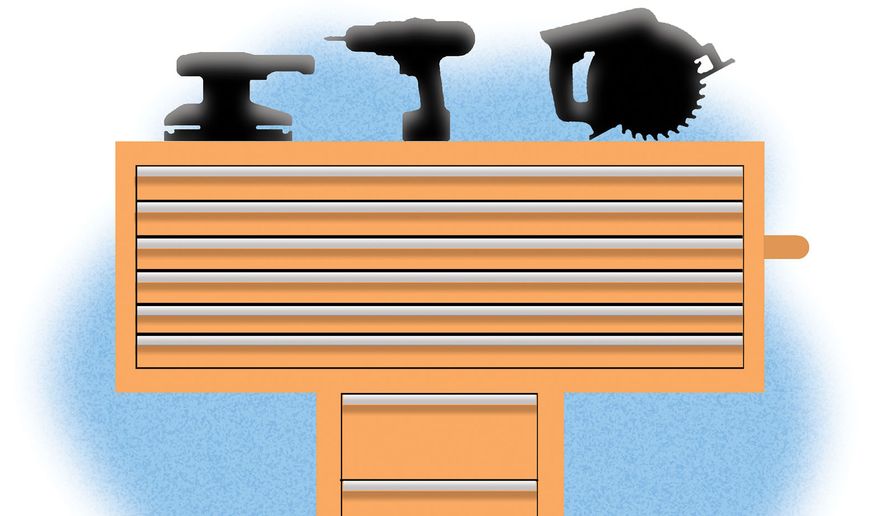
That principle deserves to go one step further, to the tools tradespeople buy for themselves, not just the large equipment covered by the June 1 order. A journeyman electrician outfitting a truck. A carpenter replacing a worn-out circular saw. A roofer buying new cordless drills after finishing a Workforce Pell-funded training program. These are direct, out-of-pocket purchases, made with after-tax income, by people who do not have a corporate accounting department to absorb a price increase. There is a fleet of small-business owner-contractors who build things in every town and rely on these tools to make a living.
If new Section 301 tariffs add another layer to these kinds of power tools and equipment, farmers and tradespeople pay the difference themselves — tool by tool, paycheck by paycheck.
As USTR finalizes its remaining Section 301 decisions, it should apply the June 1 logic to these products too: no new tariffs on the tools for American tradespeople. It is not a new idea. It is the same math, applied to the workers who feel it most directly.
The stakes go beyond one tariff schedule. Democrats have decided that trade policy is their best shot at winning back the workers they lost, betting that any tariff, applied broadly enough, will eventually feel like a tax rather than a shield.
Mr. Trump told blue-collar America he would fight for them. In the second year of his term, the fight is still going, and still worth winning.
• Steve Cortes is president of the League of American Workers and adviser to Catholic Vote. He directs political campaigns on media, polling and Hispanic outreach, including the Trump 2016 and 2020 campaigns and the Vance 2022 U.S. Senate campaign. He is a former broadcaster for Fox News and CNN.

Please read our comment policy before commenting.