



OPINION:
The Baltimore Orioles had just been swept in four games by the Boston Red Sox at Fenway Park in mid-August of 1995. I was sitting in the press box writing the epitaph on the season — at 46-53, their hopes for the postseason were pretty much buried — and so was the future of first-year manager Phil Regan.
On the phone was one of my top sources as a beat writer covering the team: Baltimore owner Peter Angelos. And he wasn’t happy.
“I should fire him,” Angelos told me, referring to Regan.
People were interested in these podcasts
Angelos, in his second full year of ownership, loved confiding with reporters in the early days of his tenure. He was still basking in the glow of being the hero for standing up to his fellow owners and refusing to use replacement players in the spring during the baseball strike. He didn’t just talk to me. He spoke to the beat writers for the Baltimore Sun and the Washington Post as well.
Sometimes, though, in return for inside information, Angelos asked for something — your opinion. He listened to his sons; he listened to writers. Not so much his front office.
During the winter, when the club was debating whether to promote outfield prospect Curtis Goodwin from Double-A to play centerfield in Baltimore, Angelos asked me what they should do. I said you should sign a free agent to a one-year deal to buy some time — someone looking to revive his career. I suggested Pittsburgh Pirates outfielder Andy Van Slyke, who was struggling with injuries and played in just 105 games in 1994, batting .246.
A few days later, they signed Van Slyke.
They traded him to the Philadelphia Phillies on June 18 after 17 games and a .159 average.
Yet here he was on this Sunday afternoon in August 1995, asking me, “Do you think I should fire him?”
I had no business telling Angelos what to do with his team. It certainly wasn’t journalistically appropriate. It wasn’t a Dianna Russini-level crime but wasn’t proper. It was the price, though, to pay for these Angelos conversations.
I wasn’t going to have Phil Regan’s blood on my hands, so I told Angelos, “You’re pretty much done for the postseason. You’re only a few weeks from all the attention on your team from the Cal Ripken record-breaking streak. You don’t want anything to take the spotlight away from that, like firing a manager. Why not just let him finish out the year?”
He did just that, firing Regan during the World Series after the Orioles finished 71-73 in the strike-shortened season.
I don’t think I did Regan any favors. He was miserable throughout the whole Ripken streak celebration, even more unhappy than he had been.
Regan died last week at the age of 89. He had been an outstanding relief pitcher over 13 major league seasons, from 1960 to 1972 — a 96-81 record with a 3.84 ERA, including an All-Star year in 1966 when he posted a 14-1 record with a 1.62 ERA with the Los Angeles Dodgers. He was nicknamed “The Vulture” by teammate Sandy Koufax because he picked off so many wins in late-inning relief appearances.
He spent a decade coaching college baseball and made it back to the majors in 1983 as the Seattle Mariners’ minor league pitching instructor. He was promoted to pitching coach for the major league club in 1984. In 1987, he returned to the Dodgers as an advance scout for six seasons and then was hired as pitching coach for the Cleveland Indians in 1994.
But Regan’s dream was to manage. He spent eight winters managing in the Dominican and Venezuelan winter leagues, all with the hopes of landing a major league job. Finally, in 1995, he got the job in Baltimore, hired by a special committee Angelos put together to replace Johnny Oates, who had been fired after leading the Orioles to a 63-49 record in the strike-shortened season in 1994 — his third straight winning season. It was a mercy firing. Oates nearly had a nervous breakdown managing for Angelos for that one 1994 season.
It was a cursed job from the start because of the strike, which meant two spring trainings — one with minor leaguers while other teams used replacement players and a second shortened veteran camp.
Regan had been waiting for years for this chance and had a book on how he wanted to do the job. But he entered a culture that had followed “The Oriole Way’’ — a philosophy taught to generations of players by Ripken’s father, Cal Sr. — and wasn’t ready to change for a rookie manager who had different ideas. Regan clashed with veterans in the clubhouse, so much so that at one point Ripken was calling pitches from his position at shortstop. Regan’s dream turned into a nightmare. He wouldn’t get another chance
Regan was the Dodgers’ Triple-A Albuquerque manager in 1996, then spent the next two seasons as the Chicago Cubs’ pitching coach. He was hired in 1999 as the Indians’ pitching coach, then served as the pitching coach for the 2000 United States Olympic gold medal baseball team. He bounced around the minor leagues after that.
I was in Sydney, Australia, covering that Olympic team. I told Regan the story about my conversation with Angelos. He didn’t thank me.
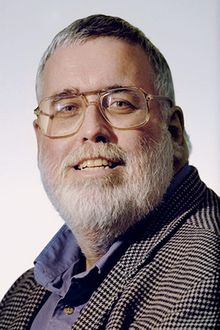
• You can hear Thom Loverro on “The Kevin Sheehan Show” podcast.
Follow the author

Please read our comment policy before commenting.