



OPINION:
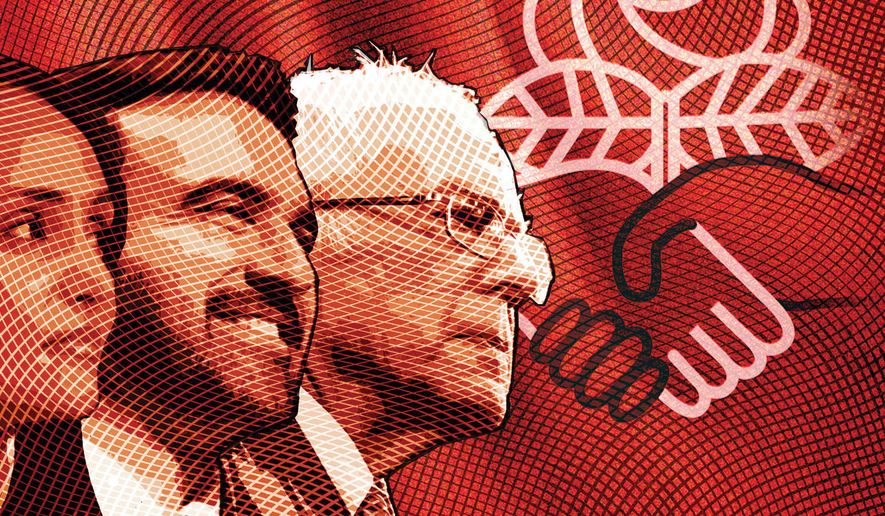
In the 2016 Democratic presidential primary, Vermont socialist Sen. Bernie Sanders’ path to the nomination was walled off by party insiders.
At the time, superdelegates — unpledged delegates to the Democratic National Convention who included prominent party leaders and elected officials such as governors, members of Congress and Democratic National Committee members — made up roughly 15% of the total delegates at the DNC.
Many of these superdelegates pledged their allegiance to Hillary Clinton before any votes were cast, giving her an early, massive lead in the primary. She secured the endorsements from 571 of these party insiders, compared with Mr. Sanders’ 48.
People were interested in these podcasts
Because superdelegate counts were added to media network polling numbers, the narrative emerged that Mrs. Clinton was a shoo-in for the presidency, discouraging potential Sanders voters and suppressing his momentum.
When Mr. Sanders won the first-in-the-nation New Hampshire primary by a commanding 22-percentage-point popular victory, Mr. Sanders walked away with 15 delegates and Mrs. Clinton walked away with 14, despite his winning the primary by an almost historic margin. Yet because six of the state’s eight superdelegates backed Mrs. Clinton, the delegate split obscured the scale of his win.
At the convention that year, Mr. Sanders’ team tried to lobby Mrs. Clinton’s superdelegates to switch sides, to no avail.
The Democratic Party defeated the socialist outsider who caucused with them, but not for long. Mr. Sanders went to work mobilizing grassroots activists to join his “political revolution,” pushing for progressive policies such as “Medicare for All,” the Green New Deal and College for All.
He attacked wealthy establishment donors and Democratic incumbents in favor of Democratic Socialists of America candidates, who branded their politics as working to serve all people, not just the richest 1%.
DSA candidates have won at least 38 primary elections nationwide so far this year, including some that upset entrenched incumbents. In New York City, socialist Zohran Mamdani won the mayor’s race last year, and in June the three congressional candidates he endorsed sailed to victory in their primaries. These include Darializa Avila Chevalier, who defeated Congressional Hispanic Caucus Chairman Adriano Espaillat in upper Manhattan and the Bronx.
DSA-backed candidates have won local races in Oregon, California, Arizona, Georgia, North Carolina, Pennsylvania, Vermont, Utah, Maryland, Washington, Colorado and the aforementioned New York.
After the DSA’s stunning victories in New York’s primary, Mr. Sanders posted on social media that one of the “lessons” from the contest was “when working people stand together, organize and fight back, they can defeat establishment politicians and enormous amounts of money and political influence.”
“We’re making progress. The task before us now is to build on that momentum,” he continued, cautioning that “if Democrats regain control of Congress next year, they must listen to the people who put them in office.”
Still, not all Democrats are impressed by the rise of socialism within their ranks.
Democratic strategist James Carville, who worked for Bill Clinton, has accused the DSA of acting like a “pariah” force that is cannibalizing the Democratic Party.
“If it’s such a powerful, sweeping movement that’s got momentum everywhere, then go ahead and be at the head of it. Don’t use the Democratic Party to advance it,” Mr. Carville said.
He blasted Mr. Sanders as an “insurgent” who contributed to Mrs. Clinton’s 2016 loss to Mr. Trump by dividing the Democratic Party, and he argued that the “left-wing idiots” of today are similarly jeopardizing the Democratic Party’s chances.
Yet it is hard to deny that the energy and momentum within the Democratic Party appear to favor the DSA side, which has been painstakingly built by Mr. Sanders.
Although party insiders were successful in pushing Maine U.S. Senate candidate Graham Platner aside because of a late-breaking sexual assault accusation, potential 2028 Democrat presidential contenders seem to understand which way the wind is blowing.
California Gov. Gavin Newsom recently urged Democrats to embrace a “big tent” approach and unite with DSA candidates, saying the Democratic Party should be in the “addition, not subtraction” business.
Last month, former Vice President Kamala Harris had a private phone call with Mr. Mamdani to discuss the future of the Democratic Party in an effort to connect with the DSA base and build future support. Former Chicago Mayor Rahm Emanuel recently traveled to Israel to blast Prime Minister Benjamin Netanyahu’s politics at Tel Aviv University, as did Rep. Ro Khanna, California Democrat, who claims to have been blockaded by Israeli settlers and Israel Defense Forces soldiers in the West Bank, both seemingly embracing the DSA’s anti-Israel foreign policy.
“What DSA represents is a real contrast to Democrats who have run the last couple of elections on fear,” DSA national co-chair Megan Romer told Politico in June. “You can’t run on that. You have to offer an alternative. And it’s really important that we be involved in that conversation in 2028. It’s important that we have somebody saying sensible things.”
The DSA is dispatching surveys to its chapters, which include more than 120,000 members, asking whom they want to back for president in 2028.
“The best possible thing that could happen is having a string of victories in the midterms and forcibly reshaping the way the national Democratic Party approaches some of these issues and having a much larger presence in the Democratic primary, and hopefully the presidential candidacy,” said Hasan Piker, a DSA social media influencer.
It seems Mr. Sanders’ political revolution is happening, 10 years after his defeat to Mrs. Clinton.
• Kelly Sadler is the commentary editor at The Washington Times.
Follow the author

Please read our comment policy before commenting.