


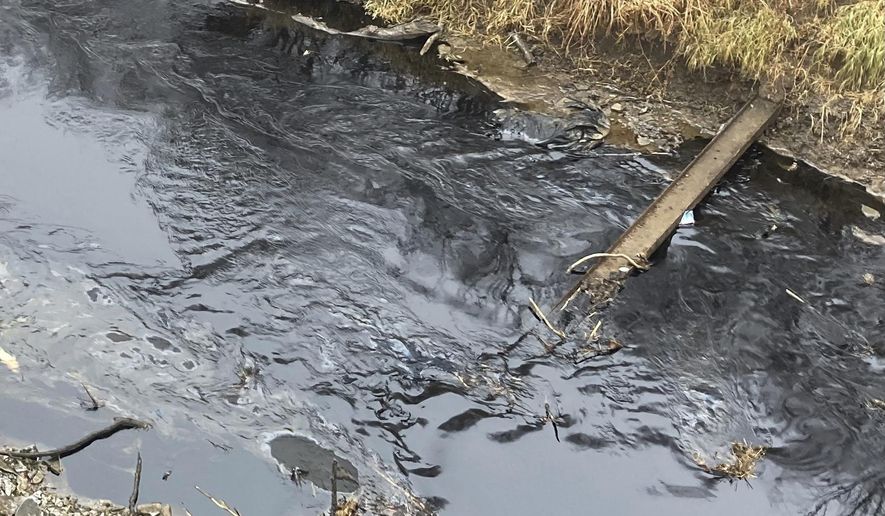

The Justice Department announced that it has filed a complaint and proposed consent decree against South Bow (USA) LP and South Bow Infrastructure Operations Inc., the owner and operator of the Keystone Pipeline, to resolve allegations that the company violated the Clean Water Act in connection with a 2022 pipeline rupture in Washington County, Kansas.
The action was brought on behalf of the Environmental Protection Agency and the state of Kansas.
According to the Justice Department, the rupture occurred on Dec. 7, 2022, releasing nearly 13,000 barrels of oil — approximately 543,000 gallons — over land and into Mill Creek, creating an imminent and substantial threat to human health and the environment. Officials described it as one of the largest inland oil spills in recent history and the largest discharge ever from the Keystone Pipeline system.
Under the proposed settlement, South Bow has agreed to pay a civil penalty of $26,867,789 and to complete work aimed at preventing future discharges, which the company estimates will cost about $40 million, the Justice Department said. South Bow has also agreed to contribute more than $3 million to Kansas for natural resource restoration projects to resolve state law violations.
Principal Deputy Assistant Attorney General Adam Gustafson of the Justice Department’s Energy and Natural Resources Division said pipelines remain the safest means of transporting large quantities of oil and other liquids and gases over long distances, but that leaks can quickly escalate, making the company’s commitment to preventive work a key part of the settlement. EPA Assistant Administrator Jeffrey A. Hall said the spill left the waterway “lifeless and useless” and required extensive cleanup, calling the penalty reflective of the seriousness of the environmental harm.
U.S. Attorney Ryan A. Kriegshauser for the District of Kansas said the incident had a massive impact on the state, while EPA Region 7 Administrator Jim Macy credited the agency’s staff for logging many thousands of hours cleaning up Mill Creek with support from other federal and state agencies.
The complaint states that crude oil an inch thick covered Mill Creek bank-to-bank for 3.5 miles downstream of the rupture site, prompting Kansas health officials to issue an advisory barring contact with the creek by people, livestock or pets. Oil residue was found across 35 surrounding acres, and the spill killed or affected more than 2,700 animals, according to the filing.
Following a 2023 EPA cleanup order, South Bow removed oil from the creek and surrounding areas and completed restoration of aquatic habitat, stream banks and shorelines, the Justice Department said. The Keystone Pipeline spans 2,687 miles between Hardisty, Alberta, Canada, and Port Arthur, Texas; the rupture occurred in a segment running from Steele City, Nebraska, to Cushing, Oklahoma. The consent decree, filed with the U.S. District Court for the District of Kansas, is subject to a 30-day public comment period.
This article was constructed with the assistance of artificial intelligence and published by a member of The Washington Times' AI News Desk team. The contents of this report are based solely on The Washington Times' original reporting, wire services, and/or other sources cited within the report. For more information, please read our AI policy or contact Steve Fink, Director of Artificial Intelligence, at sfink@washingtontimes.com
The Washington Times AI Ethics Newsroom Committee can be reached at aispotlight@washingtontimes.com.

Please read our comment policy before commenting.