



House Republicans plan to use a filibuster-proof budget reconciliation bill to pay for the Iran war, sidelining Democrats who threatened to block the military spending.
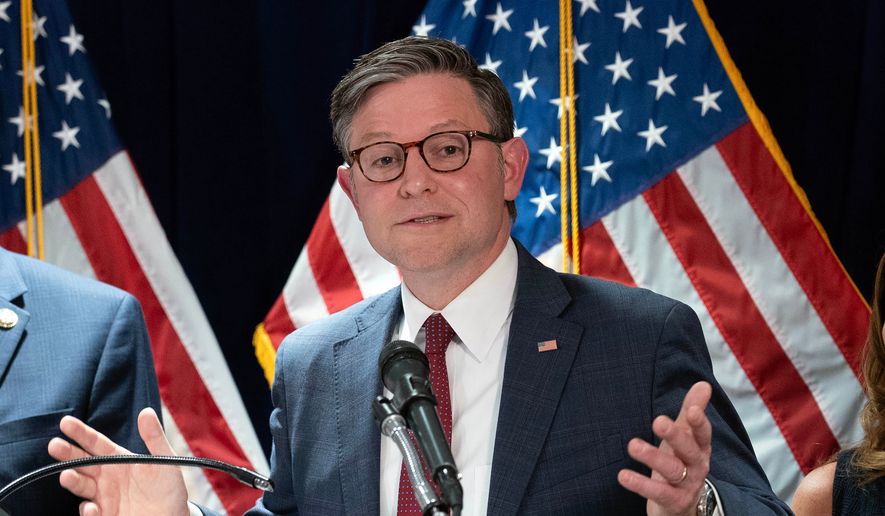
House Speaker Mike Johnson on Tuesday confirmed the Budget Committee was working on the first step in the budget reconciliation process.
“We have to be able to protect our national security,” Mr. Johnson told reporters, declining to go into specifics of the proposals or reveal spending targets.
People were interested in these podcasts
Mr. Trump has requested $350 billion through reconciliation to make up part of its unprecedented $1.5 trillion defense budget request.
He has also called for the bill to advance the goals of the Save America Act, which would require proof of citizenship to register to vote and a photo ID at the polls.
The Senate parliamentarian previously said the election legislation did not meet the strict rules to be included in a budget reconciliation bill. Mr. Johnson previously floated the idea of establishing a federal grant program via reconciliation to encourage states’ adoption of the election policies the president advocates.
The election provisions remain a part of Republicans’ reconciliation discussions, said Rep. Bryan Steil, who chairs the House Administration Committee that oversees election policy.
“I think there are meaningful things that we can do inside the reconciliation process to move election integrity forward, but that’s ultimately the conversation that we’re having,” Mr. Steil, Wisconsin Republican, told The Washington Times.
At the moment, House Republicans are not sure what exactly will go into the bill, although defense is the overall focus.
“It hasn’t all been decided yet,” Rep. Randy Fine, a Florida Republican, told reporters at the Capitol.
To guide the bill to passage, Mr. Johnson will have to rally his narrow majority.
Rep. Don Bacon, a Nebraska Republican who is not seeking reelection, said he is skeptical about using reconciliation to secure such a large spending increase.
“If we’re raising the spending, I think it would be better to work with Democrats on this,” he said. “They should share the responsibility here.”
Still, he said he would support the reconciliation bill “if that’s what it takes.”
One faction Mr. Johnson must wrangle is the fiscal hawks, many of whom want to offset spending increases with cuts.
But House moderates, some of them from blue states and swing districts, do not want to scramble to find huge spending cuts in the waning days before the midterm elections.
“That option simply isn’t possible,” said Rep. Nick LaLota, a New York Republican. “There’s no way you’re going to be able to offset $60 [billion or] $100 billion altogether.”
He also backed the spending wholeheartedly and said it should “enjoy full bipartisan support” given the depletion of American ammunition for the wars in Ukraine and Iran.
It is unlikely any Democrats will support the measure, which Republicans argue is a matter of national security.
“The administration wants an up-or-down vote from Republicans on this,” House Democratic Caucus Chair Pete Aguilar of California told The Washington Times. “They are not engaging with Democrats and talking about what our munition levels are.”
Mr. Aguilar added, “If the administration wants to have a substantive conversation about stockpiles to protect this country, Democrats are all ears for it. But that’s not been where they have landed.”
White House spokeswoman Anna Kelly rejected Mr. Aguilar’s assertions.
“The United States Military has more than enough munitions, ammo, and stockpiles to serve all of President Trump’s strategic goals and beyond, and Operation Epic Fury has exposed what happens when you mess with the United States,” she told The Times. “Even still, the President has urged our defense contractors to constantly produce more made-in-America weapons, which are the best in the world. Democrats destroyed our military, but President Trump rebuilt it.”

Please read our comment policy before commenting.