


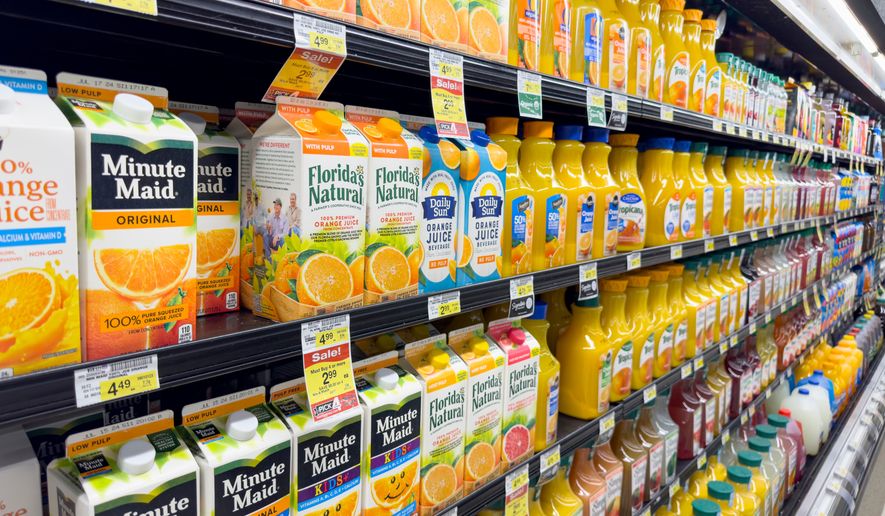

Orange juice just got a little slack in its squeeze, as the Food and Drug Administration relaxed its grip on standards for pasteurized OJ — a move that will probably go unnoticed by consumers.
Health Secretary Robert F. Kennedy Jr. announced the modernization of the 60-year-old Standard of Identity for pasteurized orange juice, the measure dictating exactly what a food product must contain to be legally marketed under a specific name.
To bear the “orange juice” label, the product must meet a minimum sugar content, known as a Brix level, and follow strict rules regarding additives, pasteurization and blending — a rule that had squeezed manufacturers since 1963.
People were interested in these podcasts
The minimum Brix level of 10.5 degrees is now reduced to 10 degrees.
“This long overdue reform will reduce our dependence on foreign imports, unleash American agriculture and save the industry more than $6 million every year,” Mr. Kennedy said at a Friday press conference. “It strengthens American supply chains and levels the playing field for American citrus growers and maintains the safety and quality and taste of this American product.”
Last August, the FDA announced its intention to amend federal standards for orange juice, citing the steady decline of Florida orange Brix levels the past few decades due to severe weather and a bacterial disease called citrus greening, making it challenging to meet the minimum Brix.
To meet FDA’s current requirements, the agency said some manufacturers have imported high-Brix orange juice from abroad.
“This rigid, obsolete rule did nothing to protect consumers, and it severely harmed domestic production, particularly right here in Florida. It effectively forced manufacturers to turn away from the Sunshine State and rely on foreign imported oranges just to meet an arbitrary federal number,” FDA acting Commissioner Kyle Diamantas said.
The FDA said the rule would not require producers to change their manufacturing processes, instead providing greater flexibility of product choice for consumers and potential sustainability for manufacturers due to disease or climate impacts.
A wider range of products can now be marketed as pasteurized orange juice.
The FDA estimates that manufacturers’ annual cost savings would range from just under $15 million to over $100 million.
This move came after the Florida Citrus Processors Association and Florida Citrus Mutual petitioned for the rule change in 2022.
Florida was the dominant supplier of juice oranges, but the average Brix of Florida oranges has steadily dropped since 2010 due to a bacterial disease called citrus greening. Hurricane Irma also led to reduced orange production and lower average fruit sugar content.
Because of this, seasonal average Brix levels hover below the minimum of 10.5 degrees.
Shannon Shepp, executive director of the Florida Department of Citrus, said the move addresses “the growing realities of today’s Florida citrus crop.”
“Our industry has worked tirelessly over the years to recover from the impacts of citrus greening and severe hurricane damage,” she said in a statement. “This science-based update supports the future of Florida growers and their families while also preserving the quality, taste and nutrition consumers know, love and expect from 100% orange juice — the original wellness drink.”
Contact the author


Please read our comment policy before commenting.