


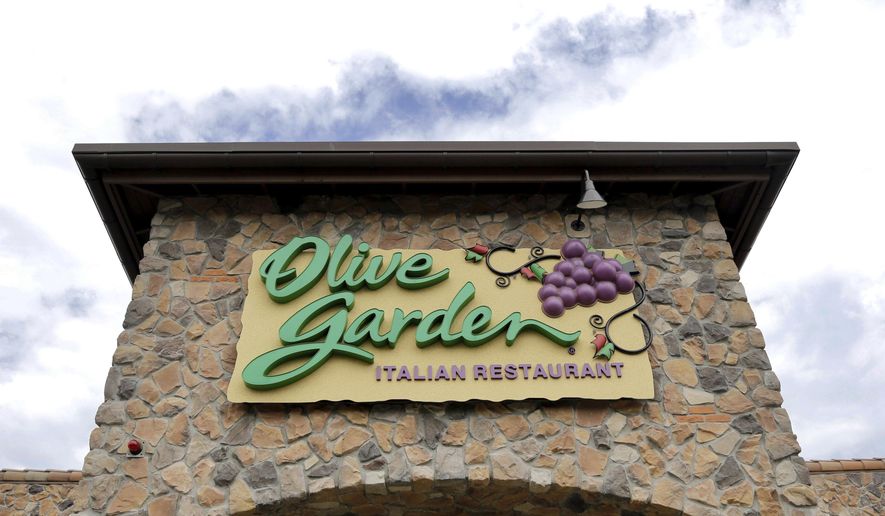

Olive Garden’s Never-Ending Pasta Pass has become an unlikely flashpoint in the fight over voter identification, after conservatives seized on the restaurant’s ID policy to argue it is more stringent than voting requirements in some states.
The pass, which returned this week for the first time since 2019, lets customers pay $100 for 13 weeks of unlimited pasta, soup, salad and breadsticks. But it comes with a catch: The pass is non-transferable, and passholders must show a photo ID matching the name on the pass before they can redeem it. Olive Garden’s official pass terms spell out the requirement, and the company reiterated it in a post on its X account Thursday, which quickly circulated among Republican officials and conservative media figures who drew a straight line to the long-running debate over voter ID laws.
Conservative commentator Robby Starbuck was among the first to amplify the post, writing that “our pasta deals are literally more secure than our elections.” Indiana Attorney General Todd Rokita picked up the theme, urging lawmakers to “make it make sense” and pass the SAVE America Act. Utah Sen. Mike Lee argued American elections “should not be less secure than Olive Garden’s endless pasta,” while Arizona Rep. Eli Crane made a similar case, calling the pasta pass “more secure than our federal elections.”
People were interested in these podcasts
Conservative influencer Isabel Brown and the Republican National Committee’s Election Integrity account also weighed in, both making the point that if a restaurant chain can require ID to hand out free pasta, voters should face the same standard at the polls.
The comparisons landed as the White House pushes the Safeguard American Voter Eligibility Act, known as the SAVE America Act (H.R. 7296/S. 1383), which would require documentary proof of citizenship to register to vote and photo identification to cast a ballot in federal elections, according to a bill summary from the Bipartisan Policy Center. White House spokeswoman Abigail Jackson, in comments to Fox News Digital following the Thursday night events, said the restaurant’s approach illustrates her point, adding, “It’s sad but true.” She argued the bill, which passed the House in February on a near party-line vote but remains stalled in the Senate, would help restore long-term confidence in the country’s elections.
The debate comes as roughly 14 states and the District of Columbia do not require voters to present identification at the polls, relying instead on signatures or other verification methods, according to voting-law trackers.
President Trump raised the same argument in a primetime address from the White House on Thursday evening. During the speech, he pressed Congress to pass the SAVE America Act and said his administration was declassifying and releasing intelligence he described as pointing to vulnerabilities in the U.S. election system. He urged Americans to “pick up your phone tomorrow” and press lawmakers to act without delay.
The bill has stalled in the Senate, where it faces an uphill fight even with Republican control. In June, four Republican senators — Susan Collins of Maine, Lisa Murkowski of Alaska, Mitch McConnell of Kentucky and Thom Tillis of North Carolina — joined Democrats to block an amendment that would have attached the measure to a budget reconciliation package, drawing criticism from Sen. Josh Hawley. Mr. Trump has said, and multiple news organizations have reported, that he will withhold his signature from other legislation, including a bipartisan housing bill, until the Senate passes the SAVE America Act. Republican leaders have said they hope to advance the measure before the midterm campaign fully takes hold of Congress’s attention.
This article was constructed with the assistance of artificial intelligence and published by a member of The Washington Times' AI News Desk team. The contents of this report are based solely on The Washington Times' original reporting, wire services, and/or other sources cited within the report. For more information, please read our AI policy or contact Steve Fink, Director of Artificial Intelligence, at sfink@washingtontimes.com
The Washington Times AI Ethics Newsroom Committee can be reached at aispotlight@washingtontimes.com.

Please read our comment policy before commenting.