


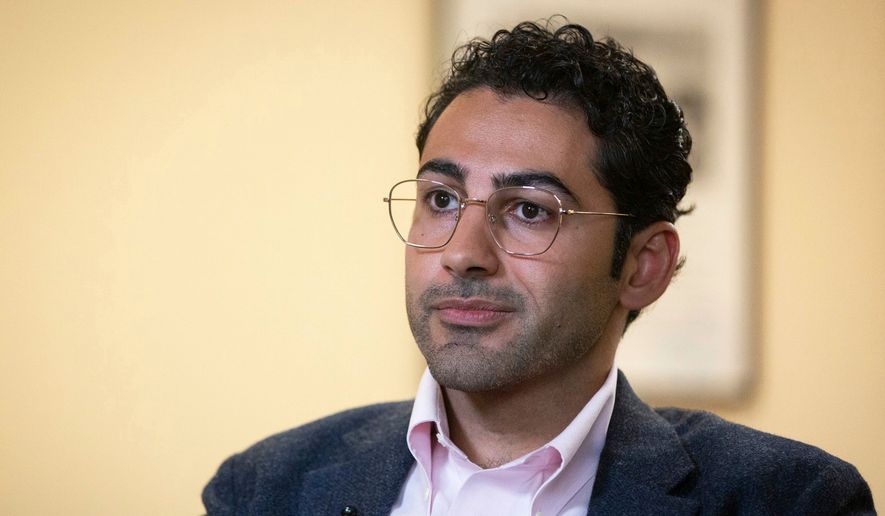

NEW YORK — A federal appeals panel has reversed a lower court decision ordering the release of pro-Palestinian activist Mohsen Mahdawi, opening the door to the re-arrest of a student protest organizer whom the Trump administration has spent more than a year trying to deport.
Tuesday’s ruling from the 2nd U.S. Circuit Court of Appeals in New York overturns a previous decision by a federal judge in Vermont, which likened the government’s efforts to expel him and other activists to McCarthyist repression.
In their unanimous decision, the panel found that the judge had overstepped his authority by intervening in Mahdawi’s case before it had moved fully through the immigration court system.
People were interested in these podcasts
The ruling mirrors a separate appellate panel’s decision earlier this year against Mahmoud Khalil, a former classmate of Mahdawi’s at Columbia University.
As with the ruling against Khalil, the appeals court did not weigh in on the merits of Mahdawi’s claim that he was unconstitutionally targeted for criticizing Israel. He can seek a review from the federal courts over those claims once he has exhausted his options in the immigration courts, the panel wrote.
Mahdawi, 35, is currently appealing an order of removal issued against him in immigration court. An emailed inquiry to his attorneys at the American Civil Liberties Union was not immediately returned.
Mahdawi was born in a refugee camp in the Israeli-occupied West Bank and became a legal permanent resident of the U.S. in 2015.
He was arrested by immigration agents during a citizenship interview in April 2025, part of the Trump administration’s sweeping efforts to expel noncitizens who criticized Israel and protested against the war in Gaza. He was released two weeks later and graduated from Columbia soon after.
At a hearing in front of the 2nd Circuit last September, government attorneys argued against the release of both Mahdawi and another student, Rumeysa Ozturk, a Turkish doctoral student at Tufts University who was detained by masked federal agents after co-signing an op-ed critical of Israel.
Both students, the government said, had wrongly benefited from a form of relief, known as habeas corpus, that should be off-limits to those whose cases are moving through the immigration courts.
Attorneys for the students countered that there was little hope in seeking relief from an immigration court system overseen by President Donald Trump’s Department of Justice.
The 2nd Circuit court is expected to issue a separate ruling concerning Ozturk’s case.

Please read our comment policy before commenting.