



OPINION:
My father looked approvingly as I retrieved my red flag from a ditch. “Wave it, son!” he shouted with revolutionary zeal.
That memory of my former life emerges as I leaf through the pages of the FBI’s counterintelligence file on my father. He was a founding member of the Movement for Independence, the precursor of the Puerto Rican Socialist Party. Our family — and my identity — was immersed in socialism, which explained our poverty and lending indictments.
In our master plan to transform chaos into ease, there were intoxicating promises of a grand new world devoid of antagonisms and social pathologies. As an embattled community, we sheltered under the mantle of that dream, and I committed myself to becoming a faithful drop in the great wave of revolution — my dignity emerged there.
People were interested in these podcasts
“America is the enemy of humanity!” my father once railed and, naturally, I believed him. The litany of condemnations against “Yankee imperialism” became my catechism, and the meagerness of our existence nurtured my rage toward America.
I will never forget the night when I saw the look of desperation on my mother’s face as she stormed outside to confront the men monitoring my father. I heard the buzz of inquisitorial voices mingling with her dejected cries. Later I learned they were intelligence officers of the Puerto Rican police working with the FBI, and I hated them.
I blamed America for destroying my parents’ marriage and our lives. But in reality the destructive force was socialism, which I would not learn until many years later, away from the utopian allure of its grasp.
At this same time, God was becoming a vital factor in my life.
My mom sent me to Mass with friends, and those experiences shaped in me a sort of double consciousness. On one hand, God; on the other, Marx. The Revolution and the Kingdom. How to reconcile this existence? By joining the Jesuit order, of course!
This solution placed me in their embrace of liberation theology — which came to the fore during the mid-1980s amid the political turmoil brewing in Central America. I was accepted in the order, and they planned to send me to the heart of the Revolution, Sandinista Nicaragua, for my philosophy studies — a socialist’s dream come true.
But then news came of seven Jesuits murdered in El Salvador close to the border with Nicaragua. The order, concerned for our safety, decided to send us to Fordham University in New York instead. Fordham? Frustrated, I left the seminary and angrily returned home. Still, at this point, I made the most beautiful “mistake”: I decided to come to America after all.
Curiously, I landed not at Fordham but at the University of Southern Mississippi. It was when my feet hit American soil — in the Deep South, no less — that my lungs were filled with the air of freedom. For the first time in my life, I was able to challenge the fiercely held assumptions of my ideology. While in the United States, I dared to try on a new filter, and a new landscape informed by liberty facilitated the experiment.
By the end of my first summer at the university, I thought about staying, but I soon found myself troubled by heretical thoughts against socialism. The Berlin Wall had fallen and this struck my consciousness. I contemplated the last of all socialist excuses: “Socialism has never really been tried.” Yet there was a new reality that spoke the language of dignity with new words — ones that made me realize that I was not merely an insignificant drop in a vast ocean.
Today, I am no longer a socialist. I encountered the reality of American freedom and its constitutional primacy on the individual, which led to the realization that socialism is an anthropological mistake.
Socialism fails because its foundational premises misunderstand humankind’s very nature. I discovered that I was unique and unrepeatable. I have the moral capacity for self-realization because, made in the imago Dei (Genesis 1:26), I have the capacity to reason to discover the truth, and the volitional capacity to choose, to do what is good.
I was willed into being by God for my own sake. I am loved by God in the radical concreteness of my existence and ordered to personal communion with others. It is in the exercise of dual capacity of reason and choice, I came to see, that my dignity could be found.
What is needed today is a social and political context that protects, affirms and optimizes these individual capacities.
A few years ago, I buried my father, who died a communist. At that time, I again silently sang the revolutionary songs in homage to the fallen warrior. I remembered his laughter when, by his side, I retrieved my red flag many years ago. I mourned his death, and I honor his life to this day. I remember still his words toward the end of his life, “Don’t be a fence-sitter!”
His example of leading a committed life is an important legacy that I have woven into my own coat-of-arms. Now I fly the crest of God-given individuality and the shield of liberty. I am convinced that my father salutes this new and uniquely American flag as he looks on in contented approval.
May God bless America!
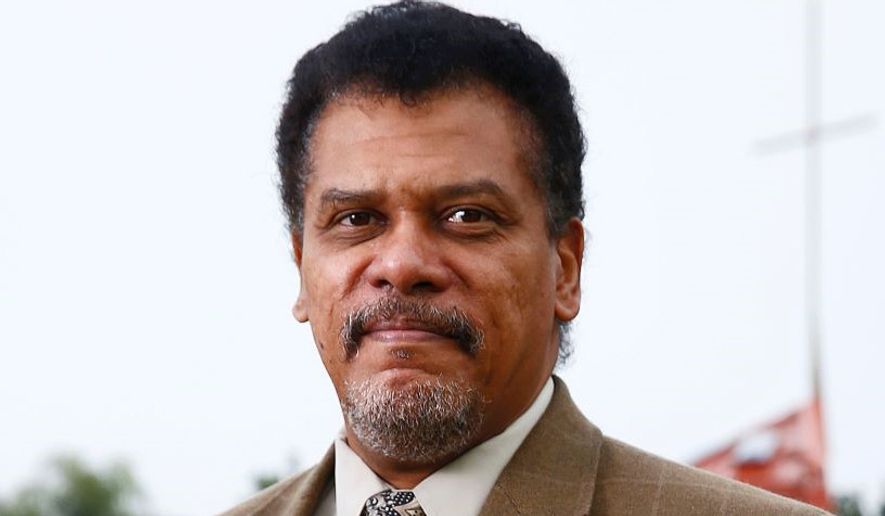
• Ismael Hernandez is founder and president of the Freedom & Virtue Institute, which exists to combat the paternalistic, condescending and statist way of addressing poverty in America. He is the author of a new book, “Rethinking Charity,” and the bestselling novel “Not Tragically Colored: Freedom, Personhood, and the Renewal of Black America,” which offers a new perspective on racial reconciliation and racial tensions in America. He holds a master’s degree in political science and lives in Fort Myers, Florida, with his wife and three children.

Please read our comment policy before commenting.