



OPINION:
One hundred seventy-three years ago, a man named Edmund Fairfield addressed the Hillsdale College community to dedicate our campus’s oldest building, Central Hall. He picked the Fourth of July. He said that education was the enemy of slavery and a friend of freedom. He was speaking on the 77th anniversary of the Declaration of Independence.
This summer we celebrate the Declaration’s 250th anniversary. Some people object that we do this. Others wonder about the relevance of that old document today.
Things are different now, so the argument goes. When Ransom Dunn rode his horse in to found Hillsdale College, he traveled by the same mode that Thomas Jefferson traveled to Philadelphia to found the nation.
People were interested in these podcasts
Central Hall, in Edmund Fairfield’s day, was heated with wood stoves, just as Independence Hall in Philadelphia was heated. Students in those days cut wood in exchange for scholarships and low tuition. Today, I drive a Cybertruck to work, and it can talk to me. I do not wear a powdered wig, nor do any of you.
But some things are the same. The most immediate and obvious is that the Declaration is controversial, as it is in every important time. It is a revolutionary document.
In 1776, it offended the monarch by saying that his power, to be rightful, must come from the people, and they are not subjects but citizens. In 1853, it offended the slave owner with its universal application. Yes, some authors of the Declaration were slave owners, but they were uniform in proclaiming that slavery was wrong. Jefferson said, “I tremble for my country when I think that God is just.”
That is the immediate thing, but the deepest thing to understand about Edmund Fairfield’s speech and the Declaration of Independence is eternal, beyond time. Both arguments had very much to do with the urgency of their time. In 1776, the revolution had already begun. When Edmund Fairfield spoke, the storm clouds of the Civil War were gathering, and they were unmistakable. But they do not begin with those urgencies, just as we must not today.
The Declaration begins, “When in the course of human events.” That means any time. It says, “one people.” That means any people. It says that the signatories are proceeding under a standard: the laws of nature and of nature’s God. What is the date when those laws were written? It turns out there is no date. They are eternal laws. Today, in this time of change and confusion, it is hard to remember what they are.
Aristotle’s Ethics was written about 2,500 years ago. It is a book about how to be a good person. A good person to Aristotle, as to Edmund Fairfield, as to Thomas Jefferson, is one capable of living well, of service to his community, his family, his nation, one capable of casting his mind up to God. Such a person is courageous, moderate, just, and wise. These are hard things to achieve. It is our work to achieve them.
This past spring I taught a course on Aristotle’s Nicomachean Ethics. In our final class meeting, one senior, a smart girl, asked: “Is freedom compatible with virtue?” I replied, “If someone makes you do a thing, are you responsible for it?” The reply was “no.” So I said, “then would doing it be a virtue in you?” Everybody looked up and smiled. Freedom is not merely compatible with virtue; it is necessary to it.
This is why the Declaration still matters: It tells us what we are. We are free, rational creatures, made to seek the good; made to live, and to live well. In order to live well, we have to learn. We have to meet life’s challenges, which come every single day. We have to grow. We have to strive. We have to suffer. Only we can choose to do that. Our right to do it is written in our nature, and in the laws of nature and of nature’s God.
The first nation, the only nation, founded according to a principle like that, the principle that matters most of all principles, is our own. Hillsdale College exists so that, in a shifting world, we may learn to grasp and follow these permanent things. We have kept that up for 182 years. Let us pray that our nation may return to that path from which it has departed, and let us resolve to work as citizens to help it do so.
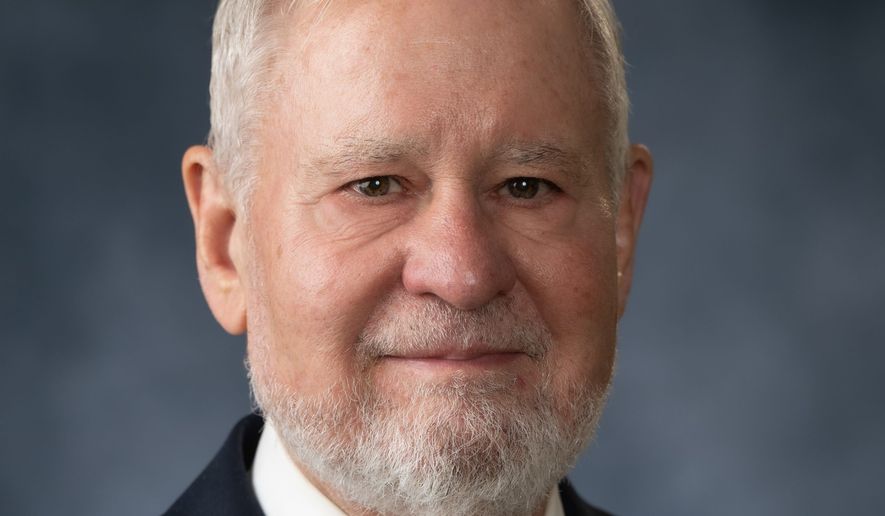
• Larry P. Arnn, Ph.D., is the 12th president of Hillsdale College, where he is also a professor of politics and history. Dr. Arnn is the author of three books: “Liberty and Learning: The Evolution of American Education”; “The Founders’ Key: The Divine and Natural Connection Between the Declaration and the Constitution and What We Risk by Losing It”; and “Churchill’s Trial: Winston Churchill and the Salvation of Free Government.”

Please read our comment policy before commenting.