



It’s always nice to see chess have a moment in the larger culture, especially a moment not tied to the latest cheating scandal or geopolitical standoff.
Netflix’s “The Queen’s Gambit” provided a major boost in popularity for chess with a wide audience, with a female protagonist who was both strong at the board and reasonably sane. Former world chess champ Magnus Carlsen got a nice cameo at soccer’s just-finished World Cup, getting a little facetime on the global broadcast as he watched his Norway team take on England from the stands.
And chess is getting a major shout-out in New York these days as part of the Museum of Modern Art’s massive retrospective of French-U.S. artist Marcel Duchamp, a lifelong chess enthusiast who incorporated the game into his art.
People were interested in these podcasts
MOMA on July 28 is staging a simultaneous exhibition in Duchamp’s honor, with U.S. GM Susan Polgar taking on 50 amateur challengers.
Duchamp, a founder of the Dada movement, may have been a path-breaking giant in the history of 20th-century art, but despite his passion for the game, he ranked as only a middling figure in the chess world of his day, a decent player with roughly the strength of a minor international master.
Still, he could boast of wins over such notable players as European masters Edgar Colle and Georges Koltanowski, and played some impressive games such as his nice win here over Dutch master Johannes Addicks at the 1931 Olympiad in Prague.
Like a good modernist of his day, Duchamp adopts the newfangled “Nimzo-Indian Defense,” and fortifies his defense with a long-term plan to challenge White’s imposing but immobile pawn center.
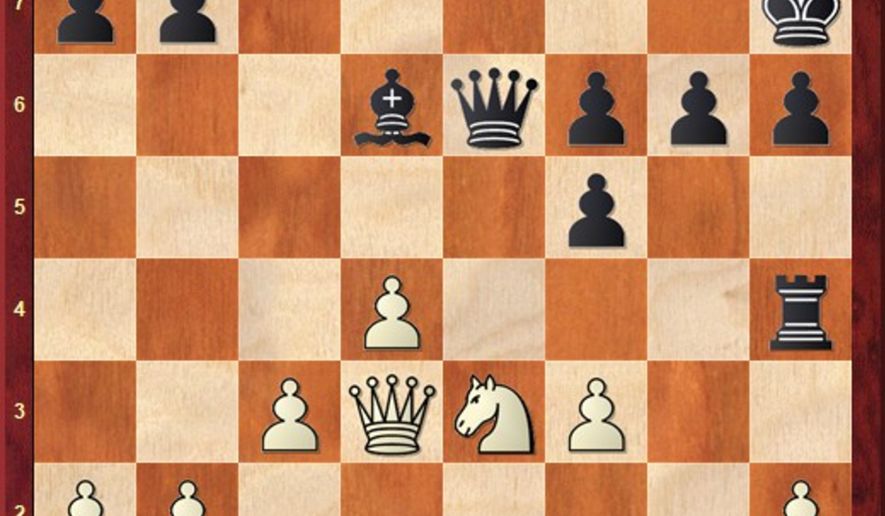
Both players embark on their middlegame strategies before bothering to care for their uncastled kings. Duchamp looks to punish his opponent with a double-edged piece sacrifice that works out swimmingly for Black: 20. Nf1?! (Bg2 Be6 21. b3 0-0 22. Bb2 offered White a much more manageable game) Nxe4!? (not decisive, but White will be on his back foot for the rest of the battle) 21. fxe4 Qxe4+ 22. Kf2 Nxh4! (Black traps his own queen on 22…Qxh1?? 23. Bg2), leaving Addicks’ king exposed as 23. gxh4? Qxh1 24. Bg2 Qxh4 is now winning for Black.
White misses a clever defensive resource and succumbs to a withering attack: 23. Rh2? (the eagle-eyed engines find the unexpected 23. Bd7+!! Bxd7 24. Rxh4 Bg4 25. Bd2 0-0-0 26. Re1, and White can fight on) Bxh3 24. gxh4 (Rxh3 Qg2+ 25. Ke1 Nf3+ and wins) Qf5+ 25. Kg3 (Qf3 Qxf3+ 26. Kxf3 Bxf1 just leaves Black three full pawns ahead) Bxf1 — Duchamp reclaims his sacrificed piece and the White king remains in the crosshairs.
Things are already looking beyond bleak when White allows a brisk finale: 29. Ke1 Rc8 30. Qd2 d5 31. Rg5? (only delaying the inevitable were lines such as 31. Rhg2 d4 32. Bf2 Qe4+ 33. Kd1 Bb3+) Qf1 mate. Not exactly an artistic masterpiece, but Black’s play here shows commendable spirit and initiative.
—-
The open and women’s U.S. senior and junior championships are at the midpoint at the St. Louis Chess Club, with some entertaining games already in the books. We’ll have full results in upcoming columns, but can offer a tease with Texas GM Andy Woodward’s attacking win over a feisty IM Alice Lee in Round 4.
Lee deserves credit for “playing up” in the open junior section, but Woodward, one of the country’s most promising young stars, shows his strength when the complications begin in earnest. This trendy London System Opening sparks an early battle over White’s efforts to establish an outpost on the e5-square.
The trades after 11. g3!? (0-0 Nxf4 12. exf4 cxd4 13. cxd4 would lead to a very different strategic battle) cxd4 12. exd4 Nxf4 13. gxf4 sets the tone for the fight to come: White accepts a crippled kingside pawn structure in exchange for attacking lines to the Black king, in particular the half-open g-file. Lee is holding her own for a while, even picking up a pawn on 19. 0-0-0 Bxf4+, but goes astray a few moves later with an ill-fated rook foray.
Thus: 23. Ne3 g6 24. Ba4 (Black has retained her extra pawn, but must be careful now as her d-pawn is weak and Woodward’s pieces are springing to life) Re4?! (better survival chances were offered by 24…Rd8 25. Nxf5 Bxf5 26. Qxf5 Kh7 27. Qf3 f5, though White still is better) 25. f3 Rh4 (an awkward outpost, but 25…Re7 allowed 26. Nxd5! Qxd5? 27. Bb3 winning) 26. Bb3 Kh7 (Be6 27. Nxf5 Bxf5 28. Qxf5 Kh7 29. Bxd5 gxf5 30. Bxf7 Rxh2 31. Be6) 27. Bxd5 Be6 28. Nxe6 Qxe6 (see diagram; White’s next requires some impressive calculation to ensure Black’s king doesn’t slip away) 26. Rxg6!.
The rook sacrifice blows up Black’s pawn ramparts and leaves Lee’s king exposed for the remainder of the game after 26…Kxg6 27. Nxf5 (hitting the rook and bishop with a discovered check to boot) Rf4 (Qxf5? 31. Rg1+ wins the queen) 31. Rg1+ Kf7 32. Nxd6+!, when 32…Qxd6 loses to 33. Qh7+ Ke6 (Ke8 34. Rg7 Qf8 35. Rc7! Rd8 36. Qg6+ Qf7 37. Qxf7 mate) 34. Re1+ Kd5 25. Qxb7+ Qc6 36. Qf7+ Kd6 37. Re6+ Kd5 38. Re7+ Kd6 39. Qe6 mate.
Woodward finds a string of precise moves to keep his attack at full throttle: 35. d6+! Kd7 (Ke6 36. Qc4+ Kd7 37. Qc7+ Ke6 38. Rg6+ Kd5 39. Qc5 mate) 36. Qc4! (sacrificing another piece so the White queen and rook can finish the job) fxe4 37. Qc7+ Ke6 38. Qe7+ Kf5 (Black’s king is also run to ground on 38…Kd5 39. Rd1+ Kc4 [Kc6 40. Qc7+ Kb5 41. Qxb7+ Kc5 42. b4+ Kc4 43. Qc6+ Qc5 44. Qxc5 mate] 39. Qxe5 e3 44. b3 mate) 39. Qf7+ Qf6 40. Qd5+ Qe5 41. fxe4+ Kf6 (Rxe4 42. Qf7+ Qf6 43. Rf1+) 42. Rg6+! and the Black queen is lost.
Lee still has two rooks for the queen, but White’s connected passed pawns will blast through any blockade. Black packs it in on 49. Kb3 a4+ 50. Ka3 — the White king has reached safety and the e- and d-pawns are ready to roll.
(Click on the image above for a larger view of the chessboard.)
Addicks-Duchamp, 4th Olympiad, Prague, July 1931
1. d4 Nf6 2. Nf3 b6 3. c4 e6 4. Nc3 Bb4 5. Qc2 Bb7 6. Nd2 Nc6 7. e3 e5 8. d5 Ne7 9. a3 Bxc3 10. Qxc3 d6 11. e4 Qd7 12. Be2 Ng6 13. h4 Nf4 14. Bf3 h5 15. g3 Ng6 16. Bg2 c6 17. Bh3 Qc7 18. dxc6 Qxc6 19. f3 Bc8 20. Nf1 Nxe4 21. fxe4 Qxe4+ 22. Kf2 Nxh4 23. Rh2 Bxh3 24. gxh4 Qf5+ 25. Kg3 Bxf1 26. Be3 Qg4+ 27. Kf2 Bxc4 28. Rg1 Qf5+ 29. Ke1 Rc8 30. Qd2 d5 31. Rg5 Qf1 mate.
Woodward-Lee, U.S. Junior Championship, St. Louis, July 2026
1. d4 d5 2. Nf3 Nf6 3. Bf4 e6 4. e3 Bd6 5. Ne5 O-O 6. Nd2 c5 7. c3 Nc6 8. Bd3 Qc7 9. Ndf3 h6 10. Bc2 Nh5 11. g3 cxd4 12. exd4 Nxf4 13. gxf4 Ne7 14. Nh4 Nf5 15. Qd3 f6 16. Neg6 Re8 17. Ng2 Kf7 18. N6h4 Kg8 19. O-O-O Bxf4+ 20. Kb1 Bd6 21. Rdg1 Qf7 22. Nxf5 exf5 23. Ne3 g6 24. Ba4 Re4 25. f3 Rh4 26. Bb3 Kh7 27. Bxd5 Be6 28. Bxe6 Qxe6 29. Rxg6 Kxg6 30. Nxf5 Rf4 31. Rg1+ Kf7 32. Nxd6+ Ke7 33. d5 Qe5 34. Ne4 f5 35. d6+ Kd7 36. Qc4 fxe4 37. Qc7+ Ke6 38. Qe7+ Kf5 39. Qf7+ Qf6 40. Qd5+ Qe5 41. fxe4+ Kf6 42. Rg6+ Kxg6 43. Qxe5 Rf7 44. Qe6+ Kg7 45. e5 h5 46. Qd5 a5 47. e6 Rf1+ 48. Kc2 Rf2+ 49. Kb3 a4+ 50. Ka3 Black resigns.
• Got a hot tip or a cool game to share? David R. Sands can be reached at davidrsands18@gmail.com.

Please read our comment policy before commenting.