



OPINION:
As America marks its 250th birthday, it’s worth noting a quieter anniversary: the 250th anniversary of the publication of Adam Smith’s “The Wealth of Nations.” This is no coincidence of the calendar.
By 1774, on the eve of revolution, colonial Americans were the most prosperous people on earth, ahead of Great Britain in per-capita income by over 50%, with colonial output increasing twelvefold in 70 years. This wasn’t the product of a king or a central plan. The founders inherited this prosperity, understood why it existed and built a republic to protect it.
But the story begins earlier, on a cold shore in Plymouth in 1620.
People were interested in these podcasts
The Pilgrims arrived under a charter requiring communal farming: Everything produced went into a common storehouse and was distributed equally regardless of effort. It sounded just. In practice, it was catastrophic. As Governor William Bradford recorded, the system bred “much confusion and discontent.” Productivity collapsed. Within two years, nearly half the colony was dead.
This was not a failure of character; it was a failure of institutions, the predictable result of severing effort from reward. Bradford saw it clearly: The planners had behaved “as if they were wiser than God.”
In 1623, Bradford divided the land into private plots. Each family now farmed for itself, and Bradford recorded what followed with something like wonder: “It made all hands very industrious.” Within four years, the colony had gone from starvation to surplus. Same people, same land — different rules.
The first Thanksgiving wasn’t a celebration of collectivism. It was a feast made possible by abandoning it.
The Founding Fathers understood this deeply. They were building a commercial republic: a nation of free people trading across state lines, generating prosperity no central plan could match. The Constitution became the largest free trade zone in the world, prohibiting tariffs between states and establishing common commercial infrastructure, because they knew power, left unchecked, would replace shared opportunity with institutionalized privilege.
Embedded in this was a transcendent vision of freedom’s purpose. George Washington repeatedly invoked Micah 4:4 — every man under his own vine and fig tree, none to make him afraid — not as decoration but as shorthand for property rights, rule of law and freedom from coercion. The founders weren’t building a welfare state. They were building conditions in which ordinary people could pursue extraordinary lives of their own choosing. They understood that with commerce as king, buttressed by virtue, integrity, prudence and hard work, the republic would withstand internal and external foes.
The framework worked, and the world noticed. When Alexis de Tocqueville visited in 1831, he marveled not at the government but at the people; their instinct was to form voluntary associations for every purpose government might otherwise claim. He warned of “soft despotism”: a state that, in trying to do everything for people, quietly crowds out their initiative and dignity.
The Pilgrims had learned that lesson the hard way. Bradford’s insight was that the problem was not the people but the system. Change the incentives, and the same people who languished became industrious.
Fast-forward to today. The United States produces roughly $30 trillion in GDP, which is 26% of global output, added within a single lifetime. That big number is really a proxy for something human: our ability to provide for our families, neighbors and communities and to pursue happiness and flourishing.
As we mark 250 years of independence, we should remember Adam Smith’s core insight: Wealth is a social process, powered by the division of labor and free exchange. We serve our neighbors best not by managing their choices but by protecting their freedom to make them. James Madison made the same point in Federalist 51: Because men are not angels, government must be constrained. But the genius of the American system is that the market constrains the individual even more powerfully than the Constitution constrains the state, through the discipline of profit and loss.
None of this happened by accident. The founders built a framework that made American innovation inevitable by institutionalizing economic freedom. As Smith showed, wealth is not divided; it is multiplied.
Bradford was right in 1623, and the truth hasn’t aged. We are stewards of the most successful experiment in self-governance in history. The task now is to remain worthy of it and protect it for future generations.
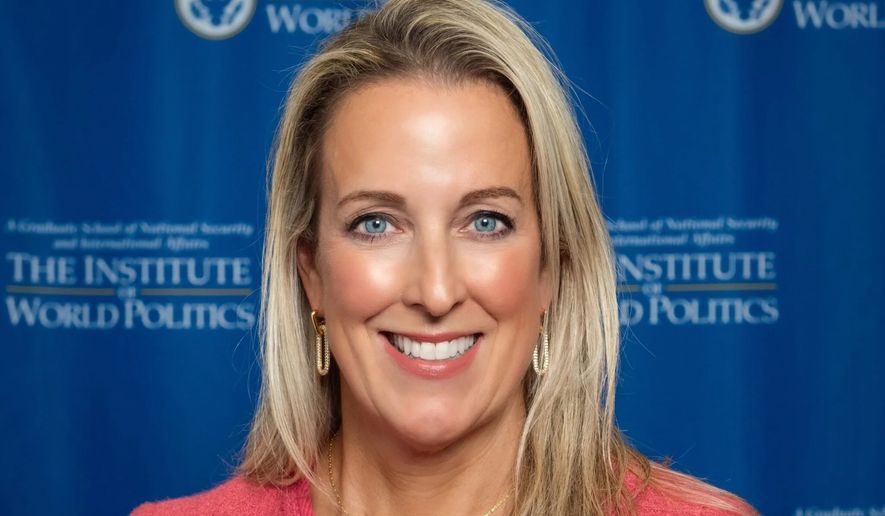
• Anne Rathbone Bradley, Ph.D., is a full-time professor at the Institute for World Politics. She is the George and Sally Mayer Fellow for Economic Education and the academic director at the Fund for American Studies and an Affiliate Scholar at the Acton Institute.

Please read our comment policy before commenting.