


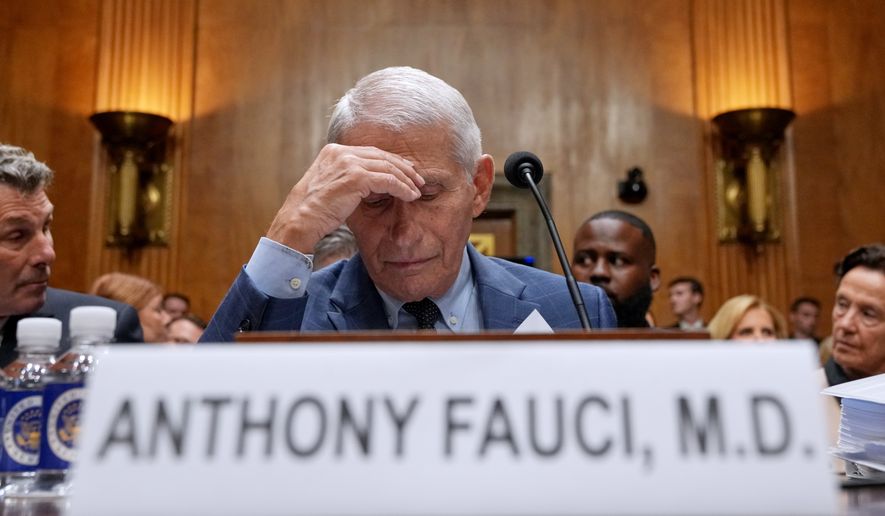

A Senate committee has scheduled a vote to hold Dr. Anthony Fauci in contempt of Congress after he appeared but refused to answer questions Wednesday about his activities during the coronavirus pandemic, citing his right against self-incrimination.
Homeland Security and Governmental Affairs Chairman Rand Paul said the vote will take place next week.
He rejected Dr. Fauci’s logic for invoking his Fifth Amendment right.
The Kentucky Republican said not only did a pardon from President Biden remove any criminal danger from Dr. Fauci for his pandemic-era decisions and conduct, but also, in giving a statement before invoking his right, he had, in effect, waived the right.
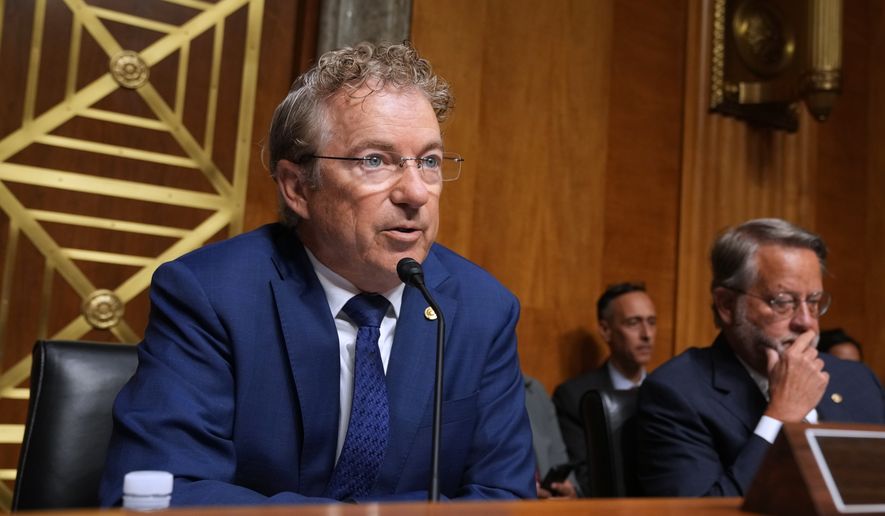
“I find your objection unsupported,” Mr. Paul told Dr. Fauci.
Dr. Fauci, in an opening statement to the committee, said he has testified repeatedly to Congress. But he said Mr. Paul’s history of antagonistic questions left him convinced that Wednesday’s hearing was an attempt to entrap him into saying something that would land him in legal hot water.
SEE ALSO: Fauci pleads the Fifth, refuses to answer questions to Congress
“The only conclusion I can reach is that the sole reason he is calling me before this committee is to get me to say something — anything — that could vindicate his repeated public pledges that I end up, in his words, ’behind bars,’” said Dr. Fauci, who is now retired from government service after decades running the infectious disease division at the National Institutes of Health.
He became the face of government efforts to respond to the coronavirus pandemic. He started off as a respected figure by both sides, but as his clashes with President Trump grew, and he eventually went to work directly for Mr. Biden, he became seen in partisan terms, with Mr. Biden’s backers deifying him and Mr. Trump’s supporters despising him.
Democrats used contempt of Congress against Trump figures during investigations into the mob intrusion on the Capitol on Jan. 6, 2021.
Steve Bannon and Peter Navarro both refused to testify, citing executive privilege to shield conversations with Mr. Trump. The House cited both for contempt, the Biden Justice Department pursued the cases and both men were convicted and served months in prison.
One issue for the committee ahead of next week’s contempt vote on Dr. Fauci is that he delivered an opening statement before refusing to answer questions.
Mr. Paul said that statement amounted to waiving his right against self-incrimination.
SEE ALSO: Trump says he warned Biden about Fauci, was ignored
Former IRS senior official Lois Lerner did something similar in testimony to the House in 2014, when she gave a statement but refused to detail her conduct during the IRS’ targeting of tea party groups for intrusive scrutiny.
The House eventually voted to hold her in contempt, though the Justice Department, under control of President Obama, refused to prosecute the case.
The Justice Department said Ms. Lerner’s opening statement did not amount to waiving her Fifth Amendment right because it was a general assertion of innocence, not a specific engagement with the committee’s questions.
Dr. Fauci’s statement Wednesday also dealt in generalities, though it was largely an attack on Mr. Paul.
The question of whether Dr. Fauci can refuse to testify, given the pardon for past behavior, will also weigh on senators.
The pardon, granted Jan. 19, 2025, a day before Mr. Biden left office, was displayed during Wednesday’s hearing.
It grants an unconditional pardon for “any offenses … which he may have committed or taken part in during the period from Jan. 1, 2014, through the date of this pardon arising from or in any manner related to his service” in the government.
Republican senators said that was a sweepingly broad pardon, comparable only to the one Mr. Biden issued for his son Hunter.
Contact the author


Please read our comment policy before commenting.