



1. What was discovered, and how?
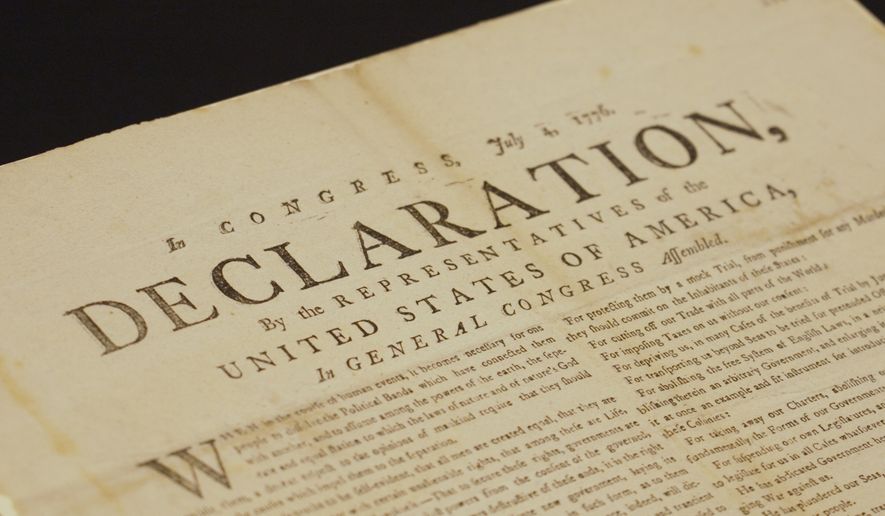
Michael Scurr, a volunteer at Britain’s National Archives, found a rare early printed copy of the Declaration of Independence while cataloging the correspondence of an 18th-century Royal Navy captain last May. The document was attached to a report on the capture of the American privateer Dalton on Christmas Eve 1776, tucked in as an unlabeled “another paper” enclosure.
2. Why is this discovery significant?
People were interested in these podcasts
Researchers identified it as one of just 11 known original copies of the Exeter, New Hampshire, printing, made July 16 to 19, 1776, and the only one found outside the United States. Its significance also comes from the circumstances of its capture, seized from a privateer operating under orders signed by Continental Congress President John Hancock, highlighting the little-known role of American sailors who fought at sea against the Royal Navy.
3. Who was involved in the ship’s capture, and what happened to the crew?
The Dalton, an 18-gun privateer, was chased for seven hours and captured on Christmas Eve 1776 by Capt. Thomas Fitzherbert’s 64-gun HMS Raisonnable off the coast of Portugal. Its 120-man crew, including 19-year-old Charles Hebert, was imprisoned in Plymouth, England, under harsh conditions involving hunger, illness and punishment, though many, including Hebert, survived and were eventually released in a prisoner exchange.
4. What does the discovery reveal about how the Declaration was used?
Amanda Bevan of the National Archives said she believes the Dalton’s captain would have read the Declaration aloud to the crew alongside his official orders, a customary practice. She suggests this framed the sailors’ fight not just as a personal grievance but as a commitment to a broader ideal, giving their mission at sea greater meaning.
5. How are historians reacting, and what does it mean for future research?
American historians, including Matthew Skic of the Museum of the American Revolution, have called the find a tangible link to 1776, comparing the moment to a baton being passed across time. Skic noted the discovery is proof that even 250 years later, new finds about the American Revolution remain to be uncovered.
For more on this report, read “Britain’s National Archives finds copy of Declaration of Independence in captured U.S. ship’s papers” from The Associated Press, published on The Washington Times.
This article was constructed with the assistance of artificial intelligence and published by a member of The Washington Times' AI News Desk team. The contents of this report are based solely on The Washington Times' original reporting, wire services, and/or other sources cited within the report. For more information, please read our AI policy or contact Steve Fink, Director of Artificial Intelligence, at sfink@washingtontimes.com
The Washington Times AI Ethics Newsroom Committee can be reached at aispotlight@washingtontimes.com.

Please read our comment policy before commenting.