



OPINION:
Socialist policies are quickly becoming ideological candy to progressives.
In the New York primaries, seven of eight democratic socialists won their bids. Politicians are becoming increasingly supportive of redistributionism and government control — to the detriment of American citizens.
Nearly half of undergraduate students surveyed at four-year colleges agree that socialist countries, such as Cuba and the Soviet Union, offer better economic models than capitalist countries. This sentiment is strong among young Democrats, who are twice as likely to view socialism as positively as they are capitalism.
People were interested in these podcasts
The idea that big-government socialism would produce better outcomes than free market capitalism is outright false. History suggests that heavily interventionist socialist models have underperformed free market systems over the long term. One needs only look to the experiences of America’s neighbors to the Global South to see this pattern exemplified.
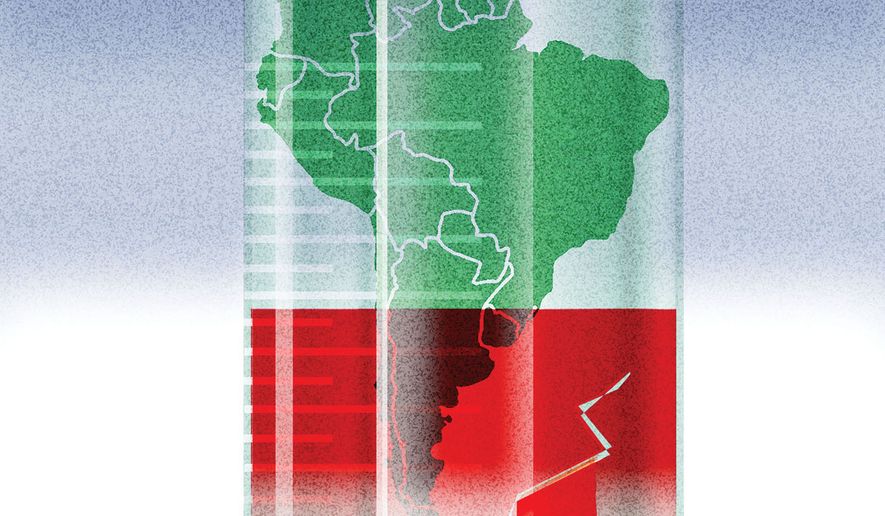
Beginning with Hugo Chavez’s election in Venezuela in 1998, and then expanding to Evo Morales in Bolivia and Luiz Inacio Lula da Silva in Brazil, a wave of left-leaning governments came to power in Latin America. This “pink tide” of newly elected socialist administrations was marked by state-controlled industries, expanded social spending and redistributionism.
High commodity prices, spurred by Chinese demand in the early 2000s, fueled roughly 4% annual growth in gross domestic product from 2000 to 2010. As prices fell after 2014, regional growth slowed to about 2%.
The very governments that relied on commodity exports to fund socialist policies found that inefficiencies from nationalization and corruption created trade deficits, national debt and floundering economies.
This cycle — boom-funded spending followed by a bust — is a recurring pattern in Latin America amplified by heavy state intervention and weak institutions.
Venezuela is the starkest cautionary tale. Under Chavez and Nicolas Maduro, oil-dependent nationalization, price controls, expropriations and money printing led to economic collapse. Per capita wealth fell by two-thirds, hyperinflation peaked at more than 65,000% in 2018, and millions of people emigrated.
As the failures of socialist policies once again became clear after a leftist resurgence during the COVID-19 crisis, voters pivoted toward centrists or conservatives, prioritizing economic security and growth through free market solutions.
Argentina was the first to eschew socialism in 2023 with the presidential election of libertarian economist Javier Milei. He repealed Lipovetzky Law rent controls, slashed government spending, deregulated and addressed persistent deficits.
Mr. Milei’s anti-interventionist and pro-business policies increased Argentina’s expected cumulative growth from 2024 to 2027 to 12.2% — a stark contrast with the negative 0.4% growth from 2011 to 2024.
Inflation fell from more than 200% in 2023 to 34% this April, stabilizing prices. The government even reported its second consecutive budget surplus.
Mr. Milei’s reforms have also benefited the country’s security and safety. Homicides are 19% lower than when Mr. Milei took office. Offenses across major categories — including robbery, theft, drug trafficking and organized crime — have decreased.
Argentina now has the lowest level of lethal violence in the Latin American and Caribbean region.
The country’s case is not a fluke. Expansive redistribution and state control that undermine incentives have frequently led to economic disappointment and social deterioration. Free market capitalism offers a path to prosperity and economic growth.
Mr. Milei’s work in Argentina is a model for other countries to follow. As a result, many Latin American nations, fatigued with inflation, economic stagnation, and crime, swung right in recent elections.
In 2025, Ecuador, Bolivia, Honduras and Chile elected candidates favoring free market practices. The dominoes continued to fall this year, with elections in Costa Rica, Peru and Colombia that defeated left-leaning, socialist or communist opponents.
Brazil may be the next country to vote right if socialist President Luiz Inácio Lula da Silva loses his reelection bid in October.
Political pundits have argued that U.S. Agency for International Development funding may have artificially propped up socialist governments in Latin America. Spending cuts made in 2025 under the Trump administration, which ended waste and ideological interference, have coincided with this regional rightward electoral shift.
Latin America’s pivot to conservative political leaders shows that voters have learned from repeated crises caused by government intervention. Still, the socialist appeal among American youths has become impossible to ignore.
The U.S. should learn the same lesson that Latin American voters have learned time and again: Socialist policies quash human and economic flourishing, while small governments and free markets facilitate prosperity and liberty.
• Nicole Huyer is a senior research associate in The Heritage Foundation’s Thomas A. Roe Institute for Economic Policy Studies. Camilla Cort is a member of Heritage’s Young Leaders Program.

Please read our comment policy before commenting.