



A version of this story appeared in the daily Threat Status newsletter from The Washington Times. Click here to receive Threat Status delivered directly to your inbox each weekday.
OPINION:
On Sept. 19, 2005, at the fourth plenary session of the six-party talks in Beijing, North Korea agreed to abandon all nuclear weapons and programs and return to the Treaty on the Non-Proliferation of Nuclear Weapons.
It took more than two years of intense negotiations to get North Korea to agree to abandoning its nuclear weapons program in return for security assurances and a path to normal relations with the U.S. The success was short-lived.
Today, North Korea has 60 or more nuclear warheads capable of being miniaturized and mated to ballistic missiles that can target South Korea, Japan and the U.S.
In a few years, North Korea will have enough fissile material from its plutonium and highly enriched uranium facilities to have more than 100 nuclear warheads.
North Korea has the short-range ballistic missiles to target Seoul and Tokyo. North Korea is now aligned with Russia, with a mutual defense treaty and more than 12,000 North Korean troops in Russia helping with Vladimir Putin’s invasion of Ukraine.
North Korea’s nuclear doctrine is “automatic” preemptive use of nuclear weapons if its leadership or command systems are under imminent attack.
North Korea’s progress with hypersonic missiles, to defeat missile defense systems, is impressive, as is its progress with cruise and anti-ship missiles.
A significant portion of the funding for these programs comes from the sale of conventional weapons and from illicit activities. North Korean hackers reportedly stole about $2 billion in cryptocurrency in 2025, in addition to selling counterfeit cigarettes and illicit drugs.
Apart from two meetings between President Trump and North Korean leader Kim Jong-un in 2018 and 2019, since 2009, when North Korea quit the six-party talks, the U.S. has ignored North Korea with a policy of “strategic patience.” It assumed Pyongyang would be contained, but it was not.
It built more nuclear weapons and more sophisticated ballistic missiles and embraced and aided the Russians against Ukraine.
Russia-Ukraine war
Russia’s invasion of Ukraine entered its fifth year on Feb. 24. It is Europe’s deadliest war since World War II, with significant casualties: Russia with more than 1.2 million casualties and 325,000 to 500,000 killed, and Ukraine with close to 600,000 casualties and 55,000 to 140,000 killed.
The United Nations has verified about 15,000 civilian deaths in Ukraine, but the number is probably higher.
Gaza Strip
On Oct. 7, 2023, Hamas conducted a massive surprise attack on Israel from the Gaza Strip, killing more than 1,200 people and abducting about 250 individuals as hostages.
A nominal ceasefire is in effect, although sporadic fighting occurs. Progress on advancing the U.S.-backed peace agreement into its second phase has stalled because of Hamas’ refusal to disarm.
Iran
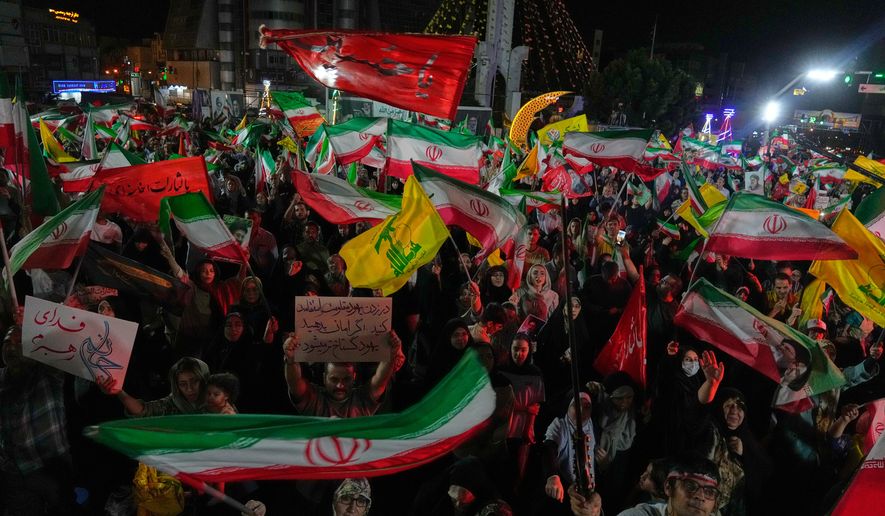
During the nationwide anti-government protests that began in December 2025, the Iranian government reportedly killed tens of thousands of protesters. Given internet blackouts and systematic media suppression by the Iranian government, obtaining accurate numbers of those killed is difficult.
U.S.-Israeli strikes on Iran reportedly killed more than 3,000 Iranians, with over 25,000 wounded. Of these, there were about 1,000 civilian deaths, including some women and children.
A temporary ceasefire has ended hostilities, with ongoing talks for a permanent ceasefire and an end to the war with Iran.
The world
Wars in Sudan, Myanmar and Congo continue, as do more than 50 countries directly involved in armed conflicts, the highest level since World War II.
War prevention and peace negotiations
An emboldened North Korea aligned with Russia can precipitate conflict on the Korean Peninsula. In 2005, North Korea agreed to denuclearize, but the U.S. failed to meaningfully engage with North Korea when it threatened to exit (and then exited) the six-party talks.
This can be corrected with President Trump, who is willing and prepared to meet with Kim Jong-un.
Aiding Ukraine and sanctioning Russia and those who aid Russia in its war with Ukraine would be prudent and well-received by the international community.
Getting Hamas to disarm so that the U.S. and others can rebuild Gaza is critically important.
A permanent ceasefire with a non-nuclear Iran that agrees to end its support to proxies that conduct terrorist acts is important.
Obviously, more must be done to prevent the proliferation of wars and conflicts. What the world is currently experiencing should not be viewed as the norm.
• The author is a former associate director of national intelligence. All statements of fact, opinion or analysis expressed are those of the author and do not reflect the official positions or views of the U.S. government. Nothing in the contents should be construed as asserting or implying U.S. government authentication of information or endorsement of the author’s views.
Follow the author


Please read our comment policy before commenting.