



A version of this story appeared in the daily Threat Status newsletter from The Washington Times. Click here to receive Threat Status delivered directly to your inbox each weekday.
OPINION:
American policymakers routinely make the same analytical mistake when assessing Iran: They assume that Iranian negotiating behavior is primarily a product of Shiite theology and revolutionary ideology.
Religion is important, but it is not the whole story. In many cases, it is not even the dominant story.
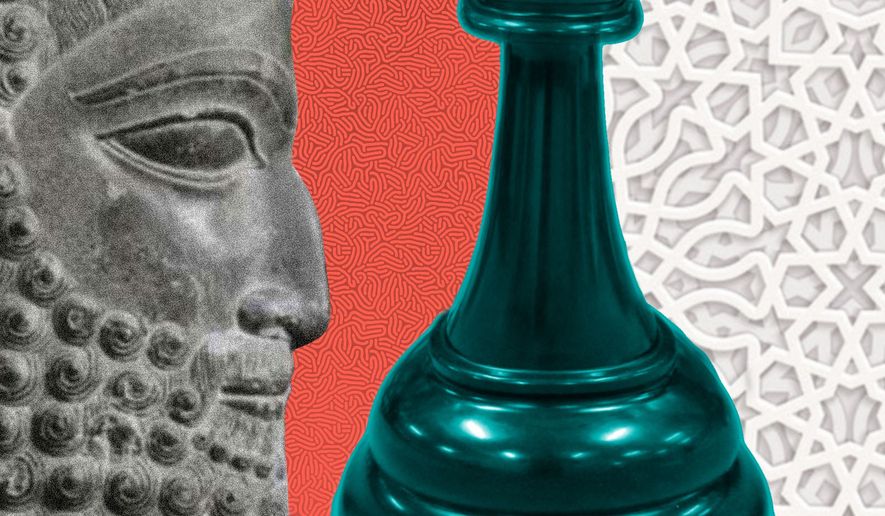
Iran’s negotiating behavior is best understood as the product of two interacting forces: Persian strategic culture and Shiite revolutionary ideology. The ideology explains the objectives; Persian culture explains the methods.
Understanding these forces is even more important now that President Trump and Tehran have reached a deal to end the war.
Confusing the two leads to repeated misinterpretation of Iranian intentions and negotiating behavior.
The Islamic Republic of Iran is only 47 years old. Persia is approximately 2,500 years old.
That distinction matters.
Many American officials approach negotiations as a process for resolving disputes. Iranian leaders often approach negotiations as a strategic contest in which time itself becomes a weapon.
Success is not necessarily measured by reaching an agreement. It may be measured by preserving options, exhausting an opponent’s political patience, surviving external pressure and advancing long-term objectives one increment at a time.
It appears to be working.
This perspective helps explain a recurring American frustration. Washington often expects sanctions, diplomatic isolation and economic hardship to force rapid concessions. Tehran frequently demonstrates a willingness to absorb those costs for years.
From the Iranian perspective, administrations come and go. Strategic objectives endure. The pattern is not new.
For centuries, Persian political culture has emphasized patience, maneuver and endurance. The objective is not necessarily to win quickly. The objective is to remain standing when the other side becomes tired, distracted, divided or replaced.
American negotiators often interpret this behavior as stalling. Iranian negotiators frequently view it as a strategy.
Another factor often overlooked by Western observers is the influence of the Persian bazaar. Numerous analysts have noted similarities between traditional bazaar bargaining and Iranian diplomatic behavior.
Extended negotiations, incremental concessions, testing an opponent’s resolve, concealing ultimate objectives and seeking maximum advantage before agreement are not viewed as unusual; they are viewed as normal.
An American diplomat may enter a negotiation believing that both parties are moving rapidly toward compromise. An Iranian negotiator may enter the same meeting believing that the real negotiation has barely begun.
The result is predictable. Washington sees delay; Tehran sees bargaining. Each side believes the other is behaving irrationally, even though both are actually operating under different strategic assumptions.
Communication presents another challenge.
Persian culture includes the concept of taarof, a sophisticated system of indirect communication, courtesy and layered meaning. Public statements may not fully reveal private intentions. Positions may be deliberately ambiguous. Concessions may be implied rather than openly stated. Western negotiators often interpret such behavior as evasive. Many Iranians regard it as culturally appropriate diplomacy.
This difference creates fertile ground for misunderstanding.
American officials often seek clarity, precision and explicit commitments. Iranian officials frequently operate within a framework that places greater value on flexibility, ambiguity and the preservation of negotiating space. Neither side is necessarily acting in bad faith; they are speaking different strategic languages.
The deeper issue is historical identity.
Many nations think of themselves as states. Many Iranians think of Iran as a civilization.
This distinction influences nearly every aspect of Iranian foreign policy. Iranian leaders often view their country as the heir to ancient Persian empires and as a regional power whose historical status exceeds its current circumstances. Consequently, issues of prestige, sovereignty, status and national dignity assume extraordinary importance. Negotiations become contests involving respect, recognition and perceived humiliation.
American policymakers sometimes underestimate this factor because modern Western strategic thinking tends to focus on material interests. Iran certainly pursues material interests, but it also pursues historical status. Those are not the same.
Persian culture, however, cannot fully explain Iranian behavior.
The Islamic Revolution of 1979 transformed Iran’s governing framework. The doctrine of Velayat-e Faqih provides the ideological foundation of the regime. Revolutionary narratives concerning resistance, anti-Americanism, opposition to Israel and defense of the Islamic system remain central to the regime’s legitimacy. These are foundational themes.
This revolutionary worldview explains why Tehran often negotiates while simultaneously applying pressure. Western observers frequently describe this behavior as contradictory. It is not.
Iran’s leadership sees no inconsistency in negotiating with the U.S. while expanding regional influence, supporting proxies or issuing threats. Negotiation is one instrument of statecraft; pressure is another. They can be employed simultaneously to pursue the same strategic objective.
This approach has been described as adaptive resistance. Preserve ideological commitments while maintaining sufficient tactical flexibility to secure practical advantages. The objective is survival, leverage and strategic gain.
Current negotiations reflect this enduring pattern. Tehran seeks sanctions relief, economic breathing room and access to financial resources. It also seeks to preserve regime legitimacy and protect capabilities that it considers essential to national security and survival. To Iran, these goals are complementary.
The policy implication is straightforward: The United States is not negotiating solely with a revolutionary Islamic government. It is negotiating with a civilization-state shaped by more than two millennia of Persian strategic culture and governed by a Shiite revolutionary framework.
Analysts who focus only on religion will misunderstand Iran’s methods. Analysts who focus only on geopolitics will misunderstand its motivations.
Persian statecraft explains how Tehran negotiates. Revolutionary ideology explains what Tehran seeks to preserve.
Until Washington recognizes both realities, it will continue to misread the intentions of one of the world’s oldest strategic competitors.
• William Gawthrop is a retired U.S. intelligence analyst with an analytic focus on Islam as a challenger civilization.

Please read our comment policy before commenting.