



OPINION:
Political analysts could not have predicted that President Trump’s second term would be marked by significant foreign policy engagements and national security advancements.
Yet Mr. Trump has broken the back of the world’s largest state sponsor of terrorism, nudged allies to prioritize their own national security, negotiated numerous peace deals and brought warring factions to the bargaining table after years of disputes.
No doubt U.S. influence on the global stage is, to borrow a word, huge.
With that powerful influence comes increased attempts by our enemies to undermine and thwart our leadership role in the world. China, Russia, North Korea, Iran and others are undoubtedly working overtime on tactics to cause disruption, sow division and find ways to sabotage the priorities of our leaders to keep the American people safe.
An emerging and effective method of accomplishing these goals is through the spread of infectious diseases and biological weapons that affect humans, animals and agricultural products. Whether it is a biological threat from an adversary or the emergence of novel viruses or diseases that can be transmitted from animals to humans, the threat to the U.S. homeland is real.
In 2020, Americans witnessed firsthand the devastation that a single infectious virus can cause to our country and the world. Thousands of tragic deaths, plus two years of lockdowns and regressive government policies, crushed our economy, ruined businesses, disrupted our children’s education, caused social upheaval and wreaked havoc on our ability to function as a society.
Perhaps learning lessons from that awful time in our history, part of Mr. Trump’s National Security Strategy is preparation for, detection of and response to emerging outbreaks of disease and biological threats. It is also meant to mitigate “any events that might harm the American people or disrupt the American economy.”
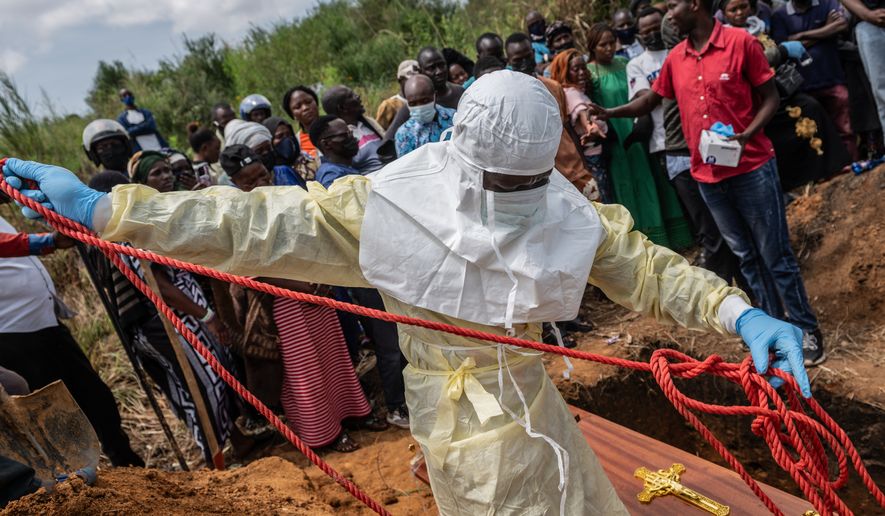
The recent horrors of a hantavirus outbreak on a cruise ship and the rapid spread of Ebola in Congo and Uganda show the need. The State Department jumped into action in March when Ebola was confirmed, leveraging its outbreak “response and humanitarian assistance capabilities, coordinating interagency and incident management systems,” and sending a disaster assistance response team to the region.
In folding the U.S. Agency for International Development into the State Department last year, the Trump administration reprioritized and reorganized the U.S. global health program. Now, it is a key part of U.S. national security.
The America First Global Health Strategy “cast a positive vision for a future where we stop outbreaks before they reach our shores, enter strong bilateral agreements that promote our national interests while saving millions of lives, and help promote and export health innovation around the world.”
Exporting health innovation. Saving millions of lives. As he did during Operation Warp Speed, Mr. Trump is working with the private sector to deliver targeted U.S. investments in global immunization, disease prevention and programs that tackle threats that debilitate societies and endanger global health. These include Ebola, HIV/AIDS, tuberculosis, malaria and a host of neglected tropical diseases. In fact, Mr. Trump has made clear that he wants to end mother-to-child transmission of HIV by the end of his term.
Regional mechanisms that track diseases, coordinate technical expertise and pool funds from the private sector and other governments include the Global Fund to Fight AIDS, Tuberculosis and Malaria, the President’s Emergency Plan for AIDS Relief, and Gavi, the Global Vaccine Alliance that targets these biological threats and helps the most vulnerable.
With this strategy, the Trump administration is not exporting woke programs. Instead, it is offering healthcare delivery that is more innovative and efficient in the regions where it is needed most.
A Military Review study identified the military advantages: “[Global health engagement] operations, activities, and investments (OAI) provide proactive and enduring opportunities to gain access and placement, project U.S. presence, build deep trust with critical partners, optimize partner-nation health systems, and develop coalition force interoperability in personnel, training, doctrine, and equipment.”
Gaining access, projecting U.S. presence and building deep trust are the benefits of a U.S. national security plan that looks into the future, mitigates potential threats and buttresses strategic interests.
As Secretary of State Marco Rubio has pointed out, the U.S. is the most generous country in the world. Our health security programs bring a tremendous return on investment in terms of lives and money.
Another great Trump achievement would be working with a Congress that fully implements and funds a global health strategy to save lives and keep Americans safer and healthier.
• Paul Teller is president of Teller Strategies. He served all four years in the Trump-Pence administration and previously served on Capitol Hill.

Please read our comment policy before commenting.