



OPINION:
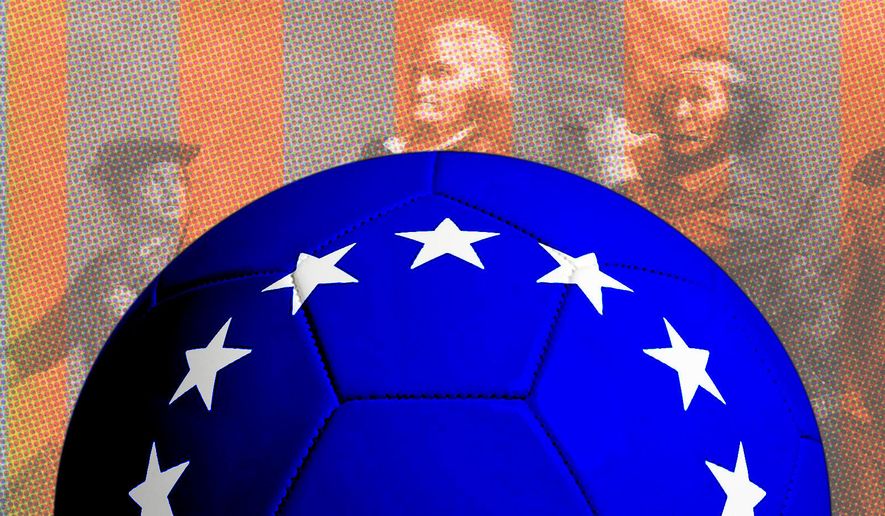
As Team USA competes in the 2026 FIFA World Cup, it does so beneath one of the oldest revolutionary symbols on earth: our red and white stripes.
Most fans see only a soccer uniform, but history recognizes these simple stripes as the basis of American rebellion.
Indeed, our nation’s red and white stripes — standing alone without the blue field of stars — flew as symbols of bloody Colonial resistance as early as the 1760s. The Sons of Liberty carried them during conflicts that predated the United States itself.
People were interested in these podcasts
Benjamin Franklin understood exactly what these stripes represented and popularized the term “patriot” as he shifted from a loyal Colonial subject to a fierce advocate of independence.
Franklin championed this revolutionary movement while proposing that our national motto should be “Rebellion to Tyrants is Obedience to God.” Although “E Pluribus Unum” prevailed on the Great Seal, Franklin’s notion captured the spirit of the moment.
Today, the word “rebellion” makes some uncomfortable, but that is exactly how America was born. The Declaration of Independence was not a polite petition but a declaration for self-government at any cost.
Likewise, Trump supporters today may rightly see the administration as rebellious for challenging globalist orthodoxies, demanding NATO burden-sharing and rejecting assumptions that previous leaders treated as untouchable.
Agree or disagree with the administration, resistance, independence and sovereignty are all baked into our American DNA, making the spirit of our FIFA stripes more relevant today than at any other point in my lifetime.
Our U.S.-inspired rebellious spirit is contagious. Bold new governments everywhere are now confronting movements that reject long-settled orthodoxies.
In Poland, Foreign Minister Radosław Sikorski has warned opponents and is laying the groundwork for rebellion against the European Union. In Venezuela, officials who once denounced challengers as seditionists are having second thoughts. Various nations and causes, yet all reveal that rebellion — as it was 250 years ago — remains one of the most powerful political forces of our time.
The U.S. soccer stripes mirror those carried by the Sons of Liberty and, later, patriotic societies such as the Improved Order of Red Men. They represent a continuing counterweight to concentrated power.
Today, those same red and white stripes appear not only across the jerseys of Team USA but also from the yards of U.S. Navy warships operating in places such as the Strait of Hormuz.
Whether flown at sea or worn on the world’s playing fields, the stripes connect America’s revolutionary past to its modern presence on the world stage. Our stripes have never been passive; they have long symbolized resistance to tyranny and the willingness to confront it.
In the 2026 World Cup, among all 48 competing nations, America’s bold red-and-white striped kit wears “rebellion” more prominently than any other. While other nations’ uniforms display cultural flair or heritage, none matches our direct revolutionary lineage.
Haiti came closest. Its original jersey featured imagery from the 1803 Battle of Vertieres, but FIFA ordered it altered as impermissible political messaging. America’s stripes, by contrast, are so embedded in our national identity that their revolutionary origins often pass unnoticed — even by well-educated Americans.
That makes Team USA’s World Cup kit more than athletic apparel. Every stripe tells a story older than our country, linking today’s athletes to patriots who understood that freedom demands courage and self-government requires backbone.
Our stripes never left. They fly on the American flag, and 13 of them alone flew on the first U.S. Navy Jack, with its defiant rattlesnake. In the past year, sailors carrying our stripes destroyed Houthi drones and missiles in the Red Sea, defended merchant shipping and sank Iranian naval forces attempting to hold a vital maritime corridor hostage.
Iranian commanders and their proxies know exactly what our red and white stripes represent. They are the banner of a nation born in bloody rebellion and still willing to defend freedom of navigation, free commerce and the defeat of tyrants.
Some 250 years after Franklin proposed “Rebellion to Tyrants is Obedience to God,” Americans still carry its symbols. Now our rebellious stripes reach a global audience as the FIFA World Cup draws more than 5 billion people — placing America’s oldest symbol of resistance before more people than any generation of patriots could have imagined.
• Andre Billeaudeaux, a retired U.S. Coast Guard commander and former strategic communications specialist at Naval Special Warfare Command, writes extensively on culture, history and U.S. national identity.

Please read our comment policy before commenting.