



OPINION:
Should the federal government step in and impose union contracts when labor negotiations stall?
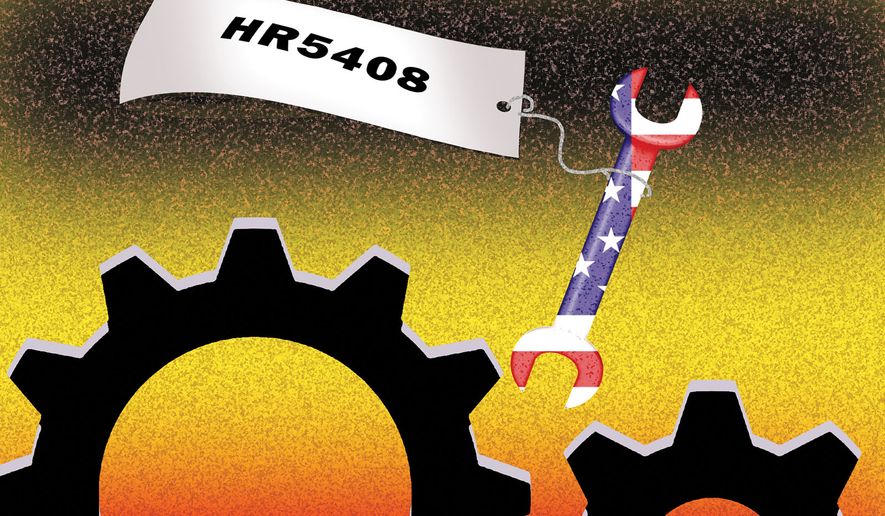
Rep. Donald Norcross, New Jersey Democrat, thinks so. His Faster Labor Contracts Act (H.R. 5408) passed the House of Representatives on June 9 by a 230-193 vote, with 20 Republicans joining the Democrats in support.
Although the legislation aims to accelerate first contracts for newly unionized workplaces, it does so by replacing voluntary, mutually beneficial agreements with government compulsion. This undermines the core principles that define American labor and economic exceptionalism: freedom of contract, individual liberty and market-driven outcomes.
People were interested in these podcasts
The remedy to prolonged labor negotiations is not federal contract-writing, which distorts incentives and weakens voluntary partnerships between workers and employers. Instead, policymakers should remove barriers to voluntary agreements and equip workers and employers with the information they need to negotiate effectively.
H.R. 5408 and its Senate companion, S. 844, aim to shorten the time between a workers’ vote to unionize and the first collective bargaining agreement. Government-written labor contracts could be imposed in as few as 130 days.
The process is as follows: Employers must begin bargaining within 10 days of a newly certified or recognized union’s written request for bargaining under the National Labor Relations Act and make “every reasonable effort” to reach a first collective bargaining agreement. If no agreement is reached within 90 days of good-faith bargaining, either party may request assistance from the Federal Mediation and Conciliation Service.
If mediation fails after 30 days, the Federal Mediation and Conciliation Service refers the dispute to a three-member panel (one chosen by the union, one by the employer and one neutral arbitrator). A majority decision by the panel becomes the binding collective bargaining agreement for at least two years.
Empowering public bureaucrats to impose private sector labor contracts is the wrong way to help workers. The bill’s rigid 130-day timeline and Federal Mediation and Conciliation Service mediation exemplify blatant government overreach into private contracts. They replace self-interested negotiation — which traditionally facilitates mutually beneficial contracts for workers and employers — with unelected bureaucrats who lack firm-specific knowledge of operations, industry dynamics and long-term viability.
This one-size-fits-all timeline ignores the complex reality of workplace negotiations. Most first contracts take six to 12 months to complete, as negotiations over wages, salaries and benefits require ample time to evaluate.
A rushed 130-day process risks deciding on impractical terms that may harm business competitiveness, sustainability and jobs — echoing historical failures of government wage or price controls.
Additionally, the legislation erodes workers’ choice. Imposed contracts bind all workers in the unit, including those who opposed unionization, with no required ratification vote.
It also shifts leverage from mutual 50-50 agreements between workers and employers to a one-third share with the appointed “neutral” arbitrator, who may lack firm-specific knowledge or be swayed by incomplete information or political ideology.
Finally, the bill dramatically expands the role of the Federal Mediation and Conciliation Service, an agency already facing scrutiny over efficiency, waste and bias. Bureaucrats have no skin in the game, unlike workers and employers, who must live with the results of collective bargaining agreements.
American labor laws must reflect the fact that workers and employers are partners in value creation, not adversaries needing federal referees.
Now that the House has passed H.R. 5408, it is vital that the Senate weigh the costs of S. 844. Legislation should advance reforms that protect the freedom of contract and allow parties to engage in self-interested negotiations. Contracts that workers and employers mutually agree on produce more sustainable outcomes than top-down federal mandates.
For example, the Employee Rights Act (H.R. 4154) strengthens secret-ballot elections, protects worker privacy, requires lawful immigration status for voting, bars mandatory diversity, equity and inclusion provisions in contracts, and increases penalties for threats or violence during campaigns.
These changes promote genuine democracy without government-dictated outcomes.
The National Right-to-Work Act (H.R. 1232) similarly advances worker freedom and opposes compulsion by eliminating forced union dues or membership as a condition of employment.
As the Supreme Court ruled in Janus v. AFSCME (2018), compelling workers to subsidize an organization they oppose violates First Amendment rights of free speech and association. No American worker should be compelled to form, join or fund a union.
American labor laws must ultimately embrace competition and worker choice. Policies should empower individuals with information, options and voluntary association — not mandate compulsion using Washington referees.
History demonstrates that government intervention in private economic relations leads to distortion, inefficiency and unintended consequences.
Congress must thoroughly evaluate the economic risks of the Faster Labor Contracts Act. Labor markets work best when agreements are chosen, not imposed, and crossing that line risks trading American dynamism for bureaucratic control.
• Nicole Huyer is a senior research associate in The Heritage Foundation’s Thomas A. Roe Institute for Economic Policy Studies.

Please read our comment policy before commenting.