



They grow up so fast these days.
The world will soon have its first grandmaster born in the Obama administration’s second term, as talented Argentine prodigy Faustino Oro secured the third and final norm this month to qualify for the game’s most prestigious title.
Oro’s 6-3 result at the recent Sardinia International Chess Festival earned him the GM title at the age of 12 years, six months and 26 days. He becomes the second-youngest grandmaster in history, just behind U.S. GM Abhimanyu Mishra, who qualified in 2009 at the tender age of 12 years, four months and 25 days. Chess prodigies once had a way of flaming out, but the more recent record has been more encouraging: Ranking fourth and sixth on the all-time youngest GM list are current classical world champion Gukesh Dommaraju of India and Uzbekistan’s GM Javokhir Sindarov, who will play Gukesh in a title match later this year.
People were interested in these podcasts
Oro’s quest for that final norm result got off to a great start in Sardinia with a sharp first-round win over German FM Gerhard Lorscheid. Black’s Philidor Defense is a relatively rare visitor to top-flight chess these days, but Oro handles the unusual opening with veteran aplomb.
White’s 5. Rg1!? g6 6. g4 is a very modern idea in this very old line, wasting no time looking to blast open a file to where Black’s king will likely land. Already on 9. f3 0-0 10. Qd2, Black might have been better advised to take active measures to head off the coming storm with 10…Bxg4!? 11. fxg4 Nfxe4 12. Nxe4 Nxe4 13. Qg2, and the engines say Black’s counterplay is enough to offset his material deficit.
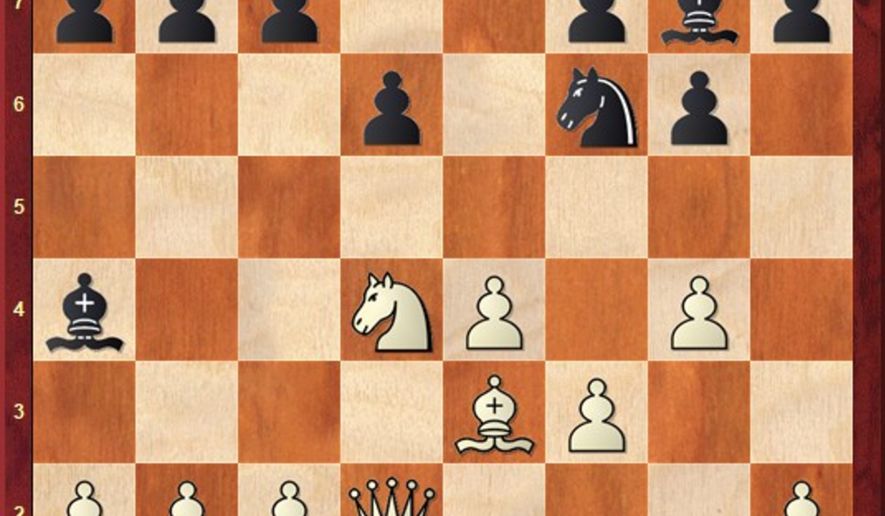
After 10…Re8 11. 0-0-0 Bd7? (too modest by half — Black underestimates the peril he faces on the kingside; again 11…Bxg4!? deserved a long look) 12. Kb1 Na4 13. Nxa4 Bxa4 (see diagram), and now the tween grandmaster-to-be shows he knows how to conduct an old-school sacrificial attack.
Thus: 14. Nf5! gxf5 (the threat was 15. Nxg7 Kxg7 16. Qd4!, hitting the bishop on a4 and threatening to win the knight with 17. g5; retreating here with 14…Bf8 leads to such fun lines as 15. Bd4 d5 16. exd5 Qxd5 17. b3! [Bxf6?? Qxd2 18. Rxd2 Re1+] Bc6 18. Qg5 Nd7 19. Bc4 Qxf3 20. Rdf1 Qe4 21. Nh6+ Bxh6 22. Bxf7+ Kf8 23. Bd5+ Qf5 24. Rxf5+ gxf5 25. Bc5+! Nxc5 26. Qf6 mate) 15. gxf5 Kh8 16. Rxg7!?, giving Black a sliver of hope compared to the more straightforward 16. Bd4! c5 17. Rxg7! cxd4 18. Qh6 Qe7 19. Bc4 Rf8 20. b3 Bc6 21. Rdg1.
Under heavy pressure, Black misses his last chance to fight on after 16…Kxg7 17. Bd4 h6 18. Bc4 Qe7? (Rg8! leave White still with work to do to cash in after 19. b3 d5! 20. exd5 Bd7 21. d6 cxd6 22. Qf4 Rc8), and it’s curtains after 19. Qc3 Rg8 20. b3! (maturely sidestepping the hasty 20. Bxf6+?? Qxf6 21. Rg1+ Kh7, and the Black queen can’t be taken because of the back-rank mate threat) c5 21. Bxf6+. Scheid has seen enough and resigns.
Black’s queen is lost and his position untenable after 21…Qxf6 22. Rg1+ Kh7 23. Qxf6 Rxg1+ 24. Kb2 Be8 25. Qxd6 b6 26. Bd5 Rc8 27. Bb7.
—-
The stunning success of Sindarov and the Uzbekistan Olympiad team — a bronze medal in 2024 after a stunning gold-medal win in 2022 — has focused new attention on the rising stars of the central Asian nation. One player to watch may be 18-year-old IM Bakhrom Bakhrillaev, who just won the country’s 1st League Championship in Tashkent.
Bakhrillaev, a half-point clear of the field entering the final round, clinched clear first with a win from the White side of a classic Giuoco Piano line against CM Miraziz Matyakubov. A positional battle breaks out on 14. a4 b5 15. d4, as White answers Black’s queenside expansion with a traditional counterpunch in the center.
White seizes the high ground on 16. Be3 Rd8 (just to illustrate the richness of the position, the plausible 16…b4!? 17. d5 Bd7 18, c4 Kh7 would have yanked the game in a starkly different direction) 17. d5 Bd7 18. c4! bxc4 (Black has to cede the initiative to his opponent as 18…bxa4?! 19. Bxa4 Rb8 20. Bxd7 Rxd7 21. Qc2 makes the isolated Black a-pawn a long-term defensive liability) 19. Nd2 Nh4?! 20. Kh2! (stopping Black’s hoped-for 20…Bxh3! 21. gxh3 Qxh3, with a decisive attack) c3 21. Nc4 cxb2 22. Rb1 — Black is temporarily two pawns ahead, but one pawn must fall, and White has piled up some very useful positional chips as well.
Facing a long, slow deterioration in his position, Black rolls the dice with 22…Bb5?! (getting three passed pawns for the lost piece; Black understandably didn’t like the looks of more passive defenses such as 22…Rb8 23. Nxd6 Qc7 24. Nc4 Rb4 25. Qe2 and 22…Ne8 23. Rxb2 Rb8 24. Rxb8 Qxb8 25. Bd2 Ng6 26. Ba5 Rc8 27. Qh5, with the threat of 28. Nf5 Bxf5 29. Qxf5 Nf8 30. Rb1) 23. axb5 axb5 24. Na5 c4.
Black’s queenside pawn mass could be dangerous if ever given the time to link up, but Bakhrillaev doesn’t give his opponent the chance: 25. Bxa7 Rxa7 26. Nc6 Rdd7 27. Rxb2 Qa6 (Rab7 28. Qb1 and the b-pawn falls, leaving Black down a piece for just a pawn) 28. Nxa7 Rxa7 29. Qd2, and Black is down in material, and his pawns remain frozen in place.
With 33. Rb4 g5 34. Rxc4, another pawn falls, and Black packs it in. The ending could have gone something like 34…bxc4 35. Rxb7 Na6 36. Rb5 Qd8 37. Na4 Kh7 38. Qa5 Qxa5 39. Rxa5 Nb4 40. Bb1 and wins.
(Click on the image above for a larger view of the chessboard.)
Oro-Lorscheid, Sardinia International Open, Orosei, Italy, May 2026
1. e4 d6 2. d4 Nf6 3. Nc3 e5 4. Nf3 Nbd7 5. Rg1 g6 6. g4 exd4 7. Nxd4 Bg7 8. Be3 Nc5 9. f3 O-O 10. Qd2 Re8 11. O-O-O Bd7 12. Kb1 Na4 13. Nxa4 Bxa4 14. Nf5 gxf5 15. gxf5 Kh8 16. Rxg7 Kxg7 17. Bd4 h6 18. Bc4 Qe7 19. Qc3 Rg8 20. b3 c5 21. Bxf6+ Black resigns.
Bakhrillaev-Matyakubov, Uzbekistan Championship 1st League, Tashkent, May 2026
1. e4 e5 2. Nf3 Nc6 3. Bc4 Bc5 4. O-O Nf6 5. d3 a6 6. Re1 d6 7. c3 Ba7 8. Bb3 h6 9. Nbd2 O-O 10. h3 Be6 11. Bc2 Ne7 12. Nf1 Ng6 13. Ng3 c5 14. a4 b5 15. d4 Qc8 16. Be3 Rd8 17. d5 Bd7 18. c4 bxc4 19. Nd2 Nh4 20. Kh2 c3 21. Nc4 cxb2 22. Rb1 Bb5 23. axb5 axb5 24. Na5 c4 25. Bxa7 Rxa7 26. Nc6 Rdd7 27. Rxb2 Qa6 28. Nxa7 Rxa7 29. Qd2 Ne8 30. Ne2 Nc7 31. Nc3 Qa5 32. Reb1 Rb7 33. Rb4 g5 34. Rxc4 Black resigns.
• Got a hot tip or a cool game to share? David R. Sands can be reached at davidrsands18@gmail.com.

Please read our comment policy before commenting.