


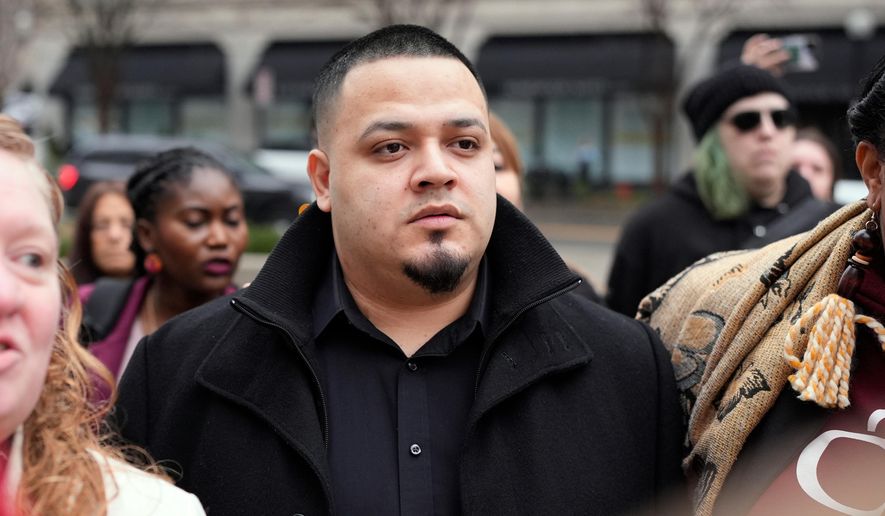

A federal judge has thrown out the Trump administration’s criminal case against Kilmar Abrego Garcia, ruling that it was a vindictive prosecution.
Judge Waverly Crenshaw Jr. said Friday the government only launched the criminal case after it ran into trouble with its deportation case against Mr. Abrego Garcia. Rather than just bring him back from El Salvador, where he had been wrongly deported, the government secured a criminal indictment.
The judge specifically said acting Attorney General Todd Blanche “tainted” the investigation into Mr. Abrego Garcia.
People were interested in these podcasts
“The objective evidence here shows that, absent Abrego’s successful lawsuit challenging his removal to El Salvador, the government would not have brought this prosecution,” Judge Waverly wrote.
Mr. Abrego Garcia is still battling his potential deportation, but Friday’s ruling erases the criminal charges he’d also faced.
The Justice Department said it will appeal.
“Another activist judge has placed politics above public safety. The judge’s order is wrong and dangerous,” the department said in a statement.
The case stemmed from a 2022 incident where Mr. Abrego Garcia was stopped on a highway in Tennessee with a carload of migrants.
Police suspected he was smuggling them, but no charges were brought then.
Last year, as Mr. Abrego Garcia was battling — and beating — the Trump administration in a case challenging his deportation, the feds renewed the criminal investigation.
Mr. Abrego Garcia was part of the controversial flights of migrants from the U.S. to El Salvador on March 15, 2025. Most were Venezuelans whom the administration accused of being gang suspects, and were deported under the Alien Enemies Act.
But some were Salvadorans whom the U.S. was sending back to their home country.
Mr. Abrego Garcia was among them, though an immigration judge had explicitly said he couldn’t be sent back for fear of facing reprisal from a gang.
The case became a cause for Democrats, who cheered Mr. Abrego Garcia as a “Maryland man” whose rights had been abused.
He sued and, in a case that went all the way to the Supreme Court, the administration was ordered to “facilitate” his return. Facing that embarrassing loss, the administration did bring him back — but only after it secured the indictment in the criminal case.
That stemmed from a 2022 incident where Mr. Abrego Garcia was stopped on a highway in Tennessee with a carload of migrants.
Police suspected he was smuggling them, but no charges were brought then.
With the new indictment in hand, Mr. Abrego Garcia was returned from El Salvador.
But he quickly won pretrial release, so the administration then sought to have him re-arrested and deported. But Judge Paula Xinis, who issued the original order that he be brought back, blocked his rearrest, saying there wasn’t a valid deportation order.
The government then secured a valid deportation order, but Judge Xinis ruled Mr. Abrego Garcia could remain free while she pondered the deportation case further.
That matter is still pending.
Mr. Abrego Garcia has said he would accept deportation to Costa Rica, and that nation has indicated it would take him.
But the Trump administration has rejected that idea, instead searching for less cushy deportation options in Africa. Judge Xinis has questioned the motives of those decisions.
On Friday, Homeland Security vowed to carry out the deportation.
“Kilmar Abrego Garcia’s final order of removal stands, and activist judges cannot change that fact,” DHS said. “This Salvadorian is not going to remain in our country.”
Losing the criminal case is another black eye for a Justice Department that has struggled to defend the actions of U.S. Immigration and Customs Enforcement.
In the criminal case, Judge Crenshaw, an Obama appointee, said the idea of pursuing charges against Mr. Abrego Garcia appears to have come from Justice Department headquarters in Washington.
He said Homeland Security only reopened its investigation after Mr. Abrego Garcia was winning his deportation case from afar.
The timing of that, and Mr. Blanche’s public comments connecting the criminal case to Mr. Abrego Garcia’s success in his deportation case, “taints the investigation with a vindictive motive.”
He said he didn’t find “actual vindictiveness” but said the government failed to counter “the presumption of vindictiveness.”
“The evidence it labels as newly discovered was available to be obtained with due diligence long before April 2025. Even more, it does not explain the government’s change in position to remove Abrego and not prosecute him to then prosecute and not remove him,” the judge concluded.
Contact the author


Please read our comment policy before commenting.