


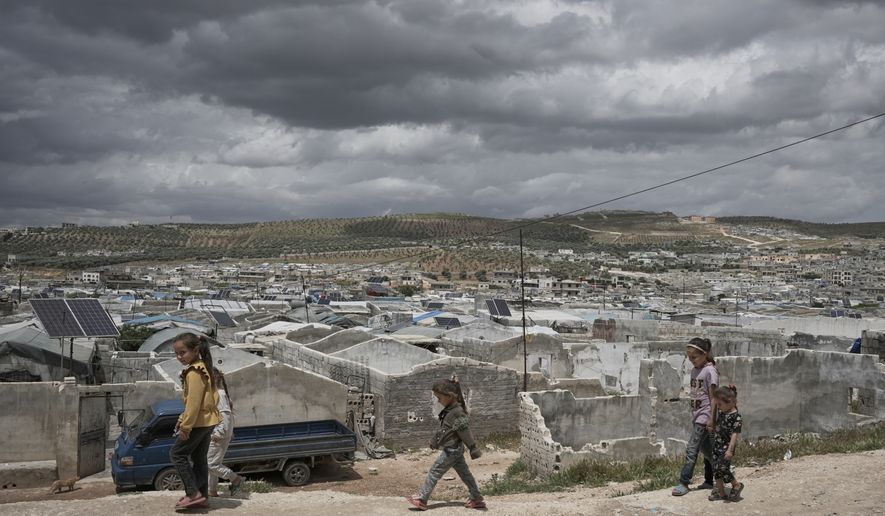

ATMEH, Syria — Sobhieh al-Saleh thought she would finally leave her tent and return home the moment a rebel offensive in late 2024 ousted then President Bashar Assad, and brought an end to more than a decade of conflict.
But she still lives in the al-Karama camp, a tent settlement in the northwest town of Atmeh in Idlib province near the Turkish border, with her husband, seven sons and four daughters.
“I went and saw my house and it was completely razed to the ground,” she told The Associated Press about her home in al-Lataminah on the other side of Idlib province that she left at the height of the conflict. Though more than half the camps’ residents have left, like many other Syrians living in poverty, she can’t afford to rebuild her home and return.
People were interested in these podcasts
So in the meantime, she continues to live in misery. Every year, the rain leaks through the tent, and every summer she and the estimated 40,000 others still in that sprawling camp have to deal with the sweltering heat and flies.
Syria’s uprising-turned-civil war from 2011 until late 2024 battered the country, and plunged more than 90% of its population of around 26 million into poverty. Rebuilding it will cost hundreds of billions of dollars, according to U.N. figures.
The war killed 500,000 people, wounded more than 1 million and displaced more than half Syria’s prewar population of 23 million.
The government under interim President Ahmad al-Sharaa has made strides in restoring ties between Syria and the international community, waiving crippling sanctions and promising sweeping reforms.
More than a year after the war had ended, more than 7 million Syrians displaced within the country can’t return home. A million of them still live in tents, like al-Saleh, according to the United Nations.
Al-Sharaa has vowed that displaced Syrians will no longer live in tents and will have alternative housing by the end of 2027. Saudi Arabia has pledged to support this initiative with $1.5 billion.
But despite major investor commitments and partnerships being signed to bring jobs and money into the country, the scale of the devastation means that alleviating poverty and bringing people back home will take time.
The World Bank estimates that postwar reconstruction would cost around $216 billion. Almost 18 months after the fall of the five-decade Assad family rule, large parts of Syria’s main cities like Aleppo and Raqqa in the north, and Homs in the center, as well as parts of Damascus, remain in ruins.
At the same time, time isn’t on the government’s side. Humanitarian agencies, which for years have experienced major budget cuts, continue reducing the size of their programs that millions of Syrians still rely on.
“Where are we going to get money to rebuild? We’re barely able to provide ourselves with bread and water,” al-Saleh said. “No aid has come to the camp since the liberation.”
Most recently, the World Food Program announced on May 13 that it reduced by half its food assistance program to the most vulnerable that once supported 1.3 million people. It also cut a bread subsidy program that millions relied on.
At the same time, inflation has surged in Syria, making it difficult for people to save adequately to rebuild.
“The cost of building materials has surged beyond comprehension. I can barely afford to take my medications,” said Abdulhamid Abu Alaa, who lives with his family in the same camp as al-Saleh.
He said that he and many others are still paying off debts from loans they took to help cover their basic expenses.
Abu Alaa said that despite Syria’s major diplomatic and economic breakthroughs, he urges the government to respond quickly to the country’s poorest who still live in abysmal conditions.
“The government’s priorities need to change, and put the needs of the poorest people above all things,” he said.
The United Nations still vows to do the best it can with its resources to help ease the financial burdens of Syrians and support al-Sharaa’s project for 2027.
On a visit to a camp in Idlib’s Maarat Misrin area, the U.N. resident and humanitarian coordinator in Syria, Nathalie Fustier, said that the private sector and international financial institutions might need to help al-Sharaa reach the late 2027 deadline.
“I don’t know exactly how long it will take,” Fustier said. “Maybe there will still be camps, but we will be working again and again to end these camps.”
___
Kareem Chehayeb contributed to this report from Beirut.

Please read our comment policy before commenting.