


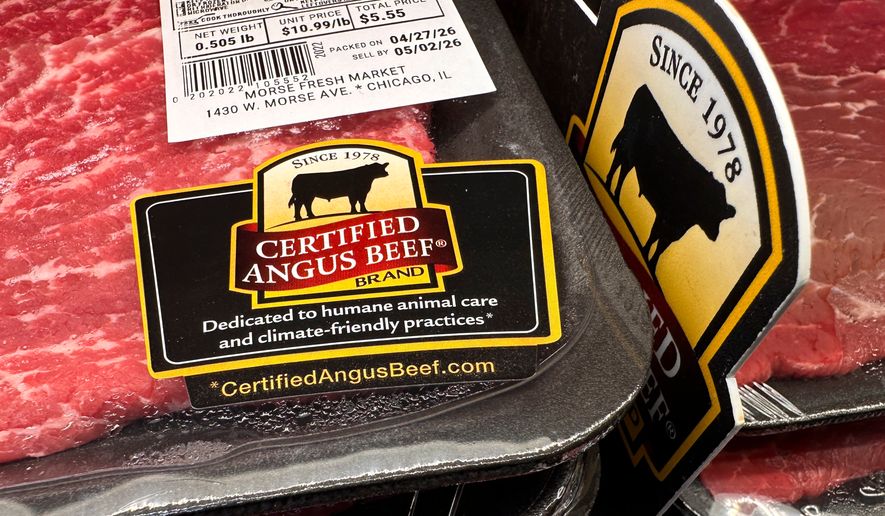

High costs for beef products have taken a toll on the barbecue industry in Texas, leading some restaurants to close.
The price of beef for producers last month was 14.2% higher year over year, according to the National Restaurant Association.
Meanwhile, the total amount of restaurant sales nationwide in April was lower than the year prior when adjusted for inflation.
People were interested in these podcasts
Brisket, a popular item in Texas barbecue, is part of the problem for the restaurant owners.
“The brisket for us barbecue restaurants specifically, it’s everyone’s most popular, it’s everyone’s most expensive, and it’s our worst yield. … To have a margin, I would need to be selling beef for $40 a pound, which no one can do,” Justin Manning, owner of a barbecue joint in College Station, Texas, told Bryan’s KBTX-TV.
Lauran Weiner, who owns a Dallas barbecue restaurant founded in 1977 by her late father, told Texas Monthly magazine in January that “there were a lot of roller coasters in the past, but this roller coaster, I don’t know that it’s going to come back up. It’s not going back down, the price — it’s just not.”
As restaurateurs hiked their prices, customers tightened their belts.
Brett Jackson, who shuttered his barbecue joint in the Houston area in December, told Texas Monthly that in the months leading up to its closure, he “saw that about one in every eight groups were splitting a two-meat plate for two people.”
Shawn Jones, who also closed his Houston-area barbecue restaurant at the end of 2025, told viewers on his YouTube channel that “when brisket costs $36 a pound for the consumer and then you got ribs and sausage and sides and desserts and all that, for, you know, even a couple of two people, you can easily be spending $70 uh $70 to $100 for barbecue.”
There is also a shortage of beef to contend with.
Emily Williams Knight, CEO of the Texas Restaurant Association trade group, told KBTX that “we have a 30-year shortage of beef.”
“If you’re a barbecue restaurant, you don’t really have anywhere to move. And I think that’s where you’re seeing a lot of these smaller barbecue restaurants begin to close, because they just don’t have any options as the price continues to increase,” she said.
Some in the state government think incentives for ranchers is the answer.
Texas Agriculture Commissioner Sid Miller said in a release in February that “we need to better incentivize ranchers to retain breeding stock, further expand grazing access, strengthen market transparency, and implement Mandatory Country of Origin Labeling to restore consumer trust.”
The state government is also looking into whether the meatpacking industry has caused some of the high prices.
Four companies — Cargill, JBS, National Beef Packing and Tyson Fresh Meats — control 85% of the market, according to a release from Texas Attorney General Ken Paxton.
Mr. Paxton, who won Tuesday’s Republican primary for the U.S. Senate, alleges that “these firms may have used their dominance to decrease the prices paid to cattle ranchers while simultaneously driving up beef prices for consumers.”
Mr. Paxton’s office said it’s working with the Justice Department on the probe.

Please read our comment policy before commenting.