



A federal appeals court on Tuesday blocked the Pentagon from forcing more than two dozen transgender troops out of the military, several months after it found that President Donald Trump’s administration unlawfully imposed the ban.
The decision — implementing an earlier ruling by the same appeals court panel — could set the stage for the issue to return to the Supreme Court, which previously allowed the ban to go forward for now in a different case.
Trump’s administration had asked the U.S. Court of Appeals for the District of Columbia Circuit to delay the June 1 ruling’s implementation while it petitions the Supreme Court to take up the case. A three-judge panel voted 2-1 on Tuesday to reject the administration’s request for a stay of the circuit’s decision.
People were interested in these podcasts
The Supreme Court had ruled in the administration’s favor last year, allowing the Pentagon to start enforcing the ban while the litigation proceeded.
Circuit Judge Robert Wilkins, partially joined by Judge Judith Rogers, ruled in June that the Pentagon’s policy was designed to exclude people from the military based on their gender identity. Their majority decision would bar the military from kicking out current service members named in the lawsuit, but it wouldn’t allow new transgender recruits to join.
Plaintiffs’ attorneys challenging the Pentagon ban say 27 service members are covered by Tuesday’s order. Shannon Minter, legal director of the National Center for LGBTQ Rights, said the plaintiffs are all “decorated troops who have met every standard the military sets.”
“The Trump administration asked the court to let it keep pushing these service members toward the door while it tries to get a different answer from the Supreme Court. Today, the D.C. Circuit said no,” Minter said in a statement.
On Tuesday, Wilkins said the administration hasn’t shown how retaining the plaintiffs currently serving in the military would cause any irreparable harm to the government or endanger national security. Wilkins also noted that the scope of the June 1 majority opinion was narrower than the injunction that the Supreme Court stayed last year.
“To the extent the government suggests that any injunction against the Executive Branch imposes irreparable harm, I am also unpersuaded,” Wilkins wrote.
The panel’s June 1 majority opinion partially upheld a March 2025 ruling by U.S. District Judge Ana Reyes, who concluded that Trump’s executive order to exclude transgender troops from military service likely violates their constitutional rights.
In January 2025, Trump signed an executive order that claims the sexual identity of transgender service members “conflicts with a soldier’s commitment to an honorable, truthful, and disciplined lifestyle, even in one’s personal life” and is harmful to military readiness.
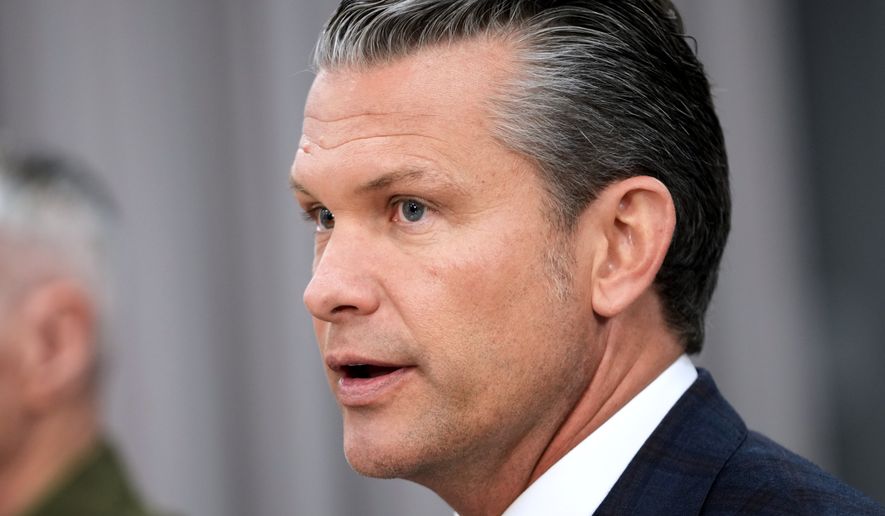
In response, Defense Secretary Pete Hegseth issued a policy that presumptively disqualifies people with gender dysphoria from military service. Gender dysphoria is the distress that a person feels because their assigned gender and gender identity don’t match. The medical condition has been linked to depression and suicidal thoughts.
Wilkins was nominated to the court by Democratic President Barack Obama. Rogers was nominated by President Bill Clinton, also a Democrat.
Circuit Judge Justin Walker, who was nominated by Trump, a Republican, wrote a dissenting opinion in June that said judges lack the power to second-guess the decision to exclude transgender troops. Walker also voted to grant the government’s request to suspend the decision.

Please read our comment policy before commenting.