




An Illinois grocery store funded by state and federal tax dollars closed abruptly Sunday, a little more than a year after its grand opening, serving as a potential warning sign to Democrats pushing for more government-funded food stores.
The Prairie Food Co-op opened in July 2025 in Lombard with the help of an $807,835 state grant and an additional $750,000 in federal funding secured by Rep. Sean Casten, Illinois Democrat.
Last year, Mr. Casten celebrated the co-op’s federal funding for “locally sourced groceries” that “create economic and environmental benefits for constituents.”
People were interested in these podcasts
In a Nov. 11 letter to co-op members, the board announced that the store lacked sufficient funds to remain open.
The co-op generated about $40,000 in sales per week, about half the weekly sales needed to keep operating.
The board’s attempts at improvements, including hiring “experienced grocery consultants” and a general manager, did nothing to improve sales, the board said.
Results from a member survey released by the board provided clues behind the store’s downfall: “Our survey … made clear that the store was not meeting many shoppers’ needs, particularly around produce selection, pricing and the availability of conventional grocery options alongside natural and organic offerings.”
The Prairie Food grocery store was among dozens of co-ops that received millions of dollars in federal funding under the Biden administration.
The federal government has handed out millions of dollars in grants to co-op food stores across the country, including $2.6 million awarded in 2024 to 20 co-op food development projects in areas with limited access to grocery shopping.
A food co-op under development in Austin, Texas, received $500,000 from the City of Austin’s allocation of American Rescue Plan Act funds in 2021.
The Del Valle Food Co-op collected an additional $144,716 from the Department of Agriculture in November 2024.
The co-op was founded “to address historic food inequity caused by historic, systemic and institutional racism and discriminatory practices and policies by public and private entities,” said a national trade group representing U.S. food cooperatives.
The store broke ground in October but has not announced an opening date.
Clinton Hill Community Action in Newark, New Jersey, received a $150,000 federal grant to open a community-owned grocery store in 2024. The store is still operating.
Store operators said they buy goods and sell them “as close to what we paid as possible with little to no markup.” The store gives away food weekly “to the neighbors who contribute to keeping this movement alive.”
Some of the nation’s leading socialist elected officials want the government to fund and own grocery stores to make food more affordable and available in underserved areas.
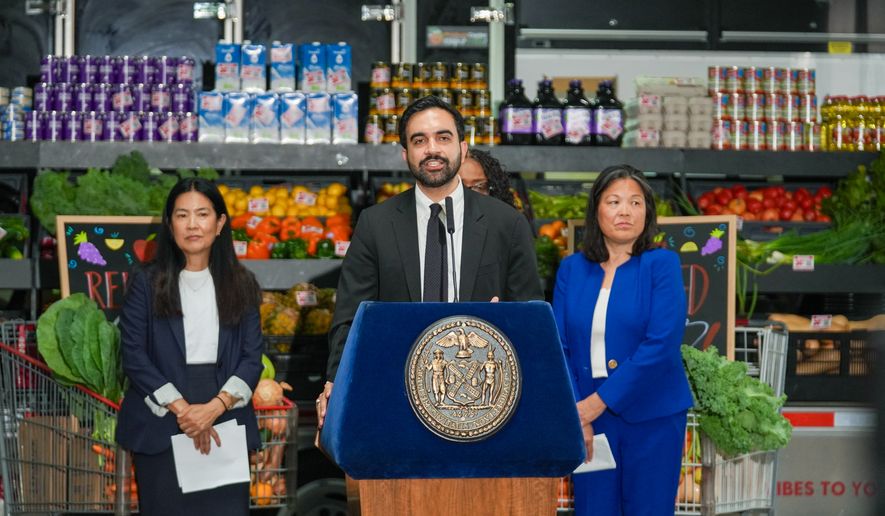
In New York City, Mayor Zohran Mamdani allocated $70 million to fund five city-owned supermarkets, all slated to open by the end of Mr. Mamdani’s first term, saying the stores would operate “with a mandate of lower prices, improved access and clear standards for quality and accountability.”
Though city-owned, the stores will be run by private operators.
Sen. Bernard Sanders, Vermont independent, said at an event with Mr. Mamdani this year that he backs government-run grocery stores, which he called “just another example of government working for the people.”
Mr. Sanders said working people “cannot afford the decent quality food” they need, a gap he said has led to obesity and a diabetes epidemic.
“Making sure our kids eat healthy food is not a radical idea. It’s what every government should be doing,” Mr. Sanders said.
Food co-ops are not owned or operated by the government. They are independent stores owned by customers who pay to become members. The stores focus on local food and “giving back to their communities,” rather than on investors, as big grocery chains do, according to National Co-op Grocers, which represents 241 stores in 40 states.
Although the broader sector has historically shown resilience — with National Co-op Grocers estimating in 2016 that fewer than a quarter of all grocery co-ops would shutter within a decade — individual startups such as Prairie Food still faced severe financial headwinds.
The board also told members in its wind-down letter that it struggled to pay the rent and keep produce in stock. Even after supporters raised $100,000 in a last-ditch bid to keep the doors open, the board closed the store.
“Prairie Food Co-op was built on an extraordinary vision: a community-owned grocery store supporting local farmers and producers, providing access to good food, and creating a more equitable and resilient local food system,” board members wrote. “That vision brought thousands of people together through years of organizing, volunteering, fundraising and community building. Those efforts mattered, and they always will.”
Contact the author


Please read our comment policy before commenting.