



Those sweet potatoes won’t dig themselves up.
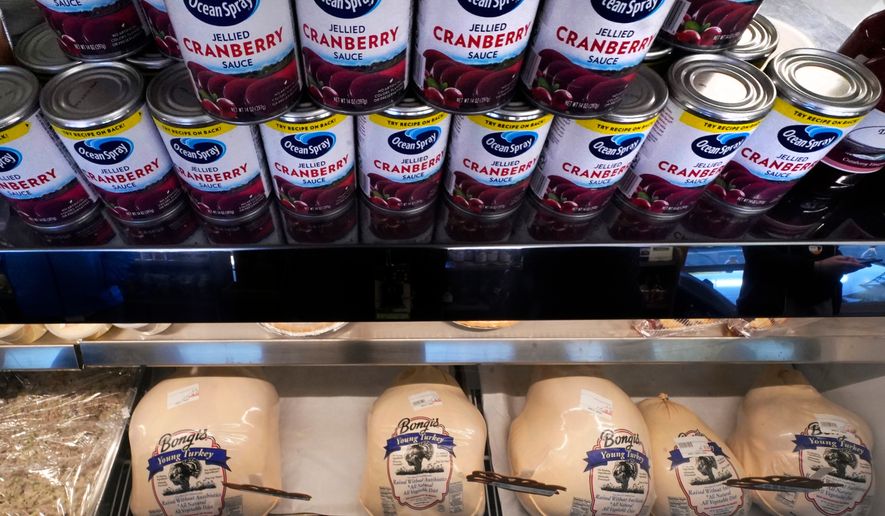
Thanksgiving meal prices are up for the first time in three years, and President Trump’s mass deportations are getting blamed, with immigrant rights advocates saying his mass deportation campaign sapped farms of the pickers and meat plants of the processors who help the food get to the table.
“Targeting hard-working immigrants working on American farms, in food processing plants and at dairies threatens farmers’ ability to operate and makes our Thanksgiving meals more expensive, hurting all Americans,” said Rebecca Shi, CEO of the American Business Immigration Coalition.
People were interested in these podcasts
ABIC blamed “mass deportations” for what it said was a 24% increase in turkey prices and 70% higher costs for green beans, citing work by Auburn University and the Alabama Cooperative Extension System.
The American Farm Bureau Federation had different figures but also said prices are rising.
It put the average 16-pound frozen turkey at $23.68 this year, up about 10% from $21.50 last year.
Add in the trimmings for 10 and the full feast will cost $5.86 per person, up about 6% from the $5.52-per-person cost last year.
“The overall increase in our annual survey reflects the rising costs of getting food from the farm to your dinner table,” said Faith Parum, the farm bureau’s deputy chief economist. “High diesel prices and a shortage of farm labor have taken a toll on the farm level of the food supply chain.”
This year’s uptick reverses a drop from the peak in 2022, amid rising inflation and pandemic pressures, when the Farm Bureau said the price per person was $6.41.
Steven A. Camarota, a demographer at the Center for Immigration Studies, said it was unlikely that a drop in farm workers accounts for most of the food price hikes.
For one thing, he said, labor costs are a tiny fraction of prices — perhaps just 6% of the final price tag for consumers is attributable to the workers who picked or milked or processed it.
He also said there’s a tension in the claims of those lamenting the loss of illegal immigrants, who usually argue that foreign labor doesn’t depress wages.
“Either their presence reduces wages and holds down prices, or it doesn’t. Which is it? You can’t argue the departure of illegal immigrants increases wages without conceding that their presence keeps them down,” he said. “This is a great example of immigration advocates always talking out of both sides of their mouth.”
Mr. Camarota’s research indicates a drop of about half a million illegal immigrants in the workforce. There’s been some increase in the native-born, apparently returning to the workforce.
In the crop workforce specifically, ABIC said nearly 7 in 10 are immigrants, and 42% of them are in the U.S. illegally. The coalition said even some of the legal workers are “stressed out about ICE,” causing their production to drop, too.
“Less employees means less cows milked and higher prices at the store,” said Hans Breitenmoser Jr., owner of the 460-cow Golden Dawn Farm in Wisconsin.
The Farm Bureau, for its part, also blamed high diesel prices and Mr. Trump’s penchant for tariffs for driving up production costs and raising Thanksgiving prices.
James MacDonald, a University of Maryland food economist and former Agriculture Department economist, said some of the price pressure on turkey is higher demand.
“Other factors include that we’re exporting and consuming more turkey, possibly driven by people substituting turkey products for more expensive beef during the rest of the year,” he told The Washington Times.
The White House, asked about increased costs, also cited high diesel prices — and said the situation is already improving.
“President Trump was right – Iran did everything it could to drive up the price of oil before the midterm elections, and now prices are tumbling down,” said Taylor Rogers, a White House spokeswoman. “The average price at the pump has fallen nearly 70 cents per gallon over the past month.”
Ryan Young, a senior economist at the libertarian Competitive Enterprise Institute, said tariffs have had relatively little impact on years of Thanksgiving prices cooling due to improved technology and supply chain advances.
“Zooming out a bit helps to put things in context,” Mr. Young said in an email. “Even with this year’s tariffs and inflation, Thanksgiving is more affordable for us than it was for our parents or grandparents.”
Siri Terjesen, an associate business dean at Florida Atlantic University, noted that diesel prices fell to below $6 per gallon Nov. 16 for the first time since Sept. 10.
“The Iran War can collapse the shipping in the Strait of Hormuz and that leads to higher diesel prices, as do Ukrainian strikes on Russian refineries,” Ms. Terjesen said in an email. “But if you factor in inflation, the Thanksgiving meal is actually cheaper than before the COVID pandemic.”
At the store, though, consumers are cutting back this year, according to LendingTree.
“Thanksgiving definitely isn’t immune to the effects of inflation,” said Matt Schulz, LendingTree’s chief consumer finance analyst. “It’s unfortunate, but that’s the situation many Americans are facing today.”
Contact the author



Please read our comment policy before commenting.