


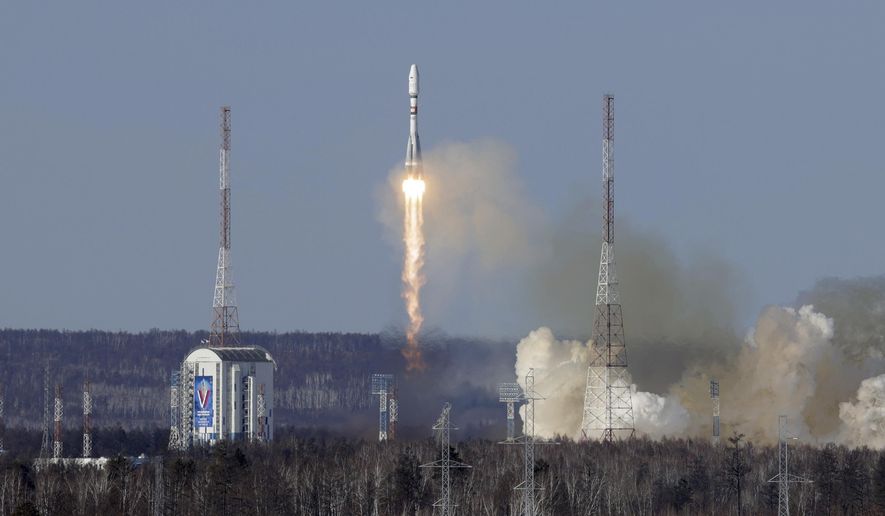

Western intelligence services believe Russia could launch a nuclear-armed satellite, reportedly named Sputnik-S, as early as December, German media reported Monday.
NATO Secretary General Mark Rutte said the alliance would defend against threats in space, while Russia’s embassy in Berlin rejected the reports as a “propaganda campaign.”
A joint investigation by German broadcasters NDR and WDR and the newspaper Süddeutsche Zeitung cited unnamed Western intelligence and German military and intelligence sources to report that the satellite was built years ago and is stored near Moscow.
People were interested in these podcasts
Intelligence shared among NATO countries this month indicated a launch could come within 60 days, the outlets reported. It was not clear which country prepared the intelligence.
German Chancellor Friedrich Merz did not confirm or deny the reports, saying they are “not new, yet they remain no less shocking.” A German government spokesman said Berlin takes the reports very seriously but warned against excessive nervousness over hypothetical dangers.
Kremlin spokesman Dmitry Peskov said that he had not seen the reports and that those citing unknown sources are “hardly worth taking seriously.” Russia’s embassy in Berlin also said Russia’s space activities are peaceful.
The White House said in February 2024 that Russia was pursuing a “troubling” anti-satellite capability that had not been deployed and posed no immediate threat. Russia denied it.
In October, the U.S. Defense Intelligence Agency said Russia was developing a satellite designed to carry a nuclear weapon.
Such a weapon could cause “rapid and sudden loss or degradation of thousands of satellites,” the agency said at the time. A nuclear detonation in space also would leave “lingering radiation belts” that could persist for years and damage satellites that were initially disrupted only temporarily, it said.
The agency said a nuclear detonation in space could be tailored to affect satellites in low, medium and geosynchronous orbits. It said the electromagnetic pulse would immediately affect satellites within range and could impact civilian infrastructure.
Russia is a party to the 1967 Outer Space Treaty, which bars placing objects carrying nuclear weapons or other weapons of mass destruction in orbit around Earth, according to the agency.
Contact the author


Please read our comment policy before commenting.