


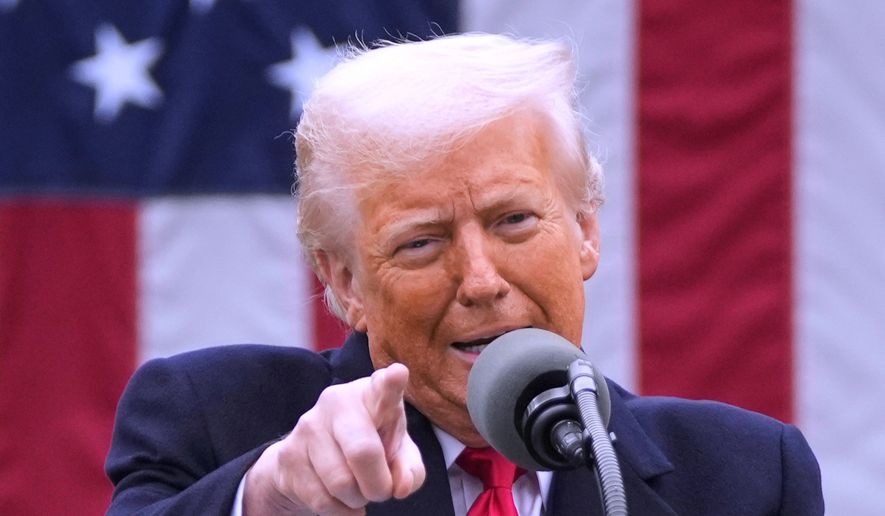

The Trump administration proposed new tariffs on 14 major trading partners, including a 20% tariff on China, after an eight-month investigation into excess manufacturing capacity.
A public comment period and a hearing could push implementation into January 2027.
The 14 trading partners named in the proposal are Bangladesh, Cambodia, China, the European Union, India, Indonesia, Japan, South Korea, Malaysia, Singapore, Switzerland, Taiwan, Thailand and Vietnam. Mexico and Norway remain under review and were not included.
People were interested in these podcasts
Unlike the broad emergency tariffs the Supreme Court struck down in February, the proposals rely on Section 301 of the Trade Act of 1974. They require a Federal Register notice, a public comment period and hearings before taking effect.
The proposal comes ahead of the expiration of a U.S.-China trade truce on Jan. 10.
A 20% tariff is proposed for China and Vietnam.
The proposed rates for partners with trade deals, including the European Union, Japan, South Korea and Taiwan, would not exceed their negotiated 15% cap, a senior administration official told reporters, according to Reuters. Malaysia’s cap is 19%.
The new tariffs will not stack on top of existing duties, except China, which faces the proposed 20% on top of roughly 25% tariffs imposed during President Trump’s first term over forced technology transfers.
The tariffs follow an eight-month investigation by the Office of the U.S. Trade Representative into alleged industrial overcapacity.
Structural excess capacity is defined by the Trump administration as production divorced from market demand, driven by industrial policies, subsidies and components from non-market economies, which allows low-cost goods to flood global markets and undercut American manufacturers.
“The so-called ‘overcapacity’ does not really exist,” the Chinese Foreign Ministry said Wednesday before the U.S. Trade Representative released its official reports, according to Reuters.
The proposed duties would not stack on top of separate Section 232 tariffs on automobiles, steel, aluminum and other products.
Separately, the administration proposed higher tariffs on Brazilian imports, including a 10% duty on finished aircraft and a new rate on out-of-quota sugar, after talks over an existing Section 301 investigation stalled.
Contact the author


Please read our comment policy before commenting.