


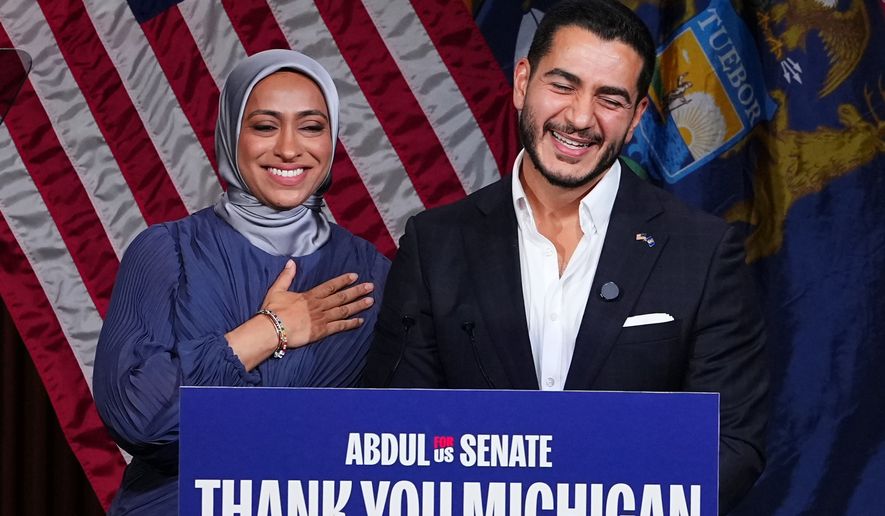

Michigan Sen.-elect Abdul El-Sayed used his victory speech to dog on those in the Trump world who attacked him and his campaign platform.
The Democrat who defeated Republican Mike Rogers said his opponents “went all-in on one of the ugliest campaigns we’ve seen in our lifetimes,” pushing back on anti-Muslim rhetoric and attacks on his identity.
He said President Trump’s comments about him became “uglier and coarser.”
People were interested in these podcasts
“They might have been pointing to my name and my faith, but we all know my name and my faith are not why you can’t afford your gas,” he said in his victory speech. “To all the parents who struggled to explain why the president openly mocks someone for their name or how they pray, let them know tomorrow that the bad guys lost.”
Mr. El-Sayed is the first Muslim elected to the U.S. Senate.
“They want an America that is too small for some of us, but we know America is big enough for all of us,” he continued.
Similar to his campaign speeches, he emphasized domestic relief — noting how hard it is to buy groceries or fill a gas tank — and criticized U.S. funding abroad.
“We want our taxes spent here, for schools here, and healthcare here, and infrastructure here. We don’t want our money sent to do apartheid, or genocide, or war,” he said.
Addressing the president, who repeatedly misnamed and attacked him during the campaign, Mr. El-Sayed said, “Donald, I know you struggled with my name. So after [Vice President J.D. Vance] swears me in in January, you can just go on and call me ’Senator.’”
Mr. El-Sayed said that with Mr. Vance “constitutionally obligated” as president of the Senate to swear in new members, it was a “delicious irony.”
He told his opponent to “enjoy your retirement” and added, “May we never have to see the likes of you in the state again.”
Nodding to his Arabic heritage, having been born to Egyptian immigrants, he said, “Up until right about now, you might have noticed I always say ’inshallah,’ or ’God willing,’ whenever the outcome of this race was mentioned.
“But today, tonight, we can turn that inshallah into alhamdulillah!” — adding for context that it means “praise be to God.”
Contact the author


Please read our comment policy before commenting.