


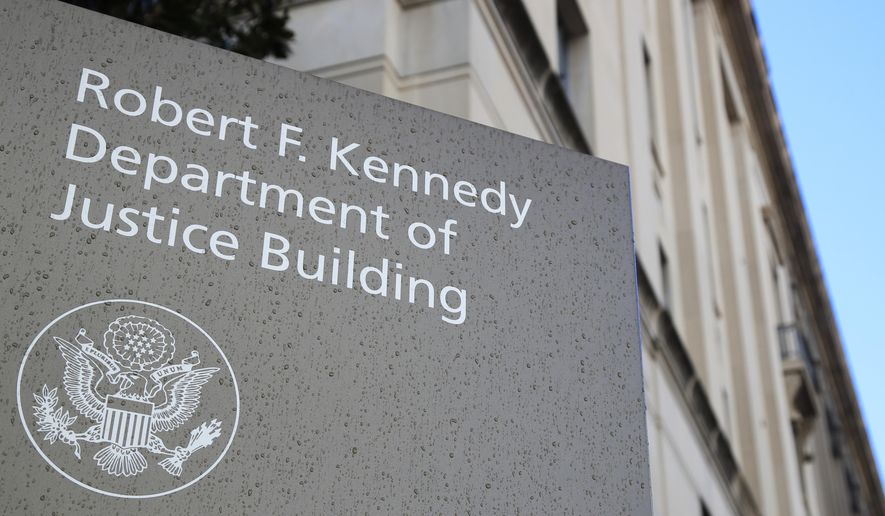

A hacker who worked for former Syrian President Bashar Assad was sentenced to three and a half years in prison for his central role in a scheme targeting nearly 50 government agencies, Western media outlets, businesses and nongovernmental organizations.
After more than a decade on the run as a cyber fugitive, Ahmad Umar Agha was taken into U.S. custody in late 2025, federal prosecutors said last week.
Mr. Agha and other hackers were accused of targeting media organizations for reporting on the former Syrian government’s atrocities during the Arab Spring and Syrian Civil War.
People were interested in these podcasts
Mr. Agha and his coconspirator, Firas Dardar, were indicted in May 2018. Mr. Dardar remains a fugitive, officials said.
Their tactics included causing fear and confusion among Syrian government opponents. They collected intelligence for the former Syrian regime and tried to convince U.S. military personnel to refuse their duty, Justice Department officials said last week.
In one instance, Mr. Agha’s actions caused a flash crash in the U.S. stock market, resulting in a temporary $136 billion loss in the value of stocks on the Dow Jones Industrial Average.
“His attacks on our networks and institutions, including one that temporarily erased $136 billion from U.S. investors, constitute an assault on the free press and our national and economic security,” said Assistant Attorney General for National Security John A. Eisenberg.
Mr. Agha’s criminal scheme forced many of his victims to spend significant sums of money to rectify the system intrusions and restructure their security protocols, officials said.
A company that provides online publishers with content, website ads, and links to other websites sustained a loss of about $35,000 a day for about six months. A global NGO spent about $250,000 on a new suite of network monitoring products in addition to retraining more than 800 staff members and upgrading its security system, officials said.
On at least two occasions, Mr. Agha tried to take over the White House social media page by stealing usernames and passwords from the staff, officials said.
Contact the author


Please read our comment policy before commenting.