


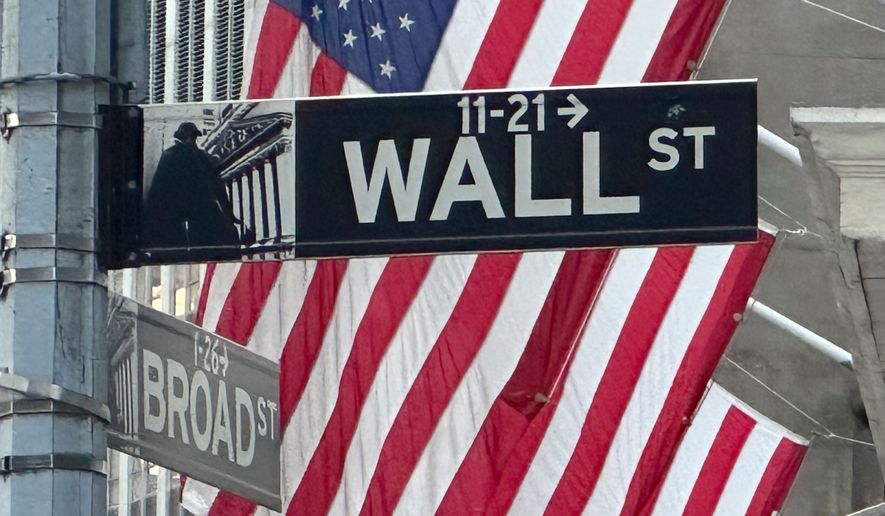

Wall Street stocks plummeted Thursday, erasing Wednesday’s massive rally after clear-cut midterm election results.
The Dow Jones Industrial Average tumbled more than 1,500 points by midday, and the S&P 500 and Nasdaq fell sharply.
Stocks rose sharply on Wednesday. Investors saw the straightforward Democratic sweep of the elections as a sign of political certainty and stability.
People were interested in these podcasts
One day later, that optimism dissipated because investors feared a slowdown of the data center boom and buildout of artificial intelligence.
Stocks for major chipmakers Broadcom and Nvidia were each down 9% on Thursday, after Democrats ran and won on an anti-data center platform.
Sen. Bernard Sanders, a Vermont independent and influential voice on the progressive left, called late Wednesday for a moratorium on data centers.
“Americans don’t want Big Tech oligarchs wrecking the environment, gutting jobs and threatening humanity’s future,” he said on social media. “NATIONAL DATA CENTER MORATORIUM NOW.”
Earlier this year, President Trump predicted a stock market collapse if Democrats took control of Congress. He has cheered on the data center boom, saying it is good for local economies.
At the same time, he took credit for the Wall Street rally on Wednesday.
“Stock Market just hit another Record High — 91 Days in just a short period of time — Less than two years. Your 401(k)s are through the roof. Record Setting All!” the president said on social media.
Foley and Lardner, a major law firm that focuses in part on technology issues, said Democrats will use their committee power to conduct oversight of AI companies. Lawmakers will likely issue document requests and hold hearings on safety incidents, data practices and other matters.
Efforts to legislate new AI safety rules could gain steam, though Democratic proposals are unlikely to preempt state policies that are more stringent.
Despite their majorities, Democratic efforts could run into resistance from the executive branch.
“Presidential vetoes, the filibuster and internal Democratic disagreement over approach [mean] many proposals may not become law before the 2028 election cycle,” the Foley firm said in an insights paper. “Bipartisan measures, such as kids’ online safety and chip export controls, likely have the best odds.”
Contact the author


Please read our comment policy before commenting.