



When the first big U.S. offshore wind farms went up, American barges hauled turbine parts out to sea, where foreign ships waited to do the heavy lifting. The country had no vessel of its own that could install a modern offshore turbine.
That workaround captures a larger problem. The European Union had 20.7 gigawatts of offshore wind by the end of 2024, according to the European Commission’s Joint Research Centre. The United States has three completed commercial-scale farms totaling about 1,640 megawatts, with a fourth, Coastal Virginia Offshore Wind, due to finish next year.
So why has offshore wind been so much harder to build in America than in Europe? Government reports from both sides of the Atlantic suggest the answer lies less in the wind than in the industrial base and permitting systems Europe had decades to build. The United States has been assembling those systems while building its first projects. That matters for the coastal states that have set legal mandates to buy offshore wind power.
People were interested in these podcasts
Why is Europe so far ahead on offshore wind?
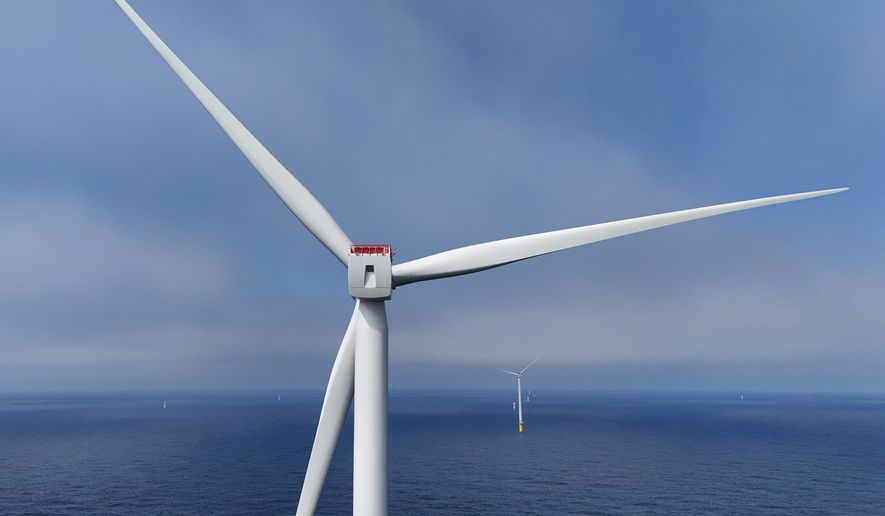
Europe had a roughly three-decade head start to build the ports, factories, ships and workforce the industry depends on.
Denmark installed the world’s first offshore wind farm, Vindeby, in 1991, according to the European Commission. The first commercial-scale U.S. project, South Fork Wind off Rhode Island, began delivering power to New York in November 2023. It was fully commissioned in March 2024, according to the federal government’s 2024 offshore wind market report.
That three-decade lead gave European companies time to standardize construction methods and train workers across several generations of turbines. Ports were modified, cable and foundation factories expanded, and specialized vessels found enough recurring work to support further investment.
European turbine makers supplied 38 percent of the offshore wind turbines installed worldwide in 2024, according to the Joint Research Centre. That figure is a one-year snapshot, but it illustrates the depth of a supply chain that American developers have not been able to take for granted.
Why is offshore wind permitting harder in the U.S.?
U.S. projects need separate federal, state and local approvals plus a grid connection, and those decisions have often run on different schedules.
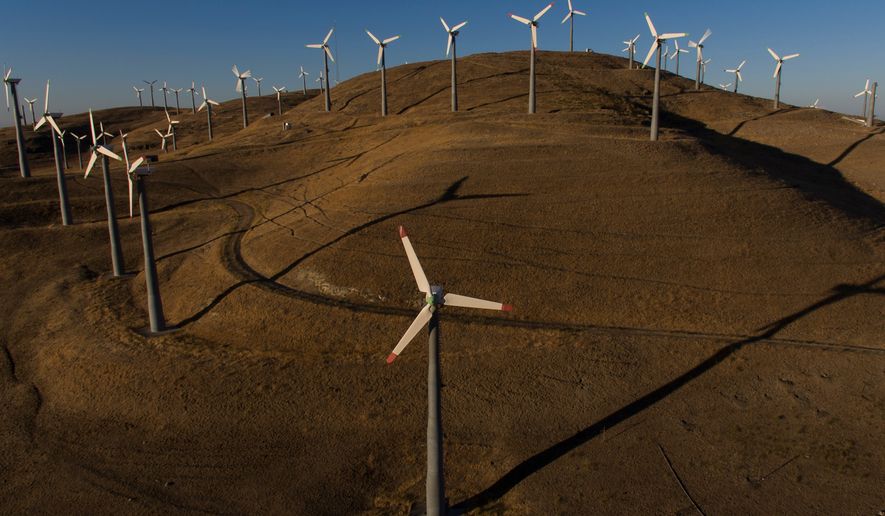
Most large U.S. wind projects are in federally controlled waters, but their cables cross state waters and come ashore in local jurisdictions. A developer may need a federal lease and construction approval, state utility and coastal decisions, local land-use permission and a separate agreement to connect with the regional grid.
A Congressional Research Service review describes federal environmental review of offshore wind projects under the National Environmental Policy Act, the Endangered Species Act and the Marine Mammal Protection Act. It notes that other federal agencies also may have permitting and review responsibilities.
States, meanwhile, have driven demand by deciding how much offshore electricity to purchase and at what price. The federal government may lease the seabed while a state negotiates the power contract. That leaves permitting, procurement, transmission and port construction on different schedules.
Federal and state officials did not publish their first integrated East Coast schedule for leasing and state procurement until April 2024. Europe’s national systems also vary, but the European Union’s revised Renewable Energy Directive generally caps permitting for offshore renewable projects at three years, or two years in designated “renewables acceleration areas.” Slow permitting remains a problem there too: the Joint Research Centre still lists it as a weakness of the EU wind sector.
How does the Jones Act affect offshore wind?
The law does not block offshore wind, but until a U.S.-built installation ship arrived in 2026, developers had to pair American barges with foreign installation vessels.
The Jones Act generally requires vessels moving merchandise between U.S. points to be American-built, American-owned and registered in the United States. The law does not prevent offshore wind construction, but it complicates projects when the domestic fleet lacks the largest turbine-installation ships.
The Government Accountability Office reported that as of June 2025, the U.S. fleet had no Jones Act-compliant vessel capable of installing turbines and their components. That is why developers turned to the barge-and-foreign-ship system. The first U.S.-built turbine installation vessel, Dominion Energy’s Charybdis, installed its first turbine at Coastal Virginia Offshore Wind at the end of January 2026, according to GAO. The project’s first commercial turbine began sending power to the grid in March.
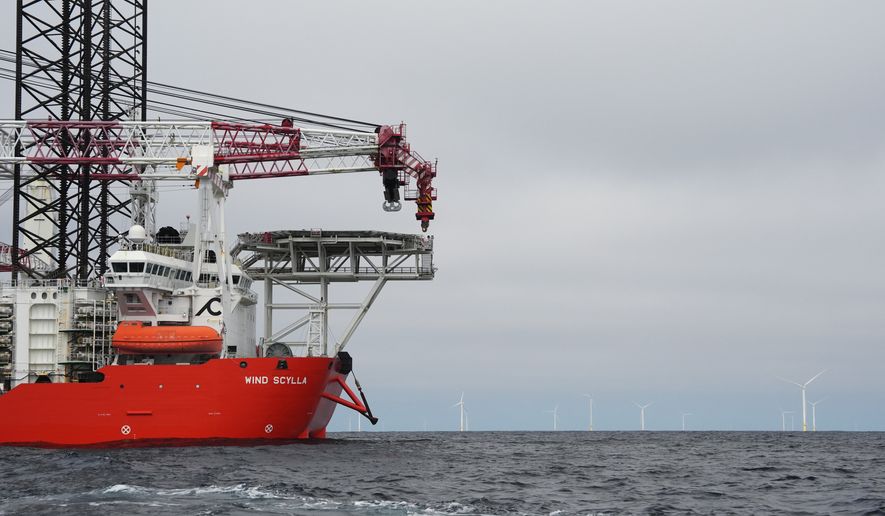
The picture is not simply one of foreign vessels replacing domestic crews. GAO reviewed three projects: Vineyard Wind, Coastal Virginia Offshore Wind and Revolution Wind. It found that about 80 percent of more than 330 vessels used were U.S.-flagged. American vessels handled much of the surveying, transportation and support work, while foreign ships performed the most specialized lifting and installation. Because those larger foreign ships carry bigger crews, GAO estimated that similar numbers of U.S. and foreign mariners worked on the three projects.
Building an American installation vessel can take years and cost hundreds of millions of dollars. Dominion announced Charybdis in 2021, and GAO put its cost at $700 million. Vessel owners need confidence that several projects will follow, but developers face higher costs when suitable ships are scarce. GAO identified industry and regulatory uncertainty, shipyard capacity and foreign competition as barriers. It added that the January 2025 federal pause on new wind approvals increased uncertainty.
In December 2025, the Interior Department ordered construction halted at the five U.S. offshore wind projects then being built, citing national security concerns. Federal judges allowed all five to resume by early February 2026.
Why have costs hit U.S. offshore wind harder than Europe’s?
Both faced rising costs, but early U.S. projects were also paying to build the industry around them, while Europe’s established network could absorb delays.
Rising interest rates, supply chain constraints and higher commodity prices pushed up offshore wind costs worldwide from 2021 to 2023, according to the federal market report. In the United States, those pressures arrived while developers were also helping to finance port upgrades, vessels and new domestic suppliers. The Department of Energy has said current market structures require early projects to bear the costs of that long-term build-out.
The report’s average estimate of the cost of electricity from a hypothetical commercial-scale U.S. offshore wind project rose by more than 45 percent from its previous edition. Several developers canceled state power contracts that had fixed electricity prices before permitting, financing and supply costs were settled. The report counted eight projects that canceled their contracts. States responded by reopening solicitations and, in some cases, allowing inflation adjustments in later contracts.
Transmission is another hurdle. A 2024 Energy Department and National Renewable Energy Laboratory study of Atlantic offshore transmission found gaps in planning and urged a coordinated approach. Coastal population centers offer the demand offshore wind is meant to serve, but the power still has to get ashore and onto the grid.
Europe has not escaped the industry’s recent problems. The Joint Research Centre found that lengthy permitting, grid bottlenecks and higher project costs slowed EU offshore construction in 2024. The European Union added 1.5 gigawatts that year, almost 47 percent less than in 2023.
The International Energy Agency’s 2025 renewables forecast cut expected offshore wind growth by about a quarter, citing policy changes, supply chain bottlenecks and higher costs.
Europe’s advantage is therefore not immunity from financial, regulatory or political risk. It is an established network of ports, manufacturers, vessels and trained workers that can absorb a delayed project without threatening the broader industry.
In the United States, one cancellation can weaken the case for infrastructure intended to serve several later projects. Vessel owners told GAO they cannot justify new ships without future projects in the pipeline. America’s first commercial wind farms have been asked not only to generate electricity, but also to create much of the industry needed to build them, down to the ships that carry the parts.
This article was constructed with the assistance of artificial intelligence and published by a member of The Washington Times' AI News Desk team. The contents of this report are based solely on The Washington Times' original reporting, wire services, and/or other sources cited within the report. For more information, please read our AI policy or contact Steve Fink, Director of Artificial Intelligence, at sfink@washingtontimes.com
The Washington Times AI Ethics Newsroom Committee can be reached at aispotlight@washingtontimes.com.

Please read our comment policy before commenting.